Garlic lands in foaming butter, and within seconds the whole kitchen smells like a good steakhouse. That’s the moment this dish is built around.
Here, sirloin cubes get a hard, fast sear until their edges turn deep brown. Then they’re folded into a glossy sauce of butter, garlic, honey and soy that clings to every piece and still leaves plenty to puddle over a bowl of rice. It’s a skillet dinner that tastes far more elaborate than the effort behind it.
The beef only touches the glaze for about a minute, and that’s the trick. Steak bites turn rubbery when they sit and simmer, so this method keeps the meat juicy and lets the sauce do the finishing work.
Table of Contents
Why You’ll Love This Recipe
- Tender without effort. Sirloin needs minutes, not hours, so you skip the long braise entirely.
- A sauce with layers. Worcestershire adds tang, smoked paprika adds a quiet smokiness, and butter smooths out the honey and soy, so it never tastes like a simple two-ingredient mix.
- Generous on the rice. The batch makes enough glaze for the beef and for the grains underneath.
- Gentle on the palate. There’s no heat unless you add it, which makes it an easy dinner for mixed company.
- Fond-powered flavor. The sauce is made in the same pan as the beef, so it picks up all the browned bits left behind.
Ingredients You’ll Need
Ingredients
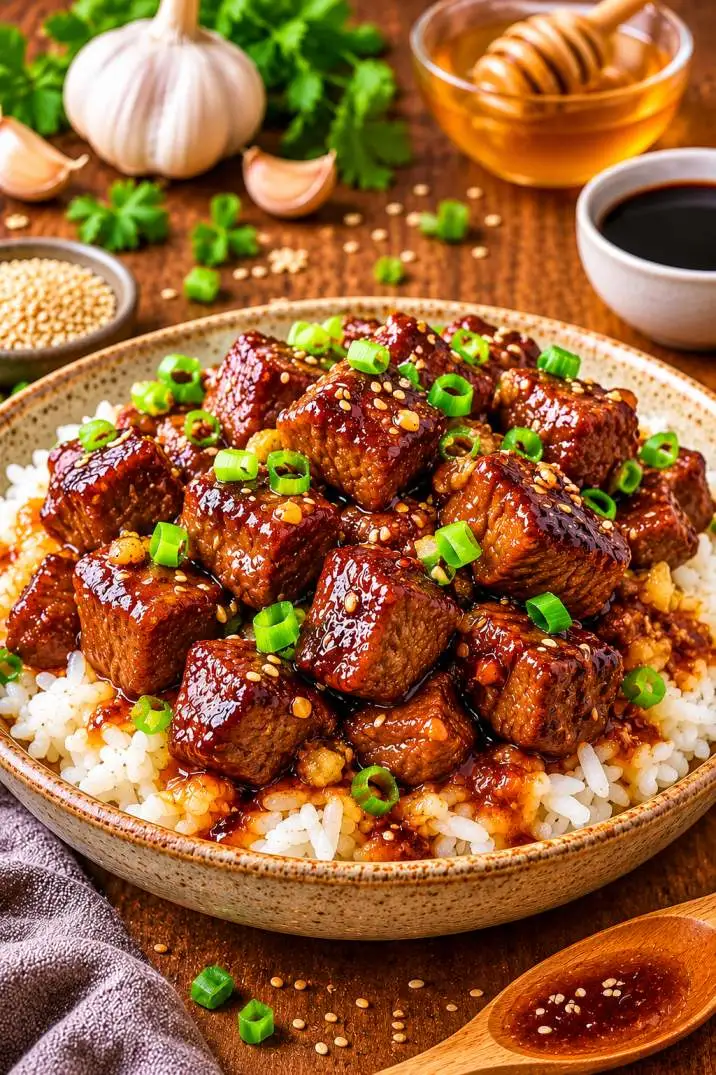
Sticky Garlic Butter Beef Bites with Honey Soy Glaze
Ingredients
Best Beef Cut for This Recipe
I recommend top sirloin. It stays tender through a fast sear, tastes properly of beef, and costs noticeably less than ribeye or tenderloin. Shop for a steak around 1 inch (2.5 cm) thick, cut away any gristle or thick edge of fat, and slice it into cubes between 1 and 1 1/2 inches (2.5 to 4 cm). Cubes of equal size finish at the same moment, which is what you want.
Ribeye is a good indulgent swap. It carries more marbling, so trim off the big fat caps first. Tenderloin is the softest and mildest of the three, and it needs a slightly shorter sear.
One cut to avoid is packaged stew meat. It comes from tougher muscles that only soften after a long, wet braise, so it would stay chewy in a quick skillet recipe. If a slow, cozy beef dinner is what you’re after, my classic beef stew is the right place to start.
How to Make Sticky Garlic Butter Beef Bites
Get the rice going first and do your prep while it cooks. Start searing once the rice is off the heat and resting. The beef and sauce need about 15 minutes of hands-on cooking, so everything reaches the table hot.
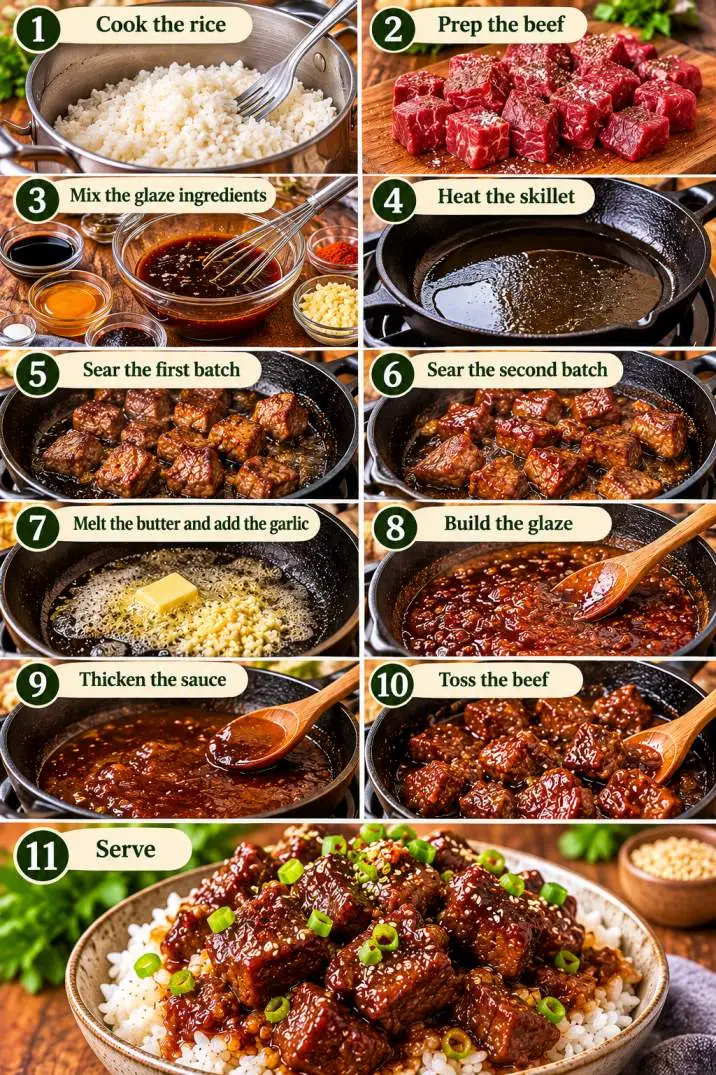
1. Cook the rice. Rinse 1 1/2 cups (300 g) of rice in a fine strainer under cold water, swishing with your fingers, until the water stops running cloudy. Tip it into a saucepan with 2 1/4 cups (530 ml) of water and 1/2 teaspoon of salt. Bring to a full boil, put on the lid, turn the burner to its lowest setting, and set a timer for 15 minutes. Take the pan off the heat without lifting the lid and leave it for another 10 minutes. Then loosen the grains with a fork.
2. Prep the beef. Blot the steak thoroughly with paper towels, since a wet surface steams instead of browning. Cut it into cubes between 1 and 1 1/2 inches (2.5 to 4 cm). Sprinkle with 1/2 teaspoon of salt and 1/2 teaspoon of black pepper, toss, and leave on the counter for 15 minutes.
3. Mix the glaze ingredients. In a medium bowl, stir together the soy sauce, honey, Worcestershire sauce, Dijon mustard (if using), smoked paprika, 1/4 teaspoon of black pepper and beef broth until the honey dissolves. In a small cup, stir the cornstarch into 1 tablespoon of cold water. Mince the garlic. Line everything up beside the stove, because once the beef hits the pan there’s no time to chop.
4. Heat the skillet. Place a 12-inch (30 cm) heavy skillet, cast iron or stainless steel, over medium-high heat and let it warm for 2 minutes. Pour in 1 tablespoon of the oil. When it ripples and shimmers, but isn’t smoking heavily, the pan is ready.
5. Sear the first batch. Lay half of the cubes in the skillet with a little space around each piece. Don’t touch them for 1 1/2 to 2 minutes. They’re ready to turn when they lift away without sticking and the underside is a deep golden brown. Flip them and brown the remaining sides for 1 1/2 to 2 minutes more. Move the beef to a plate.
6. Sear the second batch. Check the pan. If there are blackened specks, wipe them out, but leave the thin brown film because it flavors the sauce. Add the remaining tablespoon of oil and cook the rest of the beef the same way. The middle of each cube should still be a touch underdone, since it will finish in the glaze.
7. Melt the butter and add the garlic. Turn the heat down to medium-low. Add the butter and swirl it until it melts and the foam settles. Stir in the garlic for about 30 seconds, only until it smells fragrant and has turned the palest gold. Any darker and it goes bitter.
8. Build the glaze. Pour in the soy and honey mixture, scraping the bottom of the pan with a spoon to loosen the browned bits. Raise the heat to medium and simmer for 2 to 3 minutes, until the liquid has reduced a little and the bubbles turn bigger, slower and shinier.
9. Thicken the sauce. Give the cornstarch mixture a quick stir, since it settles, and pour it in while stirring. Simmer for 30 to 60 seconds more, until the sauce leaves a clear trail when you run a finger across the back of a coated spoon. You should have about 3/4 cup (180 ml).
10. Toss the beef. Return the beef to the skillet along with any juices that collected on the plate. Toss over medium heat for 45 to 60 seconds, just long enough to coat every cube, then take the pan off the burner right away.
11. Serve. Spoon the rice into four bowls, pile the beef on top, and drizzle the sauce over both beef and rice. Finish with sesame seeds, and green onions and red pepper flakes if you’re using them.
How to Make the Perfect Honey Soy Glaze
The glaze works because each ingredient covers for another. Honey brings gloss and sweetness, soy brings salt and savory depth, Worcestershire and mustard add a sour-sharp edge, and butter ties it together. Order matters, too. Garlic cooks briefly in butter over gentler heat, and the honey only goes in alongside the liquids, never into a dry, hot pan where it can scorch in seconds.
You’ll know it’s done when the bubbles are large and slow, the sauce looks shiny, and a finger-drawn line across a coated spoon holds its shape. If something’s off, fix it like this:
- It’s too thick: whisk in hot water or broth, a tablespoon at a time.
- It’s too thin: keep simmering for another minute, or stir in half of a second slurry made from 1/2 teaspoon of cornstarch and 2 teaspoons of cold water.
- It’s too sweet: squeeze in a little lemon juice or add a few drops of rice vinegar, along with a pinch more black pepper.
- It’s too salty: loosen it with a splash of unsalted broth or water, and serve with a little extra rice.
Tips for Juicy, Tender Beef
- Start with dry meat. Moisture on the surface turns into steam and blocks browning.
- Pick a heavy pan. Cast iron or stainless steel keeps its temperature when cold beef goes in, which thin nonstick pans can’t do.
- Work in two batches. A crowded pan cools down and the cubes turn gray instead of brown.
- Resist the urge to stir. A crust needs undisturbed contact with the pan.
- Keep the sauce time short. A minute of tossing is enough. If you prefer beef that’s more cooked through, add about 30 seconds to the sear rather than simmering the meat.
- Cut evenly. Cubes of the same size cook at the same pace.
For food safety, the USDA recommends cooking whole cuts of beef to an internal temperature of 145°F (63°C), followed by a 3-minute rest. Check the temperature with a food thermometer inserted into the thickest piece. The quick-sear method in this recipe may produce beef below that temperature, so adjust the cooking time if you prefer to follow the USDA recommendation.
Common Mistakes and How to Avoid Them
- Gray, chewy beef: the pan was too full or not hot enough. Sear in two rounds.
- Bitter garlic: it cooked too long, or the heat was too high. Lower the heat first and keep it to about 30 seconds.
- Scorched glaze: honey burns quickly. Add it with the liquids and keep the heat at medium or below.
- Greasy sauce: there was too much oil left in the pan. Use only the amount listed, and pour off any extra if needed.
- Tough beef: it sat in the sauce too long. Toss just until coated, then pull the pan off the heat.
- Thin sauce: it needed more time. Let it bubble until it coats a spoon.
Ingredient Substitutions and Variations
- To make it gluten-free: use tamari and a gluten-free Worcestershire sauce.
- If you don’t have Dijon: leave it out. The glaze will taste a bit sweeter, so finish with a small squeeze of lemon juice.
- Broth or water: either works. Unsalted beef broth gives the sauce a slightly deeper, meatier flavor.
- Maple syrup for honey: use the same amount. The taste shifts a little, but the balance holds.
- For some heat: stir 1/4 teaspoon of red pepper flakes into the butter with the garlic, or sprinkle them on at the table.
- Ribeye or tenderloin: use the same weight, and shorten the sear a little for tenderloin.
What to Serve with Garlic Butter Beef Bites
Rice is the natural partner, because it soaks up every drop of sauce. To round out the plate, add steamed broccoli, a tray of roasted vegetables, or some crispy roasted Brussels sprouts. On a night when you’d rather skip the rice, crispy roasted garlic potatoes are a great stand-in. More ideas live in the side dishes section.
If glossy glazes are your thing, take a look at my sticky Asian chicken thighs over rice, or browse the full dinner recipes collection.
Make-Ahead Instructions
- The beef: cube the sirloin up to a day in advance and keep it covered in the refrigerator. Blot it dry and season it right before cooking.
- The glaze: whisk the soy sauce, honey, Worcestershire, Dijon, paprika, pepper and broth together up to 2 days ahead and refrigerate. Mince the garlic and mix the cornstarch slurry on the day.
- The rice: cook it up to 2 days ahead, cool it quickly, and refrigerate.
Sear and glaze the beef right before dinner. That part takes only about 15 minutes.
Storage and Reheating
Refrigerator: Transfer leftover beef and sauce to a shallow, airtight container and refrigerate within 2 hours of cooking. Store for 3 to 4 days. Keep the rice in a separate airtight container and refrigerate it promptly as well.
Freezer: Freeze the beef and sauce in an airtight, freezer-safe container for up to 2 months for the best quality. Thaw overnight in the refrigerator before reheating.
Reheating: Warm the beef gently in a skillet over low heat with a splash of water or broth until heated through. Reheat leftovers to an internal temperature of 165°F (74°C). Warm the rice separately with a splash of water. Avoid prolonged heating, which can make the beef tough.
Frequently Asked Questions
Which cut works best for garlic butter beef bites?
Top sirloin is the best all-around option. It cooks fast, stays tender when you sear it without overdoing it, and costs less than ribeye or tenderloin.
Can I use stew meat?
No. Stew meat needs long, moist cooking to soften, so it would stay chewy in this quick method.
Why is my beef tough?
Usually it’s because of overcooking, a crowded pan that steamed the meat, or too long in the sauce. Sear in batches and toss with the glaze only briefly.
Can I use regular soy sauce?
Yes, though it’s saltier. Use the same amount and leave the salt off the beef, or taste the sauce before adding the meat.
Is this spicy?
No, it’s mild. Red pepper flakes are optional for those who want some heat.
Final Thoughts
Four things separate good beef bites from mediocre ones: dry meat, a hot pan, small batches, and a glaze added at the very end. Do those and you get a glossy, garlicky, buttery dinner that comes together fast and looks like you worked harder than you did.