Picture a sheet pan coming out of the oven. You were expecting golden, crinkly edges and sweet, tender centers. Instead, the carrots look pale, the broccoli has gone limp, and a little puddle of water is pooling on the tray.
If that has happened to you, you’re in good company. Roasted vegetables look like the simplest thing in the world, yet they trip up plenty of experienced cooks. The good news is that the difference between sad and spectacular comes down to a handful of habits, and once you know them, they’re easy to repeat.
This guide covers what people ask most often: the real secret to roasting, whether 400°F or 425°F is better, which vegetables roast best and for how long, what seasonings to use, and how to fix the usual problems. By the end, you’ll be able to roast almost any vegetable with confidence.
Table of Contents
Key Takeaways
- A hot oven, between 400°F and 450°F, is what browns vegetables. Low heat leaves them pale and soft.
- Dry vegetables, a modest amount of oil, and a pan that isn’t crowded matter more than any fancy ingredient.
- Cutting everything to a similar size helps the pieces finish at the same time.
- Group vegetables by roasting time, because dense roots and delicate greens don’t cook at the same pace.
- Add fresh herbs, lemon, or a splash of vinegar after roasting for a bright finish.
The Real Secret to Roasting Vegetables
Here’s the honest truth: there’s no single secret. Great roasted vegetables come from five small habits working together. Miss one, and the others can’t fully make up for it.
- High heat. Hot air browns the outside before the inside turns mushy. Most cooks land between 400°F and 450°F.
- Dry surfaces. Moisture is the enemy of crispness. Wash your vegetables ahead of time, then pat them very dry before oiling.
- The right amount of oil. Oil carries heat and helps browning. Too little leaves dry patches, while too much makes vegetables greasy and soft.
- Space on the pan. Crowded vegetables trap steam, and steamed vegetables don’t brown. Spread them in a single layer with a little room between pieces.
- Even pieces. Similar sizes cook at a similar speed, so you don’t end up with a burnt edge next to a raw center.
Keep those five in mind, and you’re already ahead of most recipes you’ll find online.
400°F or 425°F? Which Oven Temperature Is Better?
This question comes up again and again, and the answer is reassuring: both work. They simply behave a little differently.
At 425°F, vegetables brown faster and develop crispier edges. It’s a popular starting point because it’s hot enough for strong color while still giving the insides time to soften. At 400°F, the roast is gentler. It takes a few minutes longer, but it’s more forgiving if you get distracted. An oven at 425°F usually needs roughly 3 to 10 fewer minutes than one at 400°F, and at 450°F things move even faster, which suits thin pieces that need a close watch.
What you want to avoid is going too low. Moderate temperatures tend to leave vegetables mushy, pale, and short on caramelization. And if the outsides are browning much faster than the centers are softening, drop the oven to 400°F and add a few minutes.
Pro tip: for extra browning, preheat the empty baking sheet in the oven while it heats. When the vegetables hit the hot metal, the cut sides start browning right away.
One more thing: ovens aren’t always accurate. An inexpensive oven thermometer can show that yours runs hotter or cooler than the dial says, which explains many mysterious results.
Want to see these rules applied to one vegetable? Our crispy roasted Brussels sprouts walk through the temperature choice with a full recipe.
Which Vegetables Are Best for Roasting?
Most firm or moderately firm vegetables roast beautifully. Their natural sugars caramelize in the heat, which concentrates their flavor. Strong choices include:
- Roots and tubers: carrots, potatoes, sweet potatoes, beets, parsnips, turnips
- Cruciferous vegetables: broccoli, cauliflower, Brussels sprouts
- Squash: butternut, acorn, zucchini, summer squash
- Alliums: onions, shallots, and whole garlic cloves
- Others: bell peppers, green beans, asparagus, and tomatoes
The ones that struggle are the very watery or delicate types, such as cucumbers and leafy greens, which tend to wilt or turn soggy rather than crisp.
Roasting Times at a Glance
These are approximate times for a 425°F oven with pieces cut roughly 1 to 2 inches in size. Treat them as a starting point, since cut size, your oven, and the pan all make a difference.
| Vegetable group | Examples | Approximate time at 425°F |
|---|---|---|
| Root vegetables | Beets, potatoes, carrots | 30 to 45 minutes |
| Winter squash, cubed | Butternut, acorn (1-inch cubes) | 20 to 30 minutes |
| Winter squash, halved | Butternut, acorn (cut in half) | 40 to 60 minutes |
| Cruciferous vegetables | Broccoli, cauliflower, Brussels sprouts | 15 to 25 minutes |
| Soft vegetables | Zucchini, summer squash, bell peppers | 10 to 20 minutes |
| Thin vegetables | Asparagus, green beans | 10 to 20 minutes |
| Onions | Wedges or thick slices | 30 to 45 minutes |
| Tomatoes | Halved or whole small tomatoes | 15 to 20 minutes |
The best test of all is simple: the vegetables are done when a fork slides in easily and the edges are browned. A little charring at the tips isn’t a failure. It adds flavor.
How to Prep Vegetables for the Best Roast
Cut with the timing in mind. Dense vegetables like carrots and potatoes should be cut slightly smaller than soft ones like peppers or squash, so everything finishes together. Smaller pieces also mean more surface area, and more surface area means more crispy edges.
Dry everything thoroughly. After washing, pat the vegetables with a clean towel. A dry surface browns, and a wet one steams.
Mix on the pan only if the timing matches. If you’re combining vegetables with different cooking speeds, start the dense ones first and add the quicker ones partway through. You can also use two pans and keep each group together.
Use a rimmed baking sheet. A large sheet gives you room to spread things out. Parchment paper makes cleanup easier, but check the maximum temperature printed on the box, since some brands are only rated for around 420°F to 450°F. A plain metal pan gives slightly stronger browning where the vegetables touch the surface.
The Master Method: Basic Oven-Roasted Vegetables
This all-purpose method works for nearly any vegetable. Think of it as a template you can adapt rather than a rigid recipe.
What You’ll Need
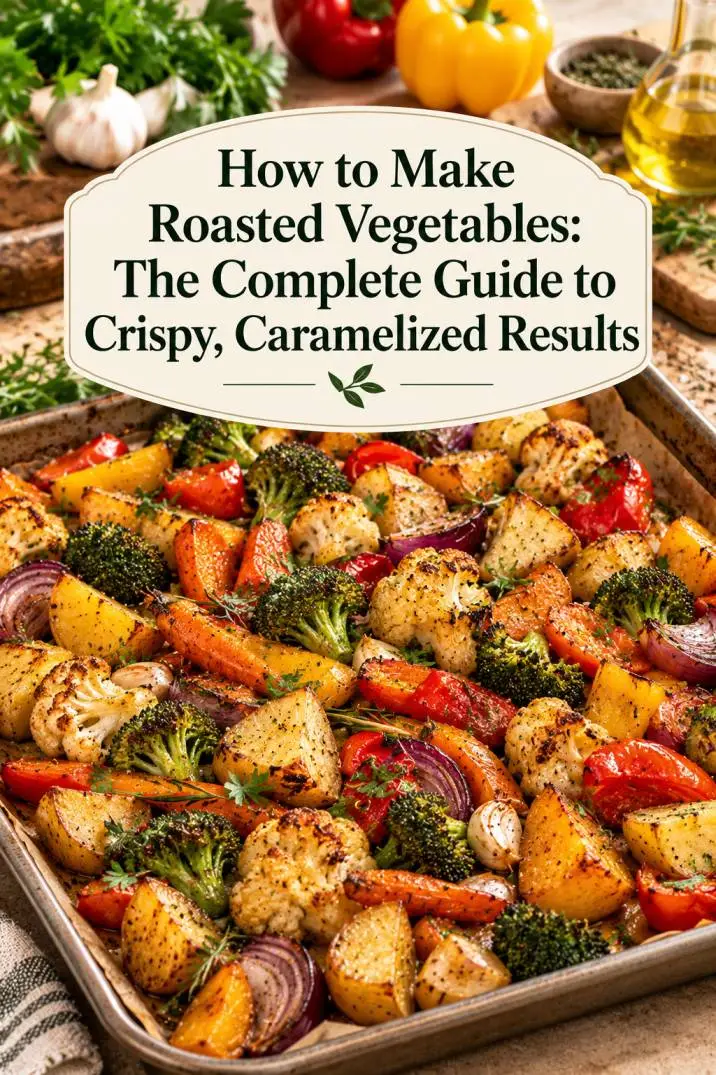
How to Roast Vegetables: Crispy Every Time (Temps & Times)
Ingredients
How to Do It
- Heat the oven. Set a rack in the middle and heat the oven to 425°F. For extra browning, put the empty baking sheet in while it preheats.
- Cut and dry. Chop the vegetables into evenly sized pieces, then blot them dry.
- Coat lightly. Toss the vegetables in a large bowl with the oil, salt, and pepper until every piece has a thin, even sheen. Tossing in a bowl instead of on the pan spreads the oil more evenly.
- Spread them out. Transfer the vegetables to a rimmed baking sheet in a single layer. If they’re touching heavily, move some to a second pan.
- Roast and turn. Slide the pan into the oven. Check and stir or flip the vegetables every 10 to 15 minutes, so all sides get a chance to brown.
- Test for doneness. When a fork pierces them easily and the edges are golden, take them out. Taste one and adjust the seasoning.
Looking for a complete recipe built on this method? Try our crispy roasted garlic potatoes, which apply the same high-heat principles to one of the most popular roasted sides.
The Best Seasonings for Roasted Vegetables
Salt and pepper alone make a perfectly good tray of vegetables. But seasoning is where roasted vegetables get exciting, and a few combinations are worth keeping in your back pocket.
- Classic herb: dried thyme and rosemary pair beautifully with carrots, potatoes, and onions.
- Warm and savory: garlic powder and smoked paprika suit potatoes, cauliflower, and broccoli.
- Sweet and warm: a little cinnamon and cumin flatter butternut squash and sweet potatoes.
- A little heat: a pinch of cayenne or chili flakes wakes up potatoes and Brussels sprouts.
- Italian-style: dried oregano and basil go well with zucchini, peppers, and tomatoes.
A useful rule is to put dry spices and dried herbs on before roasting, because they handle the heat. Save delicate fresh herbs for the end, since they burn and lose their flavor in a hot oven. Fresh garlic also scorches easily, so add it in the last 5 to 10 minutes or use garlic powder at the start.
What to Add After Roasting for More Flavor
Finishing touches can transform a pan of vegetables in seconds:
- A squeeze of fresh lemon juice for brightness
- A drizzle of balsamic vinegar for sweet tang
- A shower of grated Parmesan
- Chopped fresh parsley, basil, or dill
- A spoonful of yogurt or tahini sauce
- Toasted nuts or seeds for crunch
Can You Roast Frozen Vegetables?
Yes, and it’s a handy shortcut. Roast them straight from the freezer without thawing, at a high temperature, and don’t crowd the pan, because frozen vegetables release a lot of water as they heat. Expect roughly 15 to 20 minutes for softer vegetables and 25 to 35 minutes for denser ones. Stirring halfway through helps them brown evenly.
Roasted Vegetable Troubleshooting
They turned out soggy. The pan was probably crowded, the vegetables were damp, or the oven wasn’t hot enough. Use a second pan, dry the vegetables well, and make sure the oven is fully preheated.
They’re burnt outside and raw inside. The pieces may be too large for the heat. Cut them smaller, or lower the oven to 400°F and roast a little longer.
Some pieces are done and others aren’t. Uneven sizes or mixed vegetables are the usual cause. Cut more uniformly, and group vegetables by roasting time.
They taste flat. Season more boldly, and finish with lemon, vinegar, or fresh herbs. A little salt after roasting also helps.
They’re greasy. You used too much oil. Toss them in a bowl and leave the excess oil behind, instead of pouring it onto the pan.
Storing and Reheating Roasted Vegetables
Let the vegetables cool, then keep them in an airtight container in the refrigerator for up to 4 days. To bring back the crisp edges, reheat them on a hot baking sheet at 425°F for 5 to 8 minutes, or in an air fryer. The microwave works in a pinch, but it makes them soft.
What to Serve With Roasted Vegetables
Roasted vegetables are wonderfully flexible. They can be a side, a base for grain bowls, or a main dish with a good sauce. For a simple dinner, pair them with our tender slow cooker chicken thighs. You’ll find more ideas in our vegetable recipes and side dishes.
Roasted Vegetables FAQ
What is the secret to roasting vegetables?
There isn’t a single trick. Crisp, caramelized vegetables come from a hot oven, dry vegetables, a modest amount of oil, even cuts, and enough space on the pan so the pieces roast instead of steam.
Is it better to roast vegetables at 400°F or 425°F?
Both work well. 425°F gives stronger browning and crisper edges, while 400°F is gentler and more forgiving. Roasting below 400°F tends to produce pale, soft vegetables.
What seasoning is best for roasted vegetables?
Salt and black pepper are the foundation. From there, garlic powder, paprika, and dried herbs such as thyme or rosemary all work well. Add fresh herbs, lemon juice, or a drizzle of balsamic vinegar after roasting.
Can you roast different vegetables on the same pan?
Yes, as long as they cook at a similar pace. Group vegetables with similar roasting times together, cut dense ones smaller, or add quick-cooking vegetables partway through.
Your Next Pan Will Be Better
Remember that pale, watery tray from the start? You now know exactly what went wrong and how to fix it: more heat, drier vegetables, a lighter hand with oil, and plenty of space on the pan. These aren’t complicated rules, and they work the same whether you’re roasting carrots on a Tuesday or a full tray for a holiday dinner.
Start with the master method this week, then try one new seasoning combination. If you’d like a full recipe to practice on, begin with our crispy roasted Brussels sprouts or crispy roasted garlic potatoes. And for more ideas that make weeknight dinners less stressful, our guide to making everyday cooking easier is a good place to continue.
Made something delicious? Share your roasted vegetables with us on Instagram, and save this guide on Pinterest so you can find it again the next time a tray of vegetables needs rescuing.