Imagine opening the oven expecting a tray of crunchy, golden bites. Instead you get pale, damp potatoes with a few black flecks of burnt garlic on top. It looks like dinner took a wrong turn.
If that sounds familiar, take heart. Roast potatoes aren’t hard, but they do follow a few rules that nobody mentions on the bag. Once you know them, the results get reliable fast.
Below we’ll sort out the questions cooks ask most: how hot the oven should be, whether boiling first is worth the trouble, which fat to use, and how to keep the garlic from scorching. Then you’ll get one simple recipe to put it all together.
Table of Contents
Key Takeaways
- Roast at 400°F or hotter, because a 350°F oven tends to give soft, pale potatoes.
- Boiling the potatoes briefly first is optional, but it’s the best path to a crunchy crust.
- Oil builds crunch and butter builds flavor, so use both.
- Fresh garlic burns in a hot oven, so add it near the end.
- Dry potatoes and an uncrowded pan matter more than any fancy ingredient.
Do You Really Have to Boil Potatoes First?
No, you can toss raw chunks straight onto a tray and get decent results. But if you want the kind of crunch that makes people reach for a second helping, boiling first is the move.
Here’s why it works. A short boil softens the potato and leaves a starchy film on the surface. When that film hits hot oil, it fries into a crisp shell. Add a small amount of baking soda to the water and the surface breaks down even more, creating lots of rough edges. More edges mean more crunch.
After draining, give the pot a good shake so the pieces bump together and look a little fuzzy at the corners. That scruffy look is exactly what you want.
350°F, 400°F or 425°F? Pick the Hotter One
Temperature is where many home cooks go wrong. A gentle 350°F oven is fine for casseroles, but it’s too timid for potatoes. Low heat lets them soften without ever forming a crust, so you end up with something closer to baked than roasted.
Hotter ovens fix that. Many cooks consider 425°F the sweet spot, since the oil gets hot enough to crisp the edges while the centers still have time to turn tender. A 400°F oven also works, but plan on adding roughly 5 to 10 minutes.
If you can only remember one thing from this section, make it this: preheat fully, and don’t go lower than 400°F.
Butter or Oil: Why Not Both?
This question keeps showing up, and the answer is a happy compromise. Oil handles heat well, so it’s the better partner for browning. Butter tastes wonderful but starts to burn at a lower temperature, so on its own it can turn bitter in a very hot oven.
The simple fix is to start with oil and bring in butter for flavor. Many cooks, including Ina Garten, use a mix for just this reason. Avocado oil, canola oil, or a light olive oil all work. Extra virgin olive oil is tasty, but its smoke point is lower, so it’s better for gentler roasting.
The Garlic Problem (and the Easy Fix)
Garlic is the whole point of this dish, and it’s also the thing most likely to go wrong. Tiny pieces of fresh garlic cook quickly, and in a 425°F oven they can turn black and bitter long before the potatoes are finished.
There are two easy ways around it. You can add garlic powder with the first seasoning, since powder handles the heat. Then toss the fresh minced garlic with a little melted butter and add it for only the last 8 to 10 minutes. You get deep garlic flavor early and a bright, fragrant hit at the finish.
Five Tricks for Truly Crispy Potatoes
- Choose the right potato. Floury types like russets crisp best. Yukon golds sit nicely in the middle.
- Parboil with baking soda. It roughens the surface for extra crunch.
- Let them steam dry. Wet potatoes steam instead of browning, so let them sit in the colander for a few minutes.
- Heat the pan first. Potatoes that sizzle on contact start crisping immediately.
- Give them space. A crowded tray traps steam. Use two pans if you need to.
The Recipe: Crispy Roasted Garlic Potatoes
Ingredients
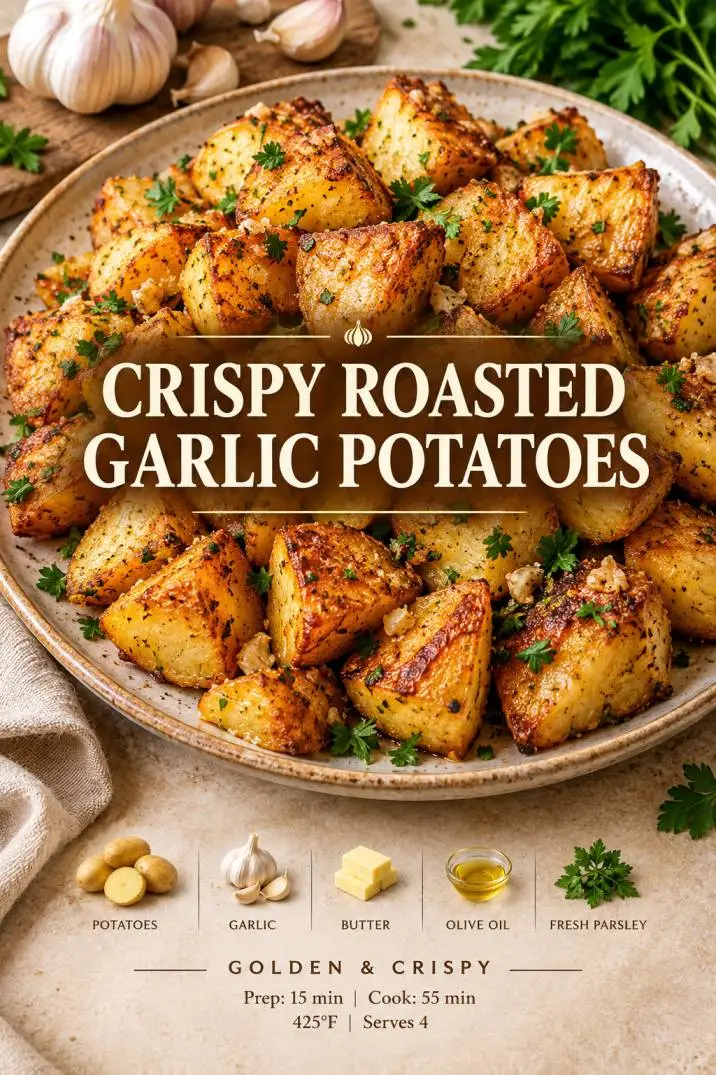
Crispy Roasted Garlic Potatoes: A Beginner’s Guide to Golden Edges and Fluffy Centers
Ingredients
Instructions
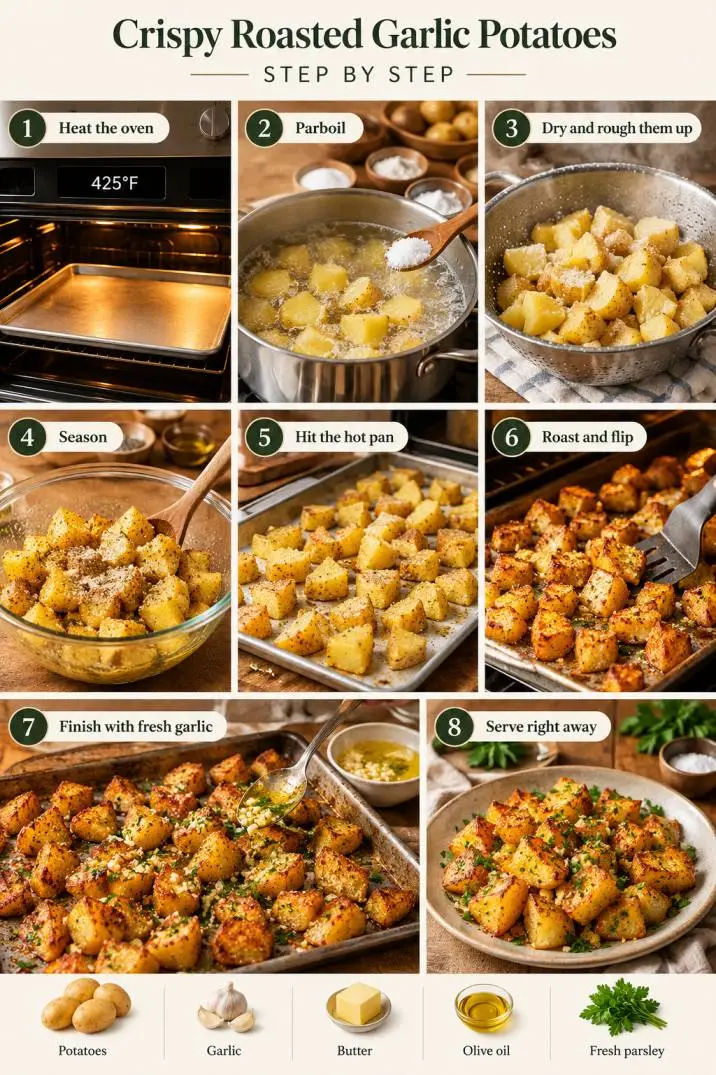
1. Heat the oven. Set it to 425°F and slide a large rimmed baking sheet inside to preheat.
2. Parboil. Put a roomy pot of water on high heat. When it starts to bubble, stir in the salt and baking soda, then lower in the potatoes. Cook for roughly 10 minutes, just until a knife slides into the edges while the chunks stay intact.
3. Dry and rough them up. Drain well, let the potatoes steam in the colander for a couple of minutes, then shake them so the surfaces turn scuffed and floury.
4. Season. Toss with the oil, garlic powder, fine salt, and pepper until every piece is coated.
5. Hit the hot pan. Carefully pull out the sheet, tip the potatoes on, and spread them in a single layer. They should sizzle.
6. Roast and flip. Bake for 25 minutes, then turn the pieces over with a spatula and bake 10 minutes more.
7. Finish with fresh garlic. Combine the minced cloves with the warm butter, spoon the mixture across the tray, toss everything together, and return it to the oven for 8 to 10 minutes, until the edges are deeply golden.
8. Serve right away. Sprinkle with parsley and a pinch of salt. Crispy potatoes lose their crunch as they sit.
Storage and Reheating
Refrigerator: Let the potatoes cool slightly, then transfer them to a shallow, airtight container and refrigerate within 2 hours of cooking. Store for 3 to 4 days.
Reheating: Spread the potatoes in a single layer on a baking sheet and warm them in a preheated 400°F (200°C) oven for about 10 to 15 minutes, until heated through and crisp again. An air fryer also works well. The microwave is quicker, but the potatoes will become softer.
Freezing: Freezing is not recommended if you want to preserve the crispy texture. The potatoes may become soft after thawing.
Roasted Potato FAQ
Should potatoes be roasted at 350°F or 400°F?
Go with 400°F or higher. At 350°F the potatoes tend to turn soft and pale instead of crisp. A 425°F oven gives the best browning for most kitchens, while 400°F works too but needs a little more time.
Is butter or oil better for roasting potatoes?
Use a bit of both. Oil handles high heat and builds crunch, while butter adds flavor but burns more easily on its own. Coat the potatoes in oil first and add a little melted butter later.
Do you really have to boil potatoes before roasting?
You don’t have to, but it makes a big difference. Boiling briefly softens the potatoes and roughens their surface, which turns into a crunchy crust in the oven.
How long do potatoes take in a 400°F oven?
Parboiled potato chunks usually need about 45 to 55 minutes at 400°F, depending on their size and your oven. Turn them halfway through and check that the centers are tender and the edges are deeply golden. Smaller or unboiled potatoes may need a different cooking time.
Your Next Batch Will Be Better
Remember that sad tray from the start? You now know what went wrong and how to fix it: a hot oven, dry potatoes, a little help from boiling, and garlic that waits its turn.
Nobody nails it on day one, and that’s fine. Each batch teaches you something about your oven and your taste, and they’ll all disappear from the plate anyway.