Here’s the dream. You tip a few ingredients into the pot before work, press a button, and walk out the door. Hours later, you step into a kitchen that smells like someone’s been cooking all day, and dinner is simply done.
Here’s the nightmare. You come home to a gray, watery mess where the pasta has dissolved and the chicken has the texture of a pencil eraser.
The gap between those two outcomes usually comes down to a handful of simple rules. Once you know them, a slow cooker turns into the most forgiving tool in your kitchen. Let’s walk through what it does best, what to keep out of it, and how to stay safe. Then we’ll finish with a beef stew that’s hard to get wrong.
Table of Contents
Key Takeaways
- Slow cookers shine with tough, budget cuts such as chuck, shank, and shoulder.
- Seafood, pasta, rice, and dairy do poorly when cooked for hours, so add them late or cook them separately.
- Raw meat is fine, but only if it’s fully thawed first.
- Keep the lid on, because every peek costs you heat and time.
- A tea towel under the lid can thicken a watery sauce.
What a Slow Cooker Does Best
A slow cooker works by holding food at a low, steady heat for many hours. That’s perfect for cuts of meat that are tough when cooked quickly. Chuck roast, shanks, and shoulders are full of connective tissue, and long, gentle cooking turns them tender and rich.
The same goes for stews, soups, chili, and braises. If a dish normally simmers for a long time on the stove, it will usually do well here. As a rough guide, something that simmers for 35 to 45 minutes tends to need about 6 to 8 hours on low.
Foods to Skip (or Add at the Very End)
Not everything enjoys a long soak. Anything that cooks quickly by nature gets overdone in a slow cooker. Here are the usual troublemakers:
- Pasta, rice, and couscous. They turn mushy and sticky. Cook them on the stove and stir them in at the end.
- Seafood. It turns rubbery. If you want it in a stew, drop it in during the last 20 to 30 minutes.
- Boneless chicken breast. It’s lean, so it dries out. Chicken thighs handle the heat much better.
- Milk, cream, and other dairy. These can curdle. Stir them in just before serving.
- Fresh, tender herbs. Basil and cilantro wilt and lose their flavor, so sprinkle them on at the end.
Notice the pattern. Most of these don’t need to be banned, only delayed. Add them close to the finish line and you’ll keep their texture.
Can You Put Raw Meat Straight In?
Yes, you can. Browning the meat first adds flavor, but it isn’t a safety step, so skipping it won’t make dinner unsafe.
The real rule is about thawing. Food safety experts advise defrosting meat and poultry in the refrigerator before it goes into the pot. Frozen meat takes too long to climb past 140°F, and the stretch between 40°F and 140°F is where bacteria multiply fastest. A thermometer is your backup: poultry should reach 165°F, and beef should reach at least 145°F. For beef stew, reaching the minimum safe temperature does not necessarily mean the meat is tender. Continue slow-cooking until the beef is fork-tender.
Two more safety habits are worth keeping. Don’t reheat leftovers in the slow cooker, and don’t let cooked food cool down inside the pot. Spoon leftovers into small, flat containers so they chill quickly, then put them in the fridge.
The Downsides Nobody Mentions
Slow cookers are wonderful, but they aren’t magic. They need planning, since a meal that takes 8 hours can’t be rescued at 5 p.m. Because the lid traps steam, liquid doesn’t evaporate the way it does on a stove, and that’s how dishes end up thin and watery. Vegetables can also go soft if they sit too long.
The lid is another trap. Each time you lift it, the temperature inside drops by 10 to 15 degrees, and the cooking can slow by 20 to 30 minutes. So resist the urge to check.
The Tea Towel Trick, Explained
If you’ve ever wondered why people drape a cloth under their lid, here’s the logic. Steam rises, hits the cool lid, turns into droplets, and rains back into the food. A tea towel soaks up that moisture before it can drip, which leads to a thicker, more concentrated sauce.
You don’t need it for every meal. Try it for the last couple of hours when you want a richer sauce, and swap in a dry towel if the first one gets soaked. Fold the edges so they don’t hang near the heating element, and stay home while it’s in use. Another option is to leave the lid slightly ajar for the final hour.
Before using this method, check your slow cooker’s manufacturer instructions to make sure it is permitted. Keep the towel securely away from the heating element and never leave the appliance unattended while using it.
The Recipe: Classic Slow Cooker Beef Stew
Ingredients
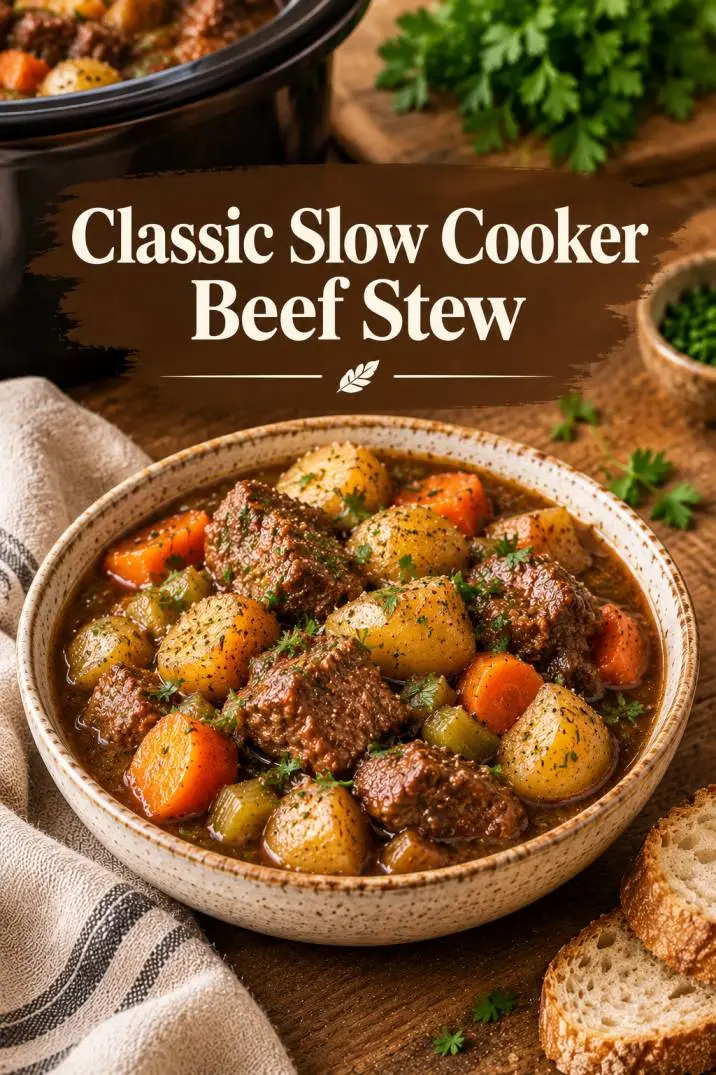
Classic Slow Cooker Beef Stew
Ingredients
Method
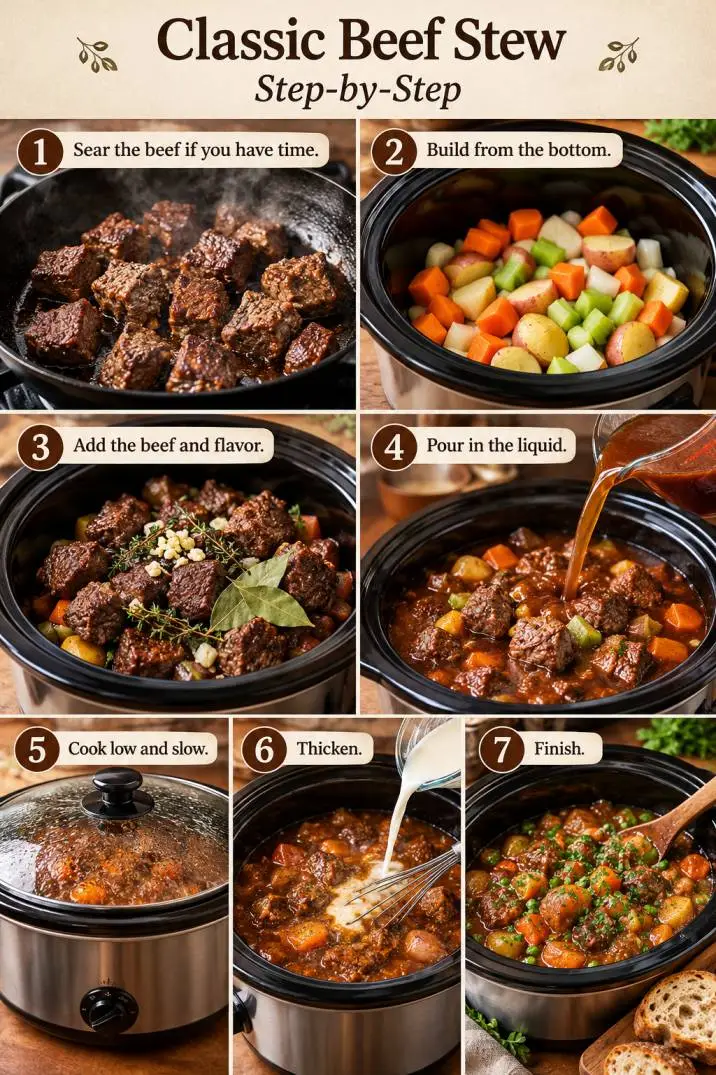
1. Sear the beef if you have time
Sprinkle the chunks with the salt and pepper, then brown them in a very hot pan a handful at a time so they get a crust instead of steaming. This step adds depth, but the stew still works without it.
2. Build from the bottom.
Put the carrots, potatoes, celery, and onion in the slow cooker first. Root vegetables cook more slowly than meat, so they belong at the base.
3. Add the beef and flavor
Lay the beef on top, then scatter in the garlic, thyme, and bay leaves.
4. Pour in the liquid
Whisk the broth with the tomato paste and Worcestershire sauce, then pour it over everything.
5. Cook low and slow
Cover and cook on low for about 8 hours or on high for about 4 hours, until the beef is fork-tender and the vegetables are soft. Cooking times may vary depending on your slow cooker and the size of the beef chunks. Check that the beef is fully cooked and tender before moving on to the next step.
6. Thicken
Stir in the cornstarch mixture, set the cooker to high, and let it bubble for about 15 minutes with the lid slightly open.
7. Finish
Fish out the bay leaves. Stir in the peas if using, then taste and adjust the salt. Serve with parsley and crusty bread.
Storage and Reheating
Refrigerator: Transfer leftover stew to shallow, airtight containers and refrigerate within 2 hours of cooking. Store in the refrigerator for 3 to 4 days.
Reheating: Warm the stew in a saucepan over medium heat, stirring occasionally, until heated through. Add a splash of beef broth if it has thickened too much. Reheat leftovers to an internal temperature of 165°F (74°C).
Freezer: Let the stew cool, then transfer it to freezer-safe airtight containers. Freeze for up to 3 months for the best quality. Thaw overnight in the refrigerator before reheating.
Crockpot FAQ
Which foods should you avoid putting in a slow cooker?
Delicate foods that overcook easily are the main troublemakers: seafood, pasta, rice, boneless chicken breast, and fresh herbs. Dairy can curdle, so stir it in at the end instead.
Can you put raw meat straight into a slow cooker?
Yes, raw meat can go in, as long as it is fully thawed first. Frozen meat takes too long to warm up, which can leave it in the temperature range where bacteria multiply.
What is the tea towel trick for a slow cooker?
You lay a clean tea towel between the pot and the lid so it soaks up steam that would otherwise drip back into your food. It helps thicken sauces, but you should fold the edges in and stay home while it’s in use.
What are the downsides of using a slow cooker?
Meals take hours, so you need to plan ahead. Food can turn watery or mushy if you pick the wrong ingredients, and you can’t speed things up by lifting the lid.
Slow Cooking Gets Easier Every Time
Remember that gray, watery nightmare from the start? You now know how to avoid it: pick tough cuts, hold back the delicate ingredients, thaw your meat, and keep the lid closed.