Takeout chicken has a way of letting you down. It photographs beautifully, lands on the table in a thin brown pool, and the pieces underneath have gone soft. The sauce went in too early, and the chicken spent its last ten minutes steaming.
This bowl flips the order. The chicken sears alone, in a hot pan, until it’s properly golden. Only then does the glaze go in, for about a minute, just long enough to thicken and cling. Everything happens in one skillet, and the rice and cucumber can be sorted while it cooks.
Table of Contents
The Short Version
- Boneless thighs, cut into 1-inch pieces, dried well and dusted with cornstarch.
- Sear first, over real heat. Glaze last, over gentle heat.
- The glaze needs sweet, salty and sour in balance. Rice vinegar does the sour part.
- Quick-pickled cucumber on the side keeps each bite from feeling heavy.
Why Thighs Make This Easy
Thigh meat carries more fat than breast, and that’s a gift when you’re cooking at high heat with a distracted mind. A minute too long in the pan won’t dry it out. Breast can work in this recipe, though it asks for more attention: slice the pieces the same size and take them off the heat the moment they hit 165°F (74°C).
Trim off any large pockets of fat before cutting. Small bits are fine, and they’ll render in the pan.
What’s Actually in the Glaze
Soy sauce is the salt and the savory depth. Honey brings sweetness, and it’s also why the sauce turns shiny as it cooks down. Rice vinegar is the quiet hero: without it, honey and soy together can taste heavy and one-note. A little garlic and fresh ginger give it a lift, and a few drops of toasted sesame oil at the end add a nutty smell as the bowls hit the table.
There’s no chili in this version, so it suits younger eaters and anyone sensitive to heat. If you want some kick, add it at the table or at the very end (see the variations below).
Timing Is the Whole Trick
Sugar and soy both scorch fast. Put them in the pan with raw chicken and they’ll turn dark and slightly bitter before the meat is cooked through. Keeping the glaze out of the pan until the chicken is done avoids that, and it lets the chicken build a crust first.
The thin coat of cornstarch plays two roles. It encourages browning on the surface, and it gives the finished glaze a rougher surface to hold on to.
Sticky Asian Chicken Thighs Over Rice: Seared Hard, Glazed Last, Never Soggy
Bite-size chicken thighs are seared in a skillet until golden, then coated in a glossy, mild soy-honey glaze scented with garlic and ginger. Spoon them over jasmine rice with quick-pickled cucumber, scallions and sesame seeds for an easy weeknight bowl.
Ingredients
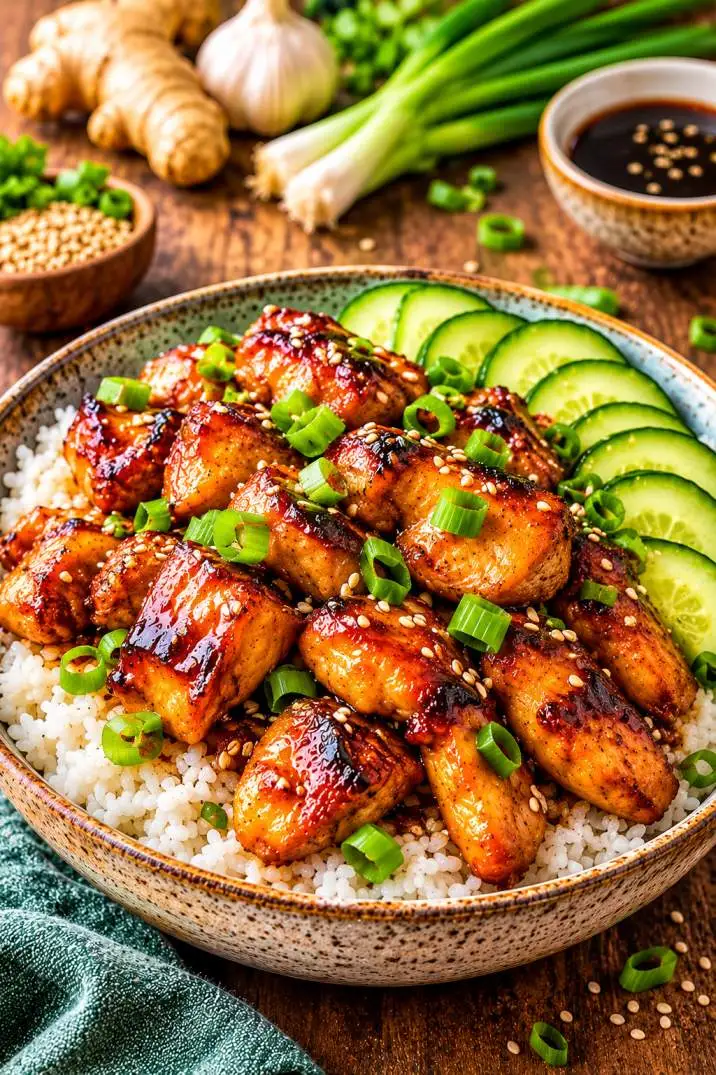
Sticky Asian Chicken Thighs Over Rice
Ingredients
Method
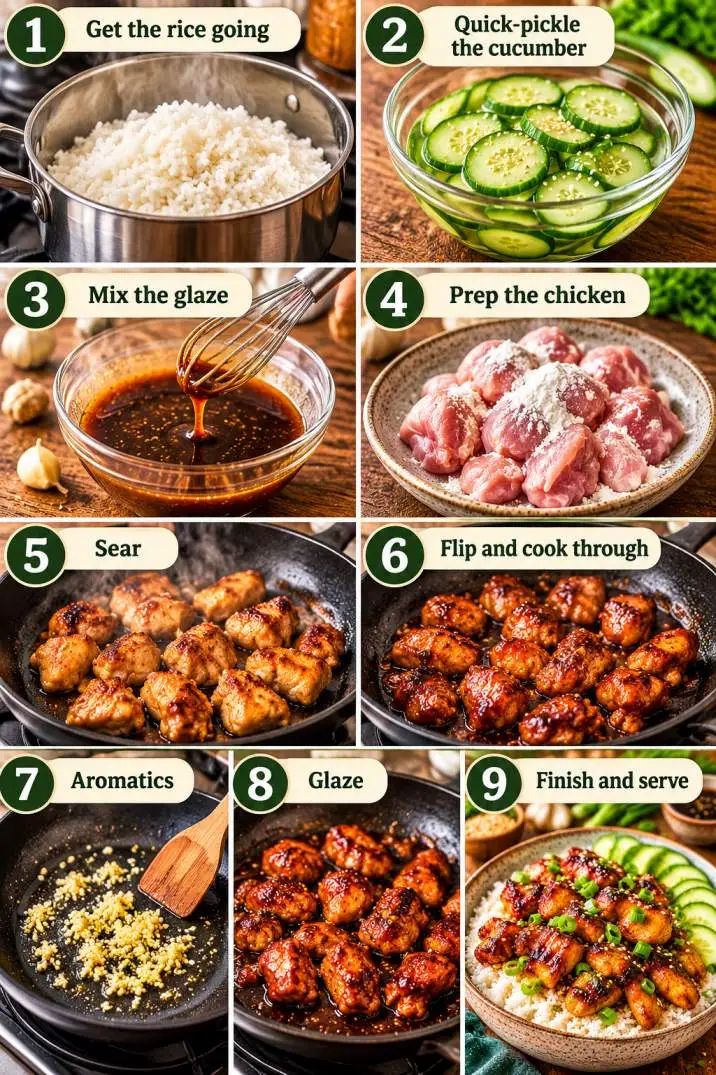
1. Get the rice going. Start it first so it finishes about when the chicken does. Everything else moves quickly.
2. Quick-pickle the cucumber. Toss the slices with the vinegar, sugar and salt in a small bowl. Leave them while you cook, tossing once or twice.
3. Mix the glaze. Stir the soy sauce, honey, rice vinegar and cornstarch slurry together. Keep the garlic and ginger on a separate plate for later.
4. Prep the chicken. Blot the pieces dry with paper towels. Any surface moisture will turn to steam and stop the browning. Toss with the cornstarch, salt and pepper.
5. Sear. Set a large skillet over medium-high heat and add the oil. When it ripples, lay in the chicken in a single layer with a little space between pieces. Use two batches if the pan looks crowded. Leave it undisturbed for 3 to 4 minutes. The pieces are ready to turn when they lift off the pan without a fight.
6. Flip and cook through. Turn the pieces and cook for another 3 to 4 minutes, until the thickest piece reaches an internal temperature of 165°F (74°C), checked with a food thermometer.
7. Aromatics. Drop the heat to medium, add the garlic and ginger, and stir for about 30 seconds until they smell fragrant.
8. Glaze. Give the glaze a fresh stir because the cornstarch settles, then pour it into the skillet. Simmer gently, stirring, for 1 to 2 minutes. The glaze is ready when the bubbles turn large and slow and a spatula dragged through it leaves a brief trail.
9. Finish and serve. Off the heat, stir in the sesame oil and taste. If it’s a bit flat, a few drops of rice vinegar will wake it up. Spoon over rice, add the drained cucumber, and scatter with scallions and sesame seeds. Pour any remaining glaze over the rice.
If Something Goes Sideways
The chicken looks pale. Either it was damp or the pan was too full. Dry it better, use a hotter pan, and cook in batches.
The glaze is runny. Give it another 30 to 60 seconds at a simmer. Still thin? Whisk a pinch of cornstarch into a spoonful of cold water and stir it in.
It tastes too salty. A splash of water and a small drizzle of honey will soften it, and the rice absorbs a lot. Taste a bite with rice before adjusting further.
It tastes too sweet. A few drops of rice vinegar fixes most of it. A squeeze of lime works too.
The glaze is darkening quickly or turning gummy. The pan is too hot. Lower the heat and add a tablespoon of water.
The chicken is sticking. It probably isn’t ready to turn yet. Give it another 30 seconds and try again.
Ways to Change It
For heat, stir ½ teaspoon of chili flakes or a teaspoon of sriracha into the glaze, or put a jar of chili crisp on the table. For vegetables, steamed broccoli, bok choy or snap peas are all good partners. If you’re avoiding gluten, swap the soy sauce for tamari and check your other labels. Brown sugar (2 tablespoons, packed) can replace honey, with a slightly deeper flavor. And if you’d rather skip the rice, pile the chicken over shredded cabbage and the pickled cucumber for a crunchy bowl.
Leftovers and Make-Ahead
The glaze can be mixed up to 2 days ahead and stored in a covered jar in the refrigerator. The chicken can also be cut into pieces ahead of time and kept covered in the refrigerator. For the best texture, cook the chicken just before serving.
Refrigerator: Transfer leftover chicken and rice to separate shallow, airtight containers and refrigerate within 2 hours of cooking. Store for 3 to 4 days.
Reheating: Warm the chicken in a skillet over medium-low heat with a splash of water until heated through and the glaze loosens and coats the pieces again. Reheat the chicken and rice to an internal temperature of 165°F (74°C). Add a little water to the rice to keep it from drying out.
What to Serve Alongside
The rice and cucumber already make a full bowl. If you’d like something extra, browse our vegetable recipes, or look through the rest of our dinner recipes for other weeknight ideas.
Common Questions
Is this a specific regional dish?
No. It uses ingredients common across many Asian kitchens (soy sauce, rice vinegar, ginger, garlic and sesame oil), but it’s an Asian-inspired weeknight recipe rather than a traditional dish from one place.
Does the chicken need to marinate?
It doesn’t. The glaze goes on at the end, so you can go straight from cutting to cooking.
Can I use chicken breast?
Yes. Cut the chicken breast into evenly sized 1-inch pieces so they cook consistently. Since breast meat is leaner than thighs, watch it closely and remove it from the heat as soon as the thickest pieces reach 165°F (74°C) on a food thermometer. Avoid overcooking to keep the chicken juicy.
My glaze is too thin. What now?
Simmer a little longer, or stir in a bit more cornstarch mixed with cold water. It also tightens as it cools slightly.
Which rice works best?
Jasmine rice is soft and slightly fragrant, which suits the glaze. Sushi rice and brown rice also work.
Over to You
Sear hard, glaze last, and balance the sauce: that’s the entire method. Once you’ve seen how quickly the glaze comes together, it’s easy to make again from memory.