Every fall, I watch the same thing happen. Someone buys a can of pumpkin, gets excited about a warm, spiced loaf, and ends up with something dry, gummy, or strangely bland. Then they decide pumpkin bread is “just not their thing.”
It is your thing. I promise. Most pumpkin bread fails for the same handful of reasons, and not one of them is hard to fix. Once you know them, you can make a loaf that is tender, moist, and fragrant almost every single time.
Table of Contents
Key Takeaways
- Use plain pumpkin puree, never pumpkin pie filling.
- Oil gives you the moistest loaf. Butter adds flavor but a slightly drier crumb.
- Stir the batter just until combined. Overmixing makes it tough.
- Bake at 350°F (175°C) so the center cooks before the top gets too dark.
- There is no rising time. This is a quick bread, so you can skip the proofing.
The Easy One-Bowl Pumpkin Bread
This is the loaf I would hand to any beginner. It uses one bowl, a whisk, and a spatula. The spices are classic and warm, and the crumb stays soft for days.
Ingredients
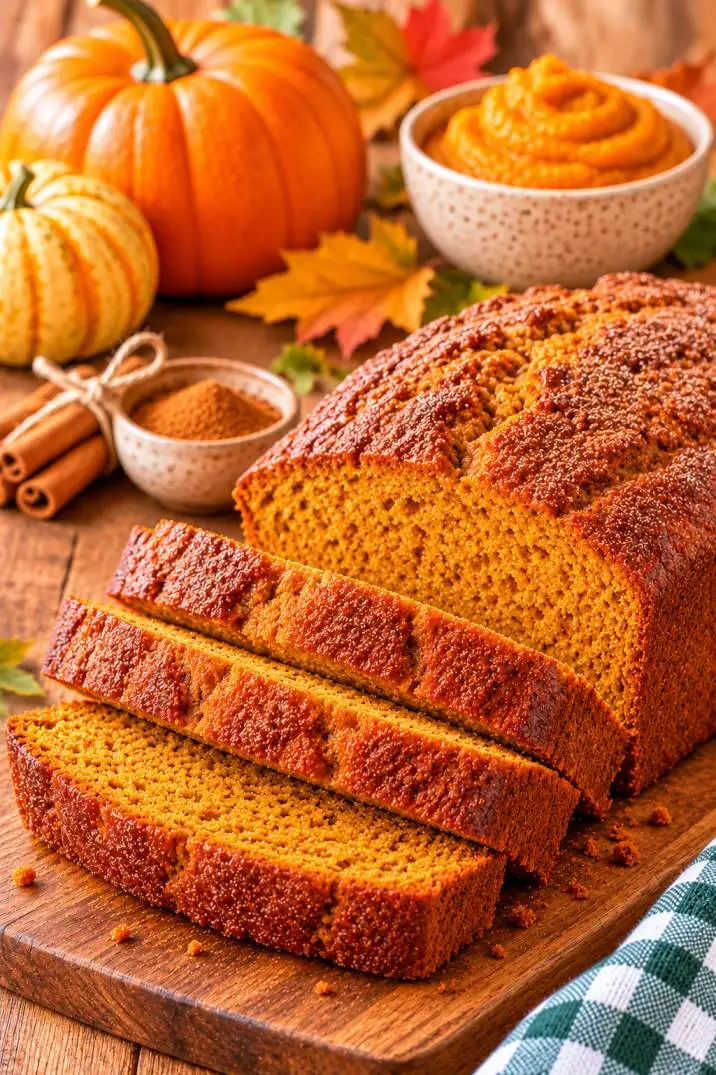
Rustic Pumpkin Bread Autumn Still Life
Ingredients
Notes
Instructions
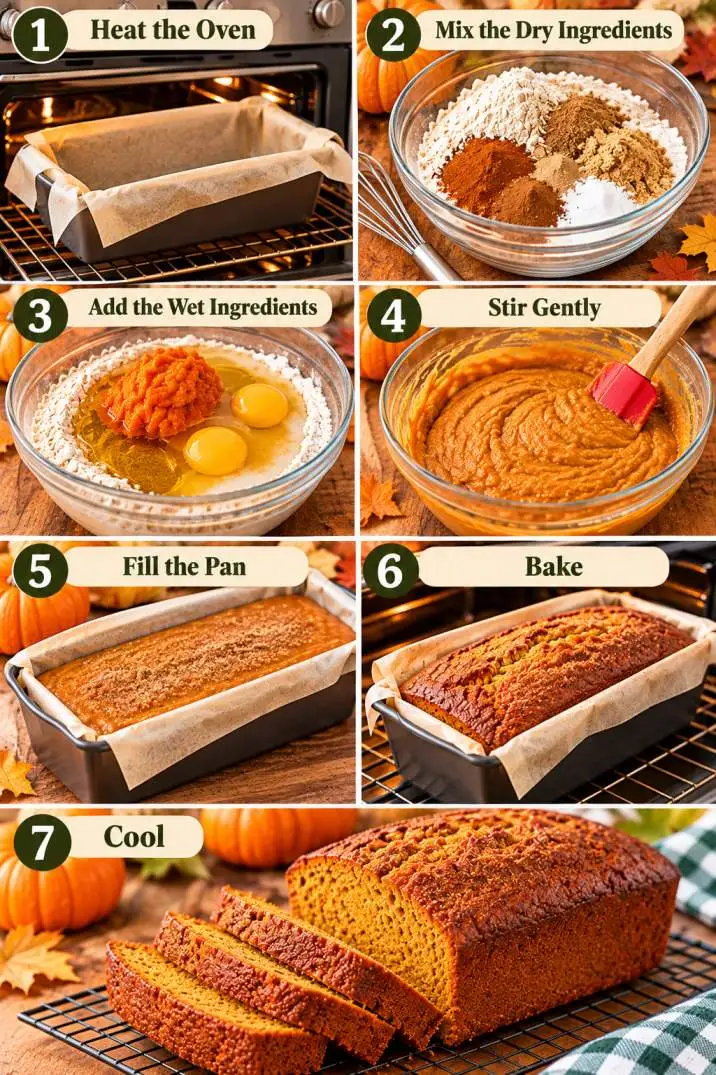
1. Heat the oven. Set it to 350°F (175°C). Grease a 9×5-inch loaf pan and line it with parchment, leaving a little overhang so you can lift the loaf out later.
2. Mix the dry ingredients. In a large bowl, whisk the flour, both sugars, baking soda, salt, and all the spices until no clumps remain.
3. Add the wet ingredients. Make a well in the center and add the pumpkin, oil, eggs, and water.
4. Stir gently. Use a spatula and fold just until you no longer see dry flour. A few small lumps are fine.
5. Fill the pan. Pour the batter in, smooth the top, and sprinkle on the cinnamon sugar if you are using it.
6. Bake. Bake for 55 to 65 minutes. A toothpick in the center should come out clean or with a few moist crumbs. If the top browns too fast, tent it loosely with foil.
7. Cool. Let the loaf rest in the pan for 15 minutes, then lift it out and cool on a rack before slicing. I know it’s tempting to cut it hot. Waiting gives you cleaner slices and a better texture.
You’ll have some puree left in the can. Stir it into oatmeal or yogurt, or freeze it in a small bag for next time.
The Secret to Moist Pumpkin Bread
If I had to name one secret, it would be this: moisture comes from a few small decisions, not one magic trick.
First, the fat. Oil stays liquid at room temperature, so it keeps the crumb soft even after the loaf has cooled. Second, the pumpkin itself. Puree is mostly water and fiber, which keeps the bread tender. Third, your mixing. The less you stir, the less gluten you build, and the softer the slice.
The last one is easy to overlook: don’t overbake. Pull the loaf when a toothpick still shows a few moist crumbs. It will finish setting as it cools. If you wait for a perfectly dry toothpick, the loaf is usually already on the dry side.
Oil or Butter in Pumpkin Bread?
Here’s my honest take: use oil for this recipe.
Butter tastes wonderful, no argument there. But butter is roughly 80 percent fat, with the rest being water and milk solids, and it turns firm as it cools. That is why a butter-based loaf can feel slightly drier and denser by day two. Oil is 100 percent fat and stays fluid, so the crumb stays soft and moist.
Want the best of both? Replace a couple of tablespoons of the oil with melted butter for a hint of that rich, toasty flavor. You’ll lose a little moisture, but many people love the trade.
Common Pumpkin Bread Mistakes (and How to Fix Them)
Mistake 1: Using pie filling instead of puree
This is the big one. Pumpkin pie filling comes pre-sweetened and pre-spiced, so it throws off the whole recipe. Check the label. You want a can that lists only pumpkin.
Mistake 2: Overmixing the batter
When you beat flour with liquid too long, gluten develops and the bread turns tough and rubbery. Stir only until the flour disappears, then stop.
Mistake 3: Skipping the baking soda, or using too much
Baking soda is a leavener, which means it helps the loaf rise. Pumpkin puree is slightly acidic, and the soda reacts with that acidity to create bubbles that lift the batter. Too little and the loaf turns dense. Too much and you can get a soapy aftertaste. Measure it level, and make sure it’s fresh. Old baking soda loses its power.
Mistake 4: Baking at the wrong temperature
People often ask whether it’s better to bake at 350°F or 400°F. For a dense, moist batter like this one, 350°F is the safer choice. A hotter oven browns the outside before the center is cooked, and you end up with a dark crust and a gooey middle.
Mistake 5: Underbaking
A dip in the center usually means the loaf wasn’t done. Check with a toothpick in the very middle, and trust the clock only as a guide, since every oven runs a little different.
Mistake 6: Waiting for it to rise
Here’s one that trips up new bakers who have also tried yeast bread. Pumpkin bread is a quick bread. It doesn’t need any rising or resting time, and letting the batter sit won’t make it fluffier. Mix it, pan it, and get it into the oven.
All About Canned Pumpkin
Canned pumpkin is a perfectly good choice here. It’s consistent, easy to find, and saves you the work of roasting and pureeing your own.
Puree vs. pie filling
Look for the words “100% pure pumpkin” or an ingredient list that says only pumpkin. If you see sugar, spices, or thickeners listed, it’s pie filling, and it belongs in a different recipe.
Is Libby’s canned pumpkin real pumpkin?
Yes, it’s real. It’s made from a variety called Dickinson pumpkin, which looks more like a tan, squash-like gourd than the round orange pumpkins you carve at Halloween. That’s actually the point: these varieties are creamier, sweeter, and less stringy, which is why many canned purees taste better in baking than a jack-o’-lantern would. Many other canned pumpkins use similar squash-type varieties.
How to choose a can
Skip the brand debate and read the label. A short ingredient list, a thick and smooth texture, and a deep orange color are what you’re after. If the puree looks watery when you open it, blot it with a paper towel before measuring.
Easy Add-Ins and Variations
The plain loaf is lovely, but here are a few ways to make it your own:
- Chocolate chips: about ¾ cup, tossed with a spoonful of flour so they don’t sink.
- Walnuts or pecans: ½ cup, chopped, folded in at the end.
- Extra crunch on top: sprinkle chopped nuts or coarse sugar before baking.
Keep add-ins to about one cup total so the batter isn’t overloaded.
Storing, Freezing, and Serving
At Room Temperature: Let the pumpkin bread cool completely on a wire rack before wrapping it tightly or placing it in an airtight container. Store it at room temperature for up to 3 days, away from direct sunlight and heat.
In the Refrigerator: For longer storage, keep the wrapped loaf or individual slices in an airtight container in the refrigerator for up to 1 week. Warm a slice briefly in the microwave if you prefer it slightly warm.
In the Freezer: Slice the completely cooled loaf and wrap the pieces individually. Place them in a freezer-safe bag or airtight container and freeze for up to 3 months. Thaw slices at room temperature or warm them in a toaster.
Serving ideas: serve plain, spread with soft butter, or alongside a hot coffee or tea. Pumpkin bread also pairs nicely with a bowl of soup, so if you want more fall flavors on your table, try my butternut squash soup or my coconut curry pumpkin soup. And if you carved a pumpkin this year, here’s how to make pumpkin seeds that actually crunch. For a drink to go with your slice, my sparkling spiced apple cider mocktail is alcohol-free and easy to share.
Frequently Asked Questions
Can I use fresh pumpkin instead of canned?
Yes. Roast the pumpkin until soft, puree it, and drain off any extra liquid so the batter isn’t too wet. Use the same amount as the canned puree.
Why is my pumpkin bread dense or gummy?
The usual causes are overmixing, underbaking, or too much liquid from a watery puree. Mix gently and check the center with a toothpick.
Can I make this bread without eggs?
You can try replacing each egg with ¼ cup of unsweetened applesauce. The loaf will be a bit denser, but still tasty.
How do I keep the top from cracking or browning too much?
A small crack on top is normal and nothing to worry about. If the top browns too fast, cover the loaf loosely with foil for the last 15 to 20 minutes.
Can I turn this into muffins?
Absolutely. Fill a lined muffin tin about three-quarters full and bake for 20 to 25 minutes at 350°F.
Your Turn to Bake
Pumpkin bread has a reputation for being finicky, but it really isn’t. Grab plain puree, go easy on the mixing, bake at a steady 350°F, and give the loaf time to cool. That’s the whole secret.
If you try this recipe, I’d love to hear how it turns out. Did you add chocolate chips or nuts? Did you stick with oil, or give butter a try? Leave a comment below and tell me about your loaf, and if you have a fall baking question that’s still bugging you, ask away. I read every one.