Most of us have met the sad bowl: pale orange, runny, and so sugary it could pass for dessert. It’s the result of boiling a squash into submission and hoping the pot will sort out the rest.
Good butternut soup is a different animal. It’s thick enough to coat a spoon, smells faintly of toasted nuts, and finishes savory instead of sweet. Getting there takes a handful of choices, and all of them happen before the blender comes out. Here they are, in the order you’ll meet them at the stove.
Table of Contents
The Short Version
- Oven heat is your flavor machine. Roast the squash rather than simmering it raw.
- Leave the peeler in the drawer. Bake the halves skin-on and spoon out the flesh afterward.
- Sweetness needs a counterweight: salt, onions, herbs, and a little acid.
- Pour in stock slowly. A thick soup can always be loosened, but a thin one is hard to fix.
- Taste at the very end and adjust, because the last pinch of salt changes everything.
Where All That Sweetness Comes From
The squash arrives with sugar already built in. Heat does two things to it: water leaves the flesh, and the sugars darken and concentrate. That’s why a roasted squash tastes richer than a boiled one, and also why a careless soup can taste like candy.
The answer isn’t to use less squash. It’s to give the sweetness something to argue with:
- Salt, added in stages so it blends in instead of sitting on top.
- Softened onion and garlic, which bring a savory, almost meaty base note.
- Herbs and spice, such as thyme, sage, or a whisper of nutmeg.
- A splash of sour, like lemon juice or cider vinegar, stirred in right before serving.
There’s no reason to add sugar. The squash has plenty.
To Peel or Not to Peel
For soup, skip it. Raw squash skin is thick, slippery, and awkward to cut, and the oven makes it unnecessary. Split the squash from stem to base, clear out the seeds, and roast the halves with the skin on. When they’ve cooled a bit, a spoon lifts the soft flesh right off.
The only time peeling pays off is if you want browned cubes, since more surface means more caramelized edges. In that case, use a sharp swivel peeler and take your time. For a first batch, halves are easier and safer.
Ingredients

Butternut Squash Soup With Real Backbone: Roast It, Balance It, Blend It
Ingredients
From Raw Squash to Finished Soup
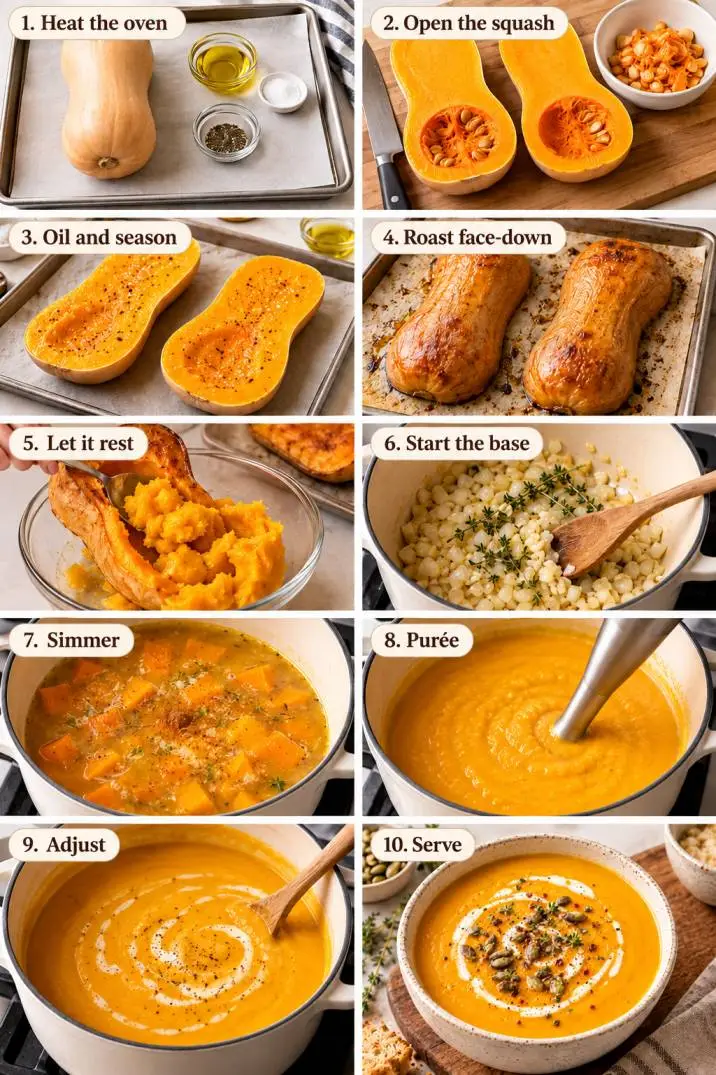
1. Heat the oven. Preheat the oven to 425°F (220°C). Line a large baking sheet with parchment paper.
2. Open the squash. Slice it down the middle and remove the seeds and stringy pulp.
3. Oil and season. Brush the cut sides of the squash with olive oil, then season with the kosher salt and black pepper.
4. Roast face-down. Place the squash halves cut-side down on the prepared baking sheet. Roast for 40 to 50 minutes, until a knife slides easily into the thickest part and the cut surfaces are golden brown.
5. Let it rest. Remove the squash from the oven and let it cool for about 10 minutes, until it is comfortable to handle. Scoop the soft flesh away from the skin and transfer it to a bowl.
6. Start the base. Warm the butter in a big pot over medium heat, cook the onion for 6 to 8 minutes until it turns soft and translucent, then stir in the garlic and thyme for a minute.
7. Simmer. Add the roasted squash, 4 cups of stock, and the nutmeg. Let it bubble gently for 10 to 15 minutes so the flavors meet.
8. Purée. Use an immersion blender directly in the pot until the soup is completely smooth. Alternatively, transfer the soup to a countertop blender in small batches, filling the jar no more than halfway. Remove the center cap from the lid and cover the opening loosely with a folded kitchen towel to allow steam to escape. Start on low speed and increase gradually. Never seal a blender full of hot soup tightly.
9. Adjust. Stir in the cream, thin with extra stock if it’s too thick, then add salt, pepper, and the lemon juice or vinegar a little at a time. Taste after each change.
10. Serve. Ladle the soup into bowls and serve hot. Finish with toasted pumpkin seeds, a drizzle of cream or coconut milk, or a slice of crusty bread.
When the Pot Disappoints: Quick Rescues
- Too thin: Simmer it uncovered for a few minutes. Next time, let the squash roast a bit longer to lose more water.
- Tastes flat: Salt first, then a little acid. Those two usually do the trick.
- Too sweet: More salt, a squeeze of lemon, and a bit more stock to dilute it.
- Grainy or stringy: Keep blending, or push the soup through a fine sieve.
- Slightly bitter: Overly dark roasted spots are the usual culprit. Trim them off, and lower the oven a notch next time.
Storing, Reheating and Freezing
Refrigerator: Let the soup cool slightly, then transfer it to shallow, airtight containers and refrigerate within 2 hours of cooking. Store it in the refrigerator for 3 to 4 days.
Reheating: Warm the soup gently in a saucepan over medium-low heat, stirring occasionally until heated through. Add a little stock or water if it has thickened in the refrigerator. Reheat leftovers to an internal temperature of 165°F (74°C).
Freezing: For the best texture, freeze the soup before adding the cream or coconut milk. Let it cool, transfer it to freezer-safe airtight containers, and freeze for up to 3 months. Thaw overnight in the refrigerator, reheat gently, then stir in the cream or coconut milk just before serving.
Make Ahead: You can roast the squash up to 2 days ahead. Scoop out the flesh, transfer it to an airtight container, and refrigerate. When ready to make the soup, prepare the onion and garlic base and continue with the recipe.
Questions Cooks Keep Asking
What’s the calorie count for 2 cups of cooked squash, and does it suit a weight-loss plan?
Two cups of plain cooked butternut squash contain approximately 160 calories, but this is not the calorie count for the finished soup. The total depends on the amount of olive oil, butter, cream, or coconut milk used. For the most accurate estimate, calculate the nutrition using the exact ingredients and quantities in the recipe.
Sweet potato or butternut: which gives you more protein?
Sweet potato usually comes out slightly ahead, but neither is a protein source. To make the soup a fuller meal, pair it with beans, an egg, or a hearty side.
Is there a catch to eating butternut squash?
For most people, not really. It’s higher in carbohydrates and natural sugars than leafy vegetables, which matters on a strict low-carb diet. The raw squash is also hard to cut, so use a stable board and a sharp knife. A few people react to it with an allergy or skin irritation.
When should you skip it?
Throw out any squash that’s moldy, slimy, very soft in spots, or sour-smelling. If a cooked piece tastes sharply bitter, spit it out and discard the rest. If you’re unsure, don’t risk it.
Over to You
The whole method fits in a sentence: roast it well, build a savory base, and balance the sweetness before the bowl hits the table. Do that and the pale, sugary soup becomes a thing of the past.