Pumpkin soup has a reputation problem. Too many bowls taste like warm baby food with a cinnamon stick thrown in: mild, faintly sweet, and forgotten by the third spoonful. If you’ve ever wondered why your pumpkin soup is so bland, you’re in good company. It’s one of the questions cooks ask most.
The fix isn’t a secret ingredient. Pumpkin is a gentle, mostly watery vegetable, so it needs a loud supporting cast: ginger, garlic, a spoonful of curry paste, creamy coconut milk, and a squeeze of lime. This pot does all of that on the stovetop, with no oven involved. Here’s how it comes together.
Table of Contents
The Short Version
- Cook the aromatics and curry paste in oil first. Heat wakes up their flavor in a way that stirring them into stock never will.
- Use a cooking pumpkin (sugar or pie pumpkin) or canned purée, not a big carving pumpkin.
- Coconut milk brings richness, so you don’t need much else to make the soup feel full.
- Season in two rounds: salt while it simmers, lime juice right before serving.
- Keep the simmer gentle once the coconut milk goes in.
Why Pumpkin Soup Turns Out Bland
Pumpkin is sweet, but it isn’t strong. Most of the flesh is water, so the flavor is easy to drown out with too much stock. Three things usually go missing from a flat pot: bold spices, enough fat and salt to carry them, and something sharp to lift the whole thing at the end.
If you’ve read my roasted butternut squash soup, you know I lean on the oven to build flavor there. This one goes the opposite way. Nothing gets roasted. The flavor is built in the pot, one layer at a time, and the result tastes brighter, spicier, and a little more adventurous.
Fresh Pumpkin or Canned Purée?
Both work, and I won’t pretend otherwise. Fresh pumpkin tastes a little cleaner and earthier, while canned purée saves you the peeling and cuts the cooking time roughly in half.
If you’re going fresh, pick a small sugar pumpkin (also sold as a pie pumpkin). Its flesh is denser and sweeter. The huge carving pumpkins are watery and stringy, and they make a thin, disappointing soup. Kabocha, sometimes sold as Japanese pumpkin, is a good stand-in too.
If you’re going canned, check the label. You want 100% pure pumpkin, not pumpkin pie filling, which is sweetened and spiced.
And the stringy part in the middle? Technically you can eat it, but the texture is unpleasant even after blending. Scrape it out along with the seeds. Rinse and toast the seeds, and you’ve got a free topping (here’s my pumpkin seeds recipe).
Coconut Curry Pumpkin Soup
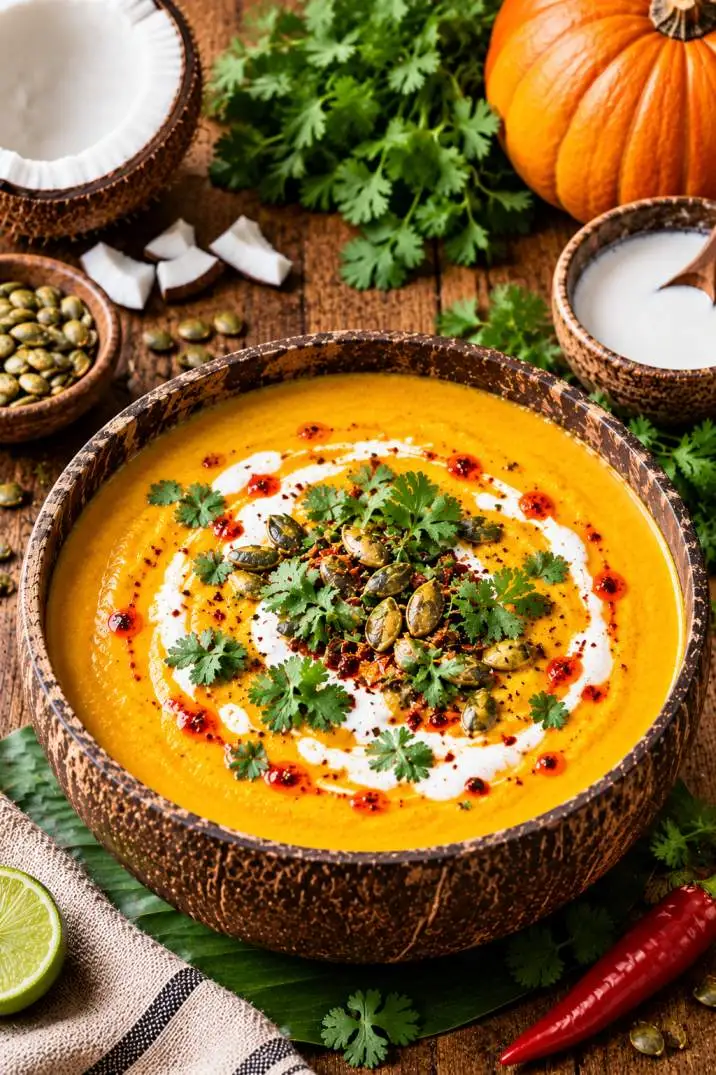
Coconut Curry Pumpkin Soup That Never Tastes Bland: Bloom It, Simmer It, Brighten It
Ingredients
Notes
Instructions
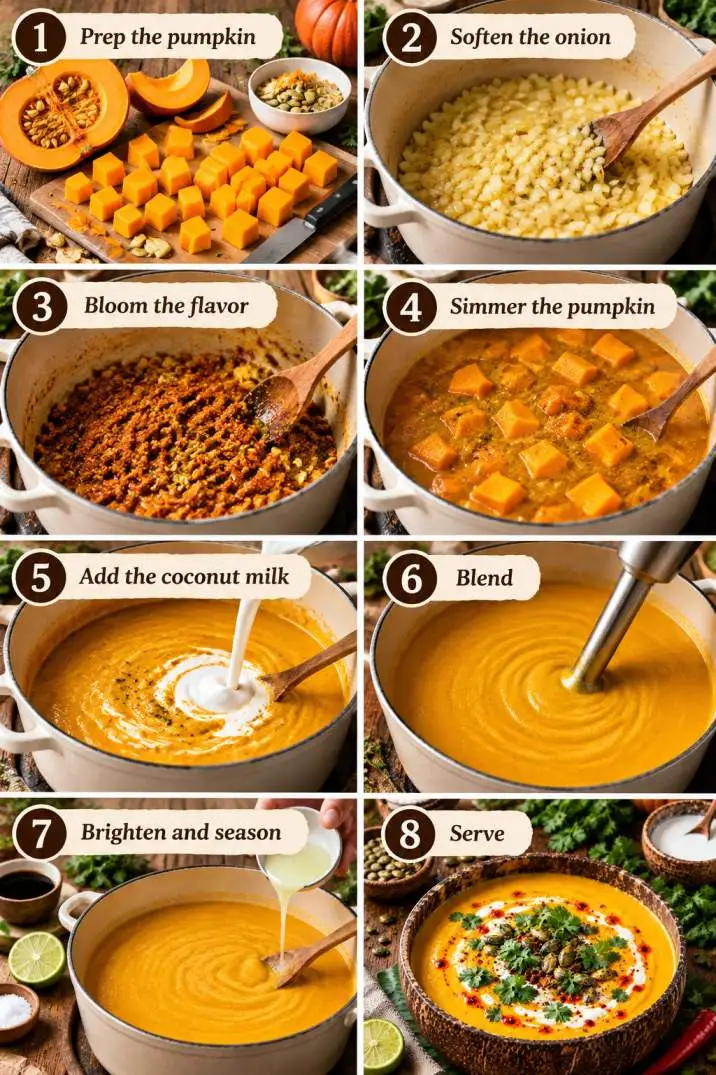
1. Prep the pumpkin. Cut the pumpkin into wedges and scrape out the seeds and strings. Slice off the skin with a sharp knife or peeler, then cube the flesh. Skip this step if you’re using canned purée.
2. Soften the onion. Warm the oil in a large pot over medium heat. Cook the onion for 6 to 8 minutes, stirring now and then, until soft and translucent.
3. Bloom the flavor. Stir in the garlic, ginger, and curry paste. Cook for 1 to 2 minutes, stirring constantly, until the pot smells amazing and the paste darkens slightly.
4. Simmer the pumpkin. If using fresh pumpkin cubes, add them to the pot with the stock and salt. Bring the mixture to a boil, then reduce the heat and simmer for 15 to 20 minutes, until the pumpkin is completely tender and a fork slides through easily.
If using canned pumpkin purée, stir it into the stock and salt instead. Simmer gently for about 10 minutes, stirring occasionally, to let the flavors come together.
5. Add the coconut milk. Pour in the coconut milk, saving a few tablespoons for serving. Keep the heat gentle for 5 more minutes. A hard boil can make coconut milk look curdled.
6. Blend. Use an immersion blender directly in the pot until the soup is smooth. Alternatively, transfer the soup to a countertop blender in small batches, filling the jar no more than halfway. Remove the center cap from the lid and cover the opening loosely with a folded kitchen towel to allow steam to escape. Start on low speed and increase gradually. Never seal a blender full of hot soup tightly.
7. Brighten and season. Stir in the soy sauce and 1 tablespoon of lime juice. Taste, then add more salt or lime a little at a time until the flavors snap into focus. Thin with extra stock if needed.
8. Serve. Ladle into warm bowls and top with cilantro, pumpkin seeds, and a drizzle of chili oil or the reserved coconut milk.
When the Pot Disappoints: Quick Rescues
- Tastes flat: Add salt first, then lime juice. Those two fix most flat soups.
- Too thin: Simmer it uncovered for 5 to 10 minutes. Next time, add a little less stock to start.
- Too thick: Stir in warm stock a splash at a time.
- Stringy or grainy: Blend longer, or pass the soup through a fine sieve.
- Curdled-looking coconut milk: Lower the heat and blend again. It usually comes back together.
Questions Cooks Keep Asking
What spices go well in pumpkin soup?
Ginger, cumin, coriander, turmeric, and curry paste all work beautifully, as do nutmeg, smoked paprika, sage, and thyme. If you add turmeric, ½ teaspoon is plenty. It gives earthy depth and a deeper golden color.
What goes well with pumpkin soup?
Crusty bread, a grilled cheese sandwich, steamed rice, or a sharp green salad all do the job. Toasted seeds on top add the crunch the soup lacks.
Is pumpkin soup healthy?
It’s a sensible choice. Pumpkin gets its orange color from beta-carotene, which your body turns into vitamin A, and it brings fiber and potassium along with a modest calorie count for its volume. But no soup targets belly fat or a specific organ, and coconut milk adds saturated fat, so the full recipe matters more than the vegetable alone. If you follow a potassium-restricted diet for kidney disease, ask your doctor before making this a regular meal.
Is pumpkin a carb or a protein?
Mostly carbs, with very little protein. To turn the soup into a more filling meal, serve it with a boiled egg, beans, or a hearty slice of bread.
Can I make it ahead?
Yes. Let the soup cool slightly, then transfer it to shallow, airtight containers and refrigerate within 2 hours of cooking. Store it in the refrigerator for 3 to 4 days. You can also freeze it in freezer-safe containers for up to 3 months for the best quality. Thaw frozen soup overnight in the refrigerator and reheat gently in a saucepan, stirring or whisking well if the coconut milk has separated slightly.
Over to You
The whole method fits in a sentence: bloom the spices, simmer the pumpkin, and brighten everything with lime right before serving. Do that and a bland bowl becomes the one you actually crave on a cold evening.