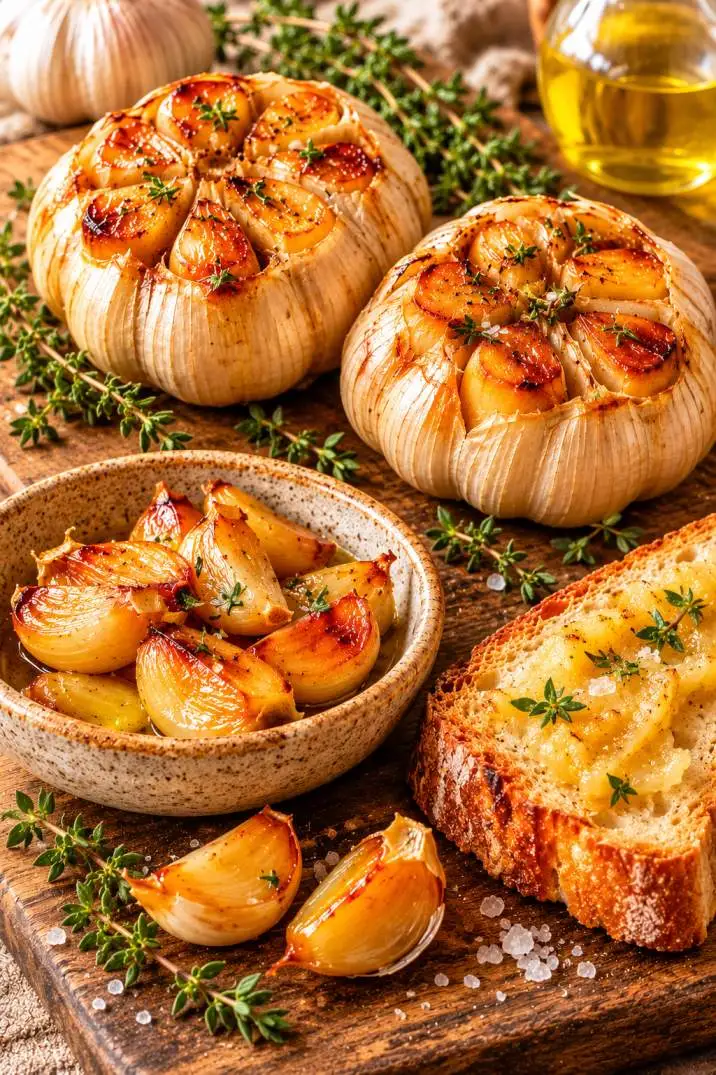
Picture a head of garlic coming out of the oven. You were hoping for golden, buttery cloves that slide out of their skins. Instead, the tops are dark and bitter, and the cloves near the bottom are still firm and sharp.
It happens to plenty of good cooks, and it’s almost always a small fix. Roasted garlic is one of the easiest things you can make, and it turns a pungent raw ingredient into something mellow, sweet, and spreadable.
This guide covers what people ask most often: the simplest method, whether to peel first, how long it takes at different temperatures, other ways to roast it, and how to store it safely. By the end, you’ll know how to roast garlic with whatever equipment you have.
Table of Contents
Key Takeaways
- A moderate oven, around 400°F, gives soft, golden cloves in about 35 to 45 minutes.
- Cut off the top, add a little oil, and cover the head so it steams while it roasts instead of drying out.
- Leave the skin on for whole heads. It protects the cloves from scorching.
- Bitter garlic usually means too much heat, too long, or no cover. Hard centers mean it needed more time.
- Refrigerate roasted garlic in an airtight container and freeze what you won’t use soon. Never leave it sitting in oil at room temperature.
The Easiest Way to Roast Garlic
If you only learn one method, make it this one. It uses a whole head, a little oil, and the oven, and it takes about five minutes of actual work.
- Heat the oven to 400°F. Put a rack in the middle.
- Trim the top. Slice about ½ inch off the pointed end of the head so the tops of the cloves are exposed. Leave the papery skin and the root end intact.
- Add oil and salt. Set the head cut side up and drizzle with 1 to 2 teaspoons of olive oil. Add a pinch of salt if you like. Rub it in so it sinks between the cloves.
- Wrap it. Close the head loosely in foil, or tuck it into a small covered oven-safe dish.
- Roast for 35 to 45 minutes. It’s ready when the cloves are golden and soft, and a knife slides in with no resistance.
- Let it cool. Give it 10 minutes, then squeeze the cloves out from the root end, or lift them out with a small fork.
The cover matters more than most people think. It traps steam, which cooks the cloves gently from the inside, while the exposed tops pick up a little color.
Skin On or Off? Peeled or Unpeeled
For a whole head, leave the skin on. The papery layers shield the cloves from direct heat, and they keep the garlic from drying out. They also make cleanup easier, since the cloves squeeze out like soft paste.
Peeling first only makes sense when you’re working with loose cloves. In that case, a covered dish and a little more oil help keep them from drying out (more on that below).
How Long to Roast Garlic at Each Temperature
There’s no single correct temperature. Lower heat is more forgiving, while higher heat is faster but needs a closer eye. These are approximate times for a whole head with the top trimmed and wrapped.
| Oven temperature | Approximate time | What to expect |
|---|---|---|
| 350°F | 50 to 60 minutes | Very gentle, mellow, and hard to overcook |
| 375°F | 40 to 50 minutes | Soft, sweet, and lightly golden |
| 400°F | 35 to 45 minutes | The reliable all-rounder |
| 425°F | 30 to 35 minutes | Faster, with deeper color and more risk of bitter tops |
The best test is touch and sight, not the clock. The cloves should look deep golden and feel completely soft when you press them. If any feel firm, give the head another 5 to 10 minutes.
Ovens run hot or cold more often than you’d think, so an inexpensive oven thermometer can explain a lot of mystery results.
Air Fryer, Grill, Microwave, and Other Methods
No oven, or just don’t want to heat one for a single head? You have options.
- Air fryer: Prep the head the same way and cook at about 380°F to 400°F for roughly 20 to 25 minutes. Check it at the early end, because air fryers vary a lot.
- Toaster oven: Use the same temperature as your oven, but start checking a few minutes sooner, since the heating element sits closer to the garlic.
- Grill: Set it up for indirect heat around 400°F and roast the wrapped head for about 30 to 45 minutes. You get a faint smoky edge.
- Stovetop: For loose cloves, warm a little oil in a small skillet over low heat, add the cloves, cover, and cook for 15 to 20 minutes, stirring now and then, until golden and soft.
- Microwave: It will soften garlic in short bursts, but it steams rather than roasts, so don’t expect the same caramelized sweetness.
- Without foil: A small lidded oven-safe dish works just as well, and so does a ceramic garlic roaster, which is made for exactly this. Use the same temperature and check for softness at the usual time.
Loose Cloves, Jarred Garlic, and Elephant Garlic
Loose cloves. Toss peeled cloves with a little oil and spread them in a small covered dish. At 400°F they usually take about 20 to 30 minutes, and they’re ready sooner than a whole head, so stir once halfway through. Peeled cloves brown quickly, so watch them.
Jarred or minced garlic. I’d skip roasting it. Jarred minced garlic is packed in liquid and doesn’t caramelize well; it tends to turn dry and flaky instead of silky. That’s also why many cooks avoid jarred and pre-peeled garlic in general: the flavor is flatter than fresh. For roasted garlic, start with whole heads.
Elephant garlic. It looks like a giant head, but it’s actually closer to a leek, and the flavor is milder. Roast it the same way, but expect it to take longer because the cloves are big. Start checking around 45 minutes at 400°F.
A quick side note on the “10-minute rule” you may have seen: many cooks let chopped or crushed raw garlic sit for about 10 minutes before cooking it, because resting is thought to help keep more of its flavor and beneficial compounds. It matters for raw or sautéed garlic, but not for roasting a whole head.
Roasted Garlic Troubleshooting
It tastes bitter. The garlic probably got too hot or cooked too long, especially at the exposed tops. Lower the oven to 375°F, make sure the head is covered, and pull it as soon as the cloves are soft and golden.
It’s dry or leathery. There wasn’t enough oil, or the head wasn’t covered. Add a little more oil next time and wrap it snugly.
The centers are still hard. It needed more time. Re-wrap it and return it to the oven for 10 minutes, then check again.
Some cloves are done and others aren’t. Heads with very different clove sizes cook unevenly. Roast a little longer and remove the cloves that finish first.
How to Store Roasted Garlic
Let the garlic cool completely first. Then squeeze the cloves into an airtight container and refrigerate them. As a cautious rule, plan to use them within a few days.
For longer storage, freeze them. Spread the cloves on a tray, freeze until firm, then move them to a freezer bag. They’ll keep for a few months. You can also mash them and freeze small portions in an ice cube tray.
Never leave roasted garlic submerged in oil at room temperature. If you store garlic in oil, refrigerate it immediately and discard any leftovers after 4 days. For longer storage, freeze the garlic in small portions. For more information, see the CDC’s botulism prevention guidance.
What to Do With Roasted Garlic
Roasted garlic is a very flexible ingredient. A few easy ideas:
- Spread it on warm bread or toast, with a little salt and olive oil
- Mash it into mashed potatoes, or stir it into butter for garlic bread
- Blend it into hummus, dips, or salad dressings
- Stir it into pasta, soups, and sauces for a mellow, sweet background flavor
- Toss a few cloves in with roasted vegetables for a pop of flavor
Looking for a full recipe? Our crispy roasted garlic potatoes are a great place to start, and our roasted vegetables guide shows how to build a whole pan around it. More ideas live in our vegetable recipes.
Roasted Garlic FAQ
What is the easiest way to roast garlic?
Trim the top off a whole head, drizzle it with a little olive oil, wrap it in foil, and roast it at 400°F for 35 to 45 minutes. It’s ready when the cloves are soft and golden.
Is it better to roast garlic with the skin on or off?
For whole heads, skin on is better. The skin protects the cloves and keeps them moist. Only peel the cloves when you’re roasting them loose, and then cover them and use a little oil.
How long does roasted garlic keep?
In an airtight container in the refrigerator, plan to use it within a few days. For longer storage, freeze it. Don’t leave it in oil at room temperature.
Is roasted garlic the same as black garlic?
No. Roasted garlic is cooked in an oven for under an hour. Black garlic is whole garlic aged slowly for weeks under controlled heat and humidity, which turns it dark, soft, and sweet, with a flavor that’s often compared to molasses. They’re different products.
Is it okay to eat garlic every day?
For most people, eating garlic in normal food amounts every day is generally fine. However, it may cause bad breath, heartburn, or an upset stomach in some people. Garlic supplements are different: they may increase the risk of bleeding, especially for people taking blood thinners or aspirin. If you take these medications or are planning surgery, talk with your healthcare provider before using garlic supplements.
Will garlic remove plaque from arteries?
No. Eating garlic does not remove plaque that has already built up in your arteries. Although garlic supplements have been studied for their possible effects on cholesterol, any benefits appear modest, and they are not a treatment for blocked arteries. Enjoy garlic as part of your meals, but talk with your healthcare provider about proven ways to manage your heart health.
Your Next Head Will Be Better
Remember that scorched, half-raw head from the beginning? Now you know what went wrong: too much heat, no cover, or too little time. Trim it, oil it, wrap it, and give it a gentle 400°F, and you’ll get soft, sweet cloves almost every time.
Roast a head this week, squeeze it onto warm bread, and see how far a little patience goes. If you’re curious about more ways to cook simply, our guide to making everyday cooking easier is a good next read.
Tried it? Share your roasted garlic with us on Instagram, and save this guide on Pinterest so it’s ready the next time you need it.