Picture a plate that looks like it came from a nice restaurant, except it came out of your own stove, one skillet and one pot, no reservation needed. That’s the idea behind this pasta.
Putting two kinds of seafood in one dish may sound fancy, and a little indulgent, but the method is easy. Below you’ll find a silky garlic-lemon sauce, a lighter version made without any cream, the slip-ups that dry out salmon, and short answers to the questions home cooks keep asking about this duo.
Table of Contents
Key Takeaways
- Sear the salmon and the shrimp in turns, then return them to the sauce only at the finish. That’s what keeps both tender.
- The creamy sauce takes about 35 minutes from start to table. The cream-free one leans on butter, Parmesan and the starchy water from the pasta pot.
- Dry seafood browns. Damp seafood steams. A few seconds with a towel pays off.
- Lift the pan off the burner before stirring in the cheese and lemon, so the sauce stays smooth.
- Salmon and shrimp make a great pair. Just remember that each one is ready on its own schedule.
Why These Two Belong Together
Salmon brings richness and a soft, flaky bite. Shrimp adds a gentle sweetness and a bouncy texture. Under a garlicky, lemony sauce, every forkful gets a bit of both, which probably explains why this combo is so popular on dinner boards and in recipe searches.
The one thing to manage is the clock. Shrimp is ready within minutes, while salmon dries out the moment you look away. So rather than cooking everything in one go, each gets its own quick sear, and both rejoin the pasta at the very last minute. One extra step, much better dinner.
Salmon and Shrimp Pasta Recipe
Ingredients
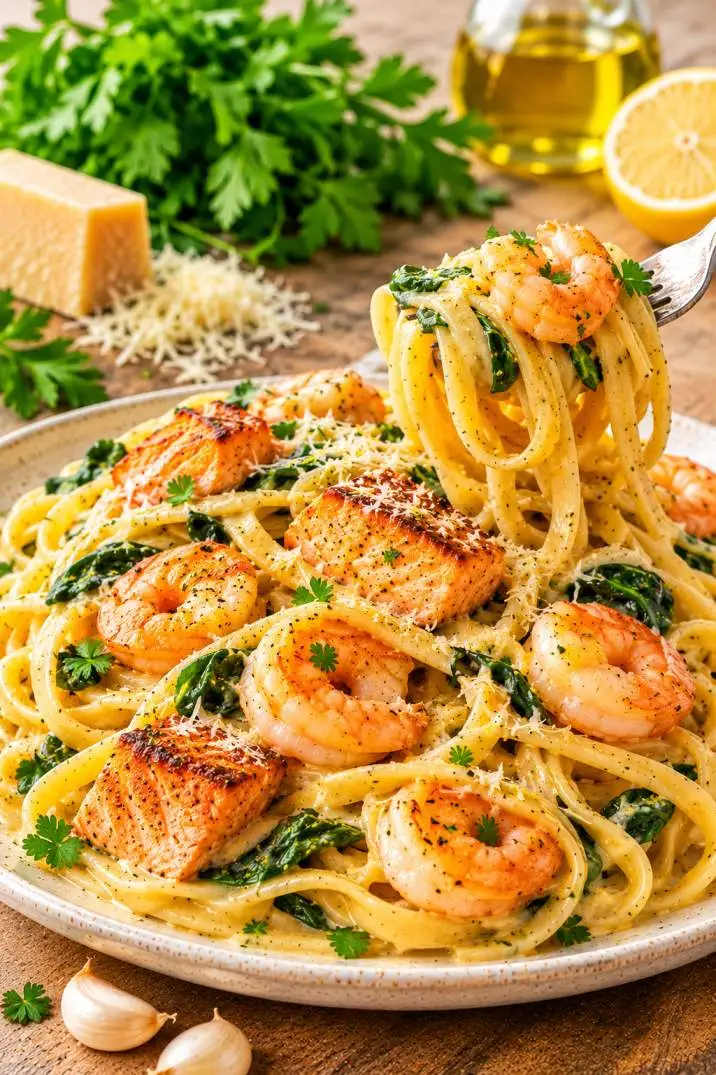
Salmon and Shrimp Pasta (Creamy or No-Cream Version)
Ingredients
How to Make It
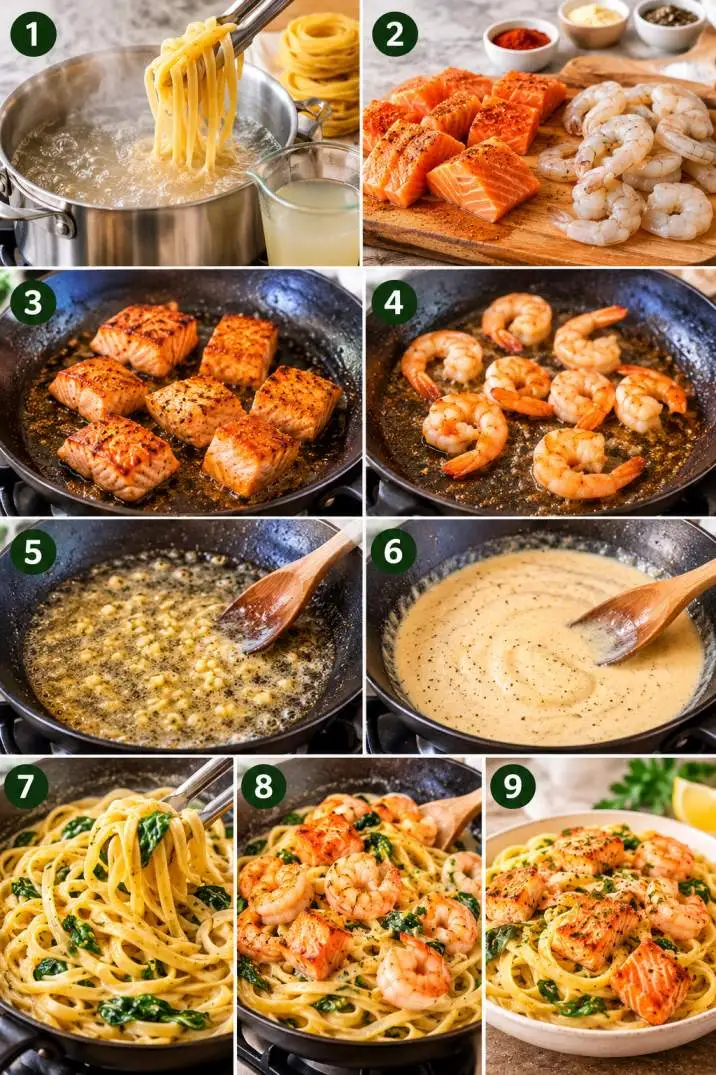
1. Set a big pot of well-salted water over high heat until it’s bubbling hard. Drop in the pasta and pull it off when it’s one minute shy of the timing on the box. Ladle out at least 1 cup of the starchy water before you drain, and park it by the stove.
2. Blot the salmon and shrimp with paper towels until the surface feels dry. Stir the paprika, garlic powder, salt and pepper together and rub the mixture over both.
3. Warm the olive oil in a big skillet over medium-high heat. Lay the salmon pieces in without touching, and sear them about 2 minutes on each side, until golden. They’ll be slightly raw in the middle, which is the plan. Transfer them to a plate. The salmon will finish cooking in the sauce, so check its internal temperature before serving.
4. Using the same skillet, cook the shrimp for 1 to 1½ minutes on each side, until they turn opaque and pearly white and curl into a loose C shape. Transfer them to the plate with the salmon. Avoid overcooking, as shrimp can become rubbery.
5. Turn the flame down to medium-low, then add the butter to the pan and let it melt. Add the garlic and let it sizzle for roughly half a minute, without letting it brown. Pour in the wine, scrape the browned bits off the bottom, and let it bubble for 2 minutes or so, until about half remains.
6. Stir in the cream and keep it at a soft simmer for 3 to 4 minutes, until it’s thick enough to leave a coating on a spoon.
7. Slide the skillet off the heat. Stir in the Parmesan in small handfuls, waiting for each to melt before adding more. Mix in the lemon zest.
8. Add the spinach and the drained pasta, then toss. Splash in some of the saved pasta water, a bit at a time, and keep tossing. Stop when the spinach has collapsed and the noodles wear a glossy coat of sauce.
9. Return the salmon and shrimp to the pan, along with any juices collected on the plate. Fold gently and let everything warm in the sauce. Check the thickest piece of salmon with a food thermometer; it should reach 145°F (63°C). The shrimp should also be cooked through, opaque, and pearly white. Avoid prolonged cooking, which can make both types of seafood tough.
10. Add a squeeze of lemon juice, taste, and fix the salt if needed. Scatter the parsley on top and serve while it’s hot.
The Cream-Free Version
This is my pick for nights when I want something lighter, or the carton in the fridge is empty. The silky texture comes from butter, cheese and the starch in the pasta water, the same principle as the Roman-style sauce in my Alfredo sauce recipe.
What changes: Leave out the cream. In step 5, use 4 tablespoons of butter instead of 2. Once the wine has reduced, remove the skillet from the heat and add 1 cup (about 85 g) of finely grated Parmesan together with the drained pasta. Toss energetically, pouring in pasta water bit by bit (up to 1 cup), until the sauce turns glossy and clings to every strand. Then finish with the lemon, spinach, salmon and shrimp exactly as written above.
One heads-up: this sauce is looser and lighter than the creamy one, and it’s at its best straight from the pan. Keep that pasta water within reach and use it generously.
Where Salmon (and Shrimp) Go Wrong
None of these are hard to avoid once you know what to look for.
Leaving the salmon in too long. This is the classic one. Salmon turns from moist to chalky in a hurry, and here it keeps cooking in the hot sauce too. That’s why it leaves the skillet while the center is still a touch underdone.
Forgetting to dry the fish. Moisture on the surface means steam, and steam means pale, bland seafood. A quick blot with a towel fixes that.
Packing the skillet. Too many pieces at once cool the pan down, and nothing browns. Keep a single layer, and cook in two rounds if your pan is on the small side.
Cooking both together. Shrimp gets tough while the salmon is still catching up. Handle them one after the other, then reunite them at the end.
Melting the cheese over a hot burner. A boiling sauce can turn gritty or greasy once Parmesan goes in. Move the pan away from the heat and stir the cheese in gradually.
Best Flavors and Sauces for Salmon
Lots of combinations work, but a few are almost foolproof: lemon, garlic, black pepper, paprika, and soft herbs such as dill or parsley. That’s the lane this recipe stays in. If you enjoy a little spice, add a pinch of cayenne or swap in a Cajun blend, and the dish moves toward a blackened salmon and shrimp pasta.
As for sauces, a garlic cream sauce like the one above is the cozy choice, while a lemon-butter sauce is the lighter one (and it’s close to the cream-free version here). Either goes well with pasta, so choose based on how the day went.
Salmon or Shrimp: Price and Nutrition
Which costs more? That depends on your store, the time of year, whether the salmon is wild or farmed, and how big the shrimp are, so compare the per-pound prices where you shop. To spend less, look at frozen options. Both frozen salmon fillets and frozen shrimp work well here, and you can let them thaw in the fridge overnight.
Which one is better for you? Honestly, both are solid choices. Salmon is valued for its omega-3 fats, and shrimp is a lean way to get protein. In this dish you get the two together. To make the meal lighter, go with the cream-free sauce and pile in more spinach.
Quick Answers
Is it fine to serve salmon and shrimp in the same dish?
Absolutely. They taste great together. Just give them separate cooking times, because shrimp is done faster than salmon.
Is a cream-free salmon and shrimp pasta possible?
Yes. Use more butter and Parmesan, add plenty of starchy pasta water, and toss away from the heat until the sauce looks silky.
What’s the most common way people ruin salmon?
By overcooking it. Take it off the heat while the middle is barely underdone, and the warm sauce will take care of the rest.
Which spices and herbs flatter salmon most?
Lemon, garlic, pepper, paprika, dill and parsley are reliable. A pinch of cayenne adds heat if you want it.
How should I keep and warm up leftovers?
Transfer leftover pasta to a shallow, airtight container and refrigerate it within 2 hours of cooking. Store it in the refrigerator for 3 to 4 days. Reheat gently in a skillet over low heat with a splash of water or milk, stirring carefully to avoid breaking up the seafood. Heat until the center reaches 165°F (74°C). Avoid repeated reheating, as the salmon and shrimp can become dry and tough.
Your Turn
The next time you’re staring into the fridge on a hectic evening, give this pasta a try and see how fast it comes together. For something that looks this impressive, the effort really is small.
Craving more pasta? My creamy Alfredo sauce is a natural next stop.