Here’s a little secret that surprises almost everyone: the Alfredo sauce you grew up with and the Alfredo that was invented in Rome are two different dishes. They share a name, a fettuccine noodle and a lot of Parmesan. After that, they go their own way.
I love both. The creamy, garlicky, restaurant-style version is what you want on a Tuesday when the day has been long. The Roman one is what you make when you want to feel a little fancy with almost no effort. In this post you’ll get both, plus what to do when the sauce turns grainy, whether milk can stand in for cream, and how to make jarred sauce taste much less like a jar.
Table of Contents
Key Takeaways
- Classic Roman fettuccine Alfredo has no cream. It’s butter, Parmesan and pasta, and the sauce is built from melted cheese and starchy pasta water.
- The creamy American version uses butter, heavy cream, garlic and Parmesan, and it takes about 20 minutes.
- Freshly grated Parmesan and low heat are the two biggest secrets to a smooth sauce.
- Milk works, but you need a little flour or cornstarch to give it body.
- Jarred sauce gets better when you warm it, add fresh garlic and cheese, and toss it with the pasta in the pan.
Wait, There Are Two Kinds of Alfredo?
Yes, and it’s a fun story. The dish is credited to Roman restaurateur Alfredo di Lelio, who is said to have created it around 1908 for his pregnant wife. His version was simple: pasta tossed with butter and Parmesan until it turned silky.
When the dish crossed the ocean and became popular in the United States, cooks adapted it. Heavy cream joined the party, and garlic often followed. That’s the thick, rich sauce most of us picture when we hear “Alfredo”, and it’s what restaurant chains serve.
That also answers a question people ask a lot: what do Italians use instead of heavy cream? Mostly they don’t use anything. The creaminess comes from butter, finely grated cheese and a splash of the water the pasta cooked in. Martha Stewart’s well-known three-ingredient version works the same way. It calls for fettuccine, butter and Parmesan, and it skips the cream entirely.
What’s Actually in Alfredo Sauce?
It depends on which version you’re making. The Roman original needs just butter and Parmigiano-Reggiano. The American version adds heavy cream and usually garlic. Restaurant-style copycats vary quite a bit. Most lean on butter, heavy cream, garlic and Parmesan, and some add Romano, a little flour or cream cheese for extra body. I’m not going to pretend to know any restaurant’s exact formula, but the recipe below gets you the same rich, creamy result.
You may notice there are no onions. Plenty of Italian dishes do start with onion and garlic cooked together, so there’s no strict rule against it. It’s just that Alfredo is a simple sauce. The fewer things you add, the more the butter and cheese get to shine.
Creamy Alfredo Sauce Recipe

Creamy Alfredo Sauce Recipe (Plus the 3-Ingredient Roman Original)
Ingredients
Instructions
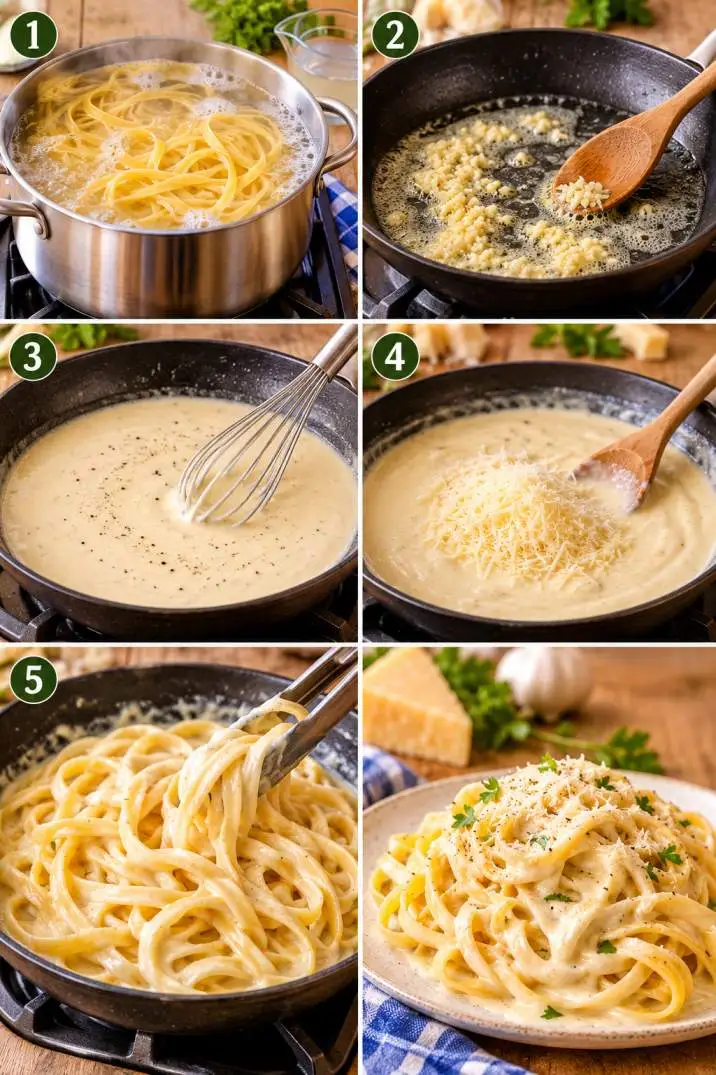
1. Bring a big pot of generously salted water to a boil. Cook the fettuccine until just shy of done, about a minute less than the package says. Save a cup of the pasta water before you drain.
2. While the pasta cooks, melt the butter in a wide skillet over medium-low heat. Add the garlic and stir for about 30 seconds, until fragrant but not browned.
3. Pour in the heavy cream and add the salt and black pepper. Bring the cream to a gentle simmer over medium-low heat, stirring occasionally. Let it simmer for 4 to 5 minutes, until it thickens slightly and coats the back of a spoon. Avoid a rapid boil, which can affect the texture of the sauce.
4. Take the pan off the heat. Add the Parmesan a handful at a time, stirring until each addition melts before adding the next.
5. Add the drained pasta and toss for a minute or so. Splash in pasta water, a little at a time, until the sauce is glossy and clings to the noodles.
6. Taste, add nutmeg if you like, and serve right away with more Parmesan on top.
The Roman Original: 3-Ingredient Alfredo
This is the sidebar for when you have ten minutes and a good wedge of cheese. For two to three servings, cook 8 oz of fettuccine. In a warm bowl or wide pan, combine 4 tablespoons of soft butter with 3/4 cup of finely grated Parmigiano-Reggiano. Add the hot, drained pasta and about 1/2 cup of pasta water. Toss vigorously until it turns silky and creamy. Season with black pepper. That’s it.
Martha Stewart’s version beats the butter and Parmesan together into a paste with an electric mixer first, then tosses it with the pasta. It’s a smart trick for a smooth coating. Fair warning: it’s much richer than you’d expect, so a small plate goes a long way.
The Mistakes That Ruin Alfredo (and How to Fix Them)
I’ve made every one of these, so no judgment here.
Using pre-grated cheese. The bagged stuff often has anti-caking additives that stop it from melting smoothly. Grate a block yourself, as finely as you can. It takes two minutes and makes a huge difference.
Cooking it too hot. If the sauce boils after you add the cheese, it can turn grainy or oily. Take the pan off the heat before the cheese goes in, and keep the burner low.
Dumping the pasta water. That cloudy water is liquid gold. The starch helps the sauce cling to the noodles and loosens a sauce that has gotten too thick.
Letting it sit. Alfredo thickens fast as it cools. Make the sauce right as the pasta finishes, and serve it immediately.
Pouring sauce over plain pasta. Do you just pour Alfredo over pasta? You can, but it’s better to toss the two together in the pan for a minute. The noodles soak up flavor and the sauce coats every strand instead of pooling at the bottom of the bowl.
If your sauce separates and looks oily, remove the pan from the heat. Add 1 tablespoon of warm pasta water or cream and whisk gently until the sauce starts to come together. Add a little more liquid if needed, one tablespoon at a time. This may help restore a smoother texture, although a badly separated sauce may not return completely to its original consistency.
Can I Use Milk Instead of Heavy Cream?
You can, with one honest caveat: it won’t be quite as rich. Milk has much less fat, so on its own it makes a thin sauce. The fix is a little thickener.
Light roux method: Melt 2 tablespoons of butter, stir in 2 tablespoons of flour and cook for a minute. Add the garlic, then slowly whisk in 2 cups of whole milk. Simmer, stirring, until it thickens, about 4 to 5 minutes. Off the heat, stir in 1 cup of finely grated Parmesan and season.
Cornstarch method: Stir 1 tablespoon of cornstarch into 2 tablespoons of cold milk, then whisk it into 2 cups of simmering milk with the butter and garlic. Cook until thickened, then add the cheese off the heat.
Either way, the sauce will be lighter and will thicken as it sits, so keep a little pasta water nearby. It’s a great option when you’re out of cream and don’t want to run to the store.
Adding Shrimp or Chicken
Do you cook the shrimp before you put it in the Alfredo? I’d say yes, and cook it separately. Pat the shrimp dry, season them, and sear for about 2 minutes per side in a hot pan until pink and just cooked through. Set them aside and fold them in at the end, so they don’t turn rubbery while the sauce simmers.
Chicken works the same way. Sear seasoned chicken strips or sliced chicken breast in a hot pan until golden and cooked through. Check the thickest piece with a food thermometer; it should reach 165°F (74°C). Let the chicken rest briefly, then lay it over the pasta or fold it into the sauce just before serving.
How to Make Jarred Alfredo Taste Better
Let’s be honest: some nights a jar is the right call. And do you need to add anything to premade Alfredo? You don’t have to, but a few quick moves make it taste much closer to homemade:
- Warm it gently in a pan instead of microwaving it cold over pasta.
- Sauté a little fresh garlic in butter first, then stir the sauce in.
- Add a handful of freshly grated Parmesan and plenty of black pepper.
- Loosen it with a splash of pasta water, and finish with a pinch of nutmeg or some lemon zest.
Then toss it with the pasta in the pan, as above. It takes five extra minutes and changes the whole dish.
Frequently Asked Questions
What’s the secret to a good Alfredo sauce?
Freshly grated Parmesan, gentle heat, and a little pasta water. Get those three right and the sauce comes out smooth and glossy.
What do Italians use instead of heavy cream?
In the Roman original, they don’t use cream at all. Butter, finely grated Parmigiano-Reggiano and starchy pasta water create the creamy texture.
Can I use milk instead of heavy cream in Alfredo?
Yes. Thicken it with a light flour roux or a little cornstarch, and expect a lighter result than you’d get with cream.
Do I need to add anything to jarred Alfredo?
It isn’t required, but warming it with fresh garlic, a handful of grated Parmesan and a splash of pasta water makes it taste much better.
How do I store and reheat leftovers?
Transfer leftover Alfredo pasta to a shallow, airtight container and refrigerate it within 2 hours of cooking. Store it in the refrigerator for 3 to 4 days. Reheat gently in a skillet over low heat, adding a splash of milk or cream and stirring carefully until warmed through. Avoid high heat, which can cause the sauce to separate. Freezing is not recommended for the best texture because cream-based sauces may separate after thawing.
Your Turn
The next time you’re staring down a pot of boiling water, ask yourself what kind of night it is. A cozy, creamy Alfredo with garlic? Or a quick Roman-style bowl of butter and cheese? Honestly, I think everyone should try both at least once. The difference is a fun surprise.
If you’re in a creamy-pasta mood, my creamy garlic pasta is another weeknight favorite. Save this recipe for your next nacho night or mac and cheese dinner.