Most brown sugar roasted butternut squash recipes share the same two problems: the sugar scorches before the squash is tender, or the whole pan turns out sweet and soft with no real browning. This version avoids both by splitting the roast into two stages. The squash cooks first with oil, salt and cinnamon. The brown sugar goes in for the final stretch, then a squeeze of lemon pulls the sweetness back into balance.
The result is tender cubes with golden, caramelized edges. It is a simple side dish for weeknight dinners and holiday tables alike.
Table of Contents
Key Takeaways
- Add the sugar late. Brown sugar goes on for the last 10 to 15 minutes so it caramelizes without burning.
- Cut evenly. Cubes of ¾ to 1 inch (2 to 2.5 cm) cook at the same pace.
- Give the squash space. One layer, no crowding, or it steams instead of browning.
- Finish with acid. A little lemon juice and zest keeps the dish from tasting flat or cloying.
- Judge by feel and color, not only by the timer.
Why You’ll Love This Brown Sugar Roasted Butternut Squash
It uses a short ingredient list and one sheet pan. It works as a side for roast chicken, turkey, pork or fish, and it holds up on a buffet. It also keeps well for leftovers, which makes it useful for meal prep.
The two-stage method is the main difference from the usual “toss everything together” recipe. Sugar left in a hot oven for the whole roast can darken too fast, especially around small cubes. Adding it late gives you the caramelization without the bitter edges.
Ingredients You’ll Need
Ingredients
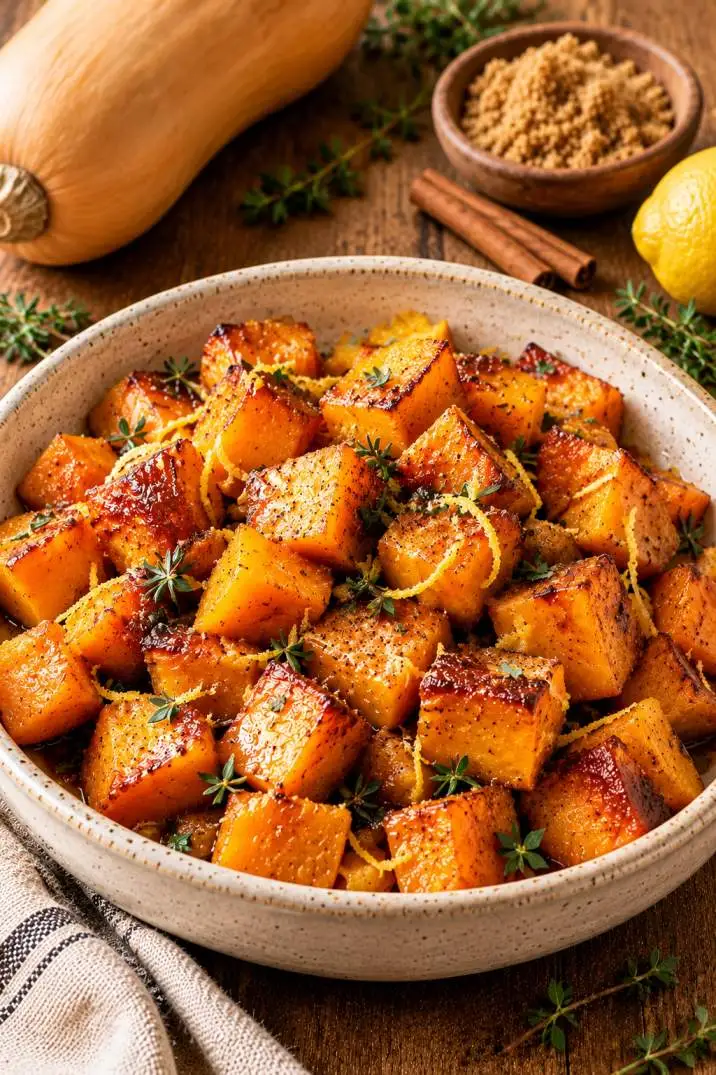
Caramelized Butternut Squash with Thyme
Ingredients
Notes
How to Make Brown Sugar Roasted Butternut Squash
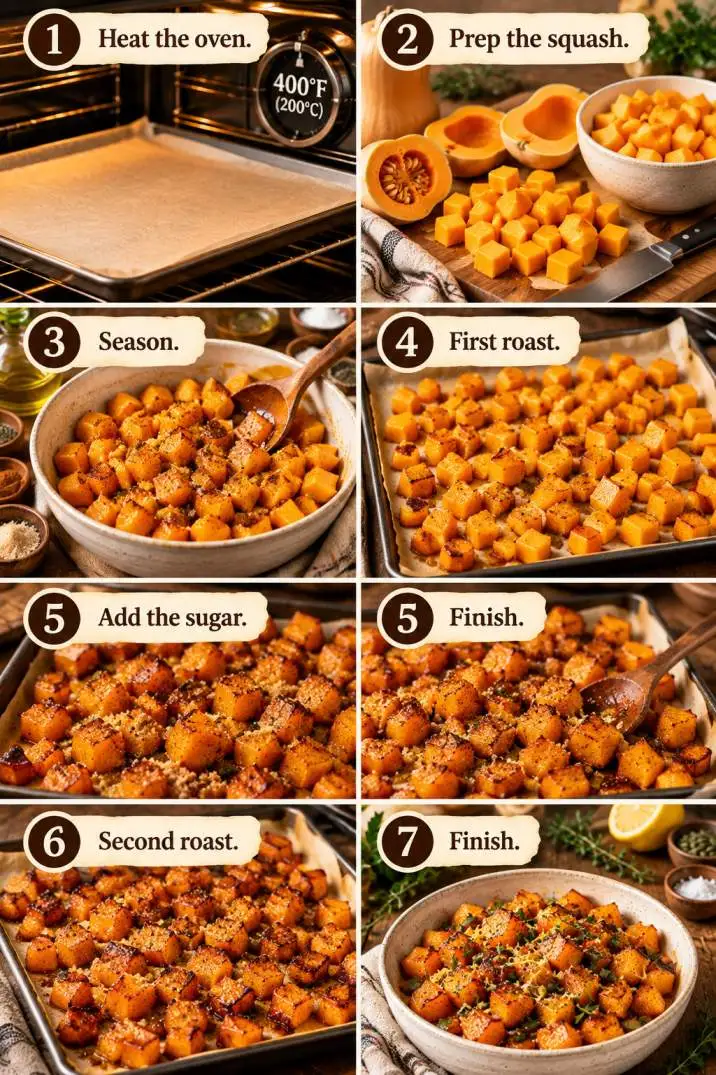
1. Heat the oven. Preheat to 400°F (200°C) and line a large sheet pan with parchment paper.
2. Prep the squash. Peel, halve lengthwise, scoop out the seeds, and cut into even ¾ to 1 inch cubes.
3. Season. Toss the cubes with the oil, salt, cinnamon and pepper until every piece is coated.
4. First roast. Spread in a single layer with space between the pieces. Use two pans if needed. Roast for 15 to 18 minutes, until the edges just begin to color.
5. Add the sugar. Pull the pan out, sprinkle the brown sugar over the squash, flip the cubes and toss gently. Return the pan to the oven.
6. Second roast. Roast another 10 to 15 minutes, checking at the 8-minute mark. The squash is ready when a knife slides in easily and the edges are deep golden. Watch closely at the end, because sugar darkens quickly.
7. Finish. While still hot, toss with the lemon juice and zest. Taste, adjust the salt, and add flaky salt, herbs or seeds before serving.
Tips for Perfectly Caramelized Squash
Don’t crowd the pan. Squash releases moisture as it cooks. If the cubes are packed together, that moisture has nowhere to go and the squash steams. Spacing them out lets it brown.
Keep the cubes the same size. Small pieces burn while large ones are still firm. Consistent cubes cook at the same rate.
Don’t add too much sugar. Two tablespoons is enough for one large squash. More can burn or make the dish cloying. Butternut is naturally sweet, so the sugar should enhance it, not cover it up.
Watch for sugar puddles. If melted sugar pools on the parchment, it can darken before the squash does. Toss the cubes so the sugar clings to them.
Use a fork test. Oven temperature and cube size change the timing. Tenderness and color tell you more than the clock.
Variations and Substitutions
- Dairy-free or vegan: use olive oil. The recipe is also naturally gluten-free as written.
- Richer flavor: swap the oil for melted butter.
- Maple version: maple syrup can replace the sugar, but it adds moisture and changes how the edges brown. Test your own quantity before relying on it.
- Savory twist: skip the cinnamon and use thyme or rosemary instead.
- Other squash: acorn squash or pumpkin can work, but cooking times will differ.
What to Serve with Roasted Butternut Squash
This dish pairs well with roast turkey, chicken, pork and baked fish, and it fits naturally on a Thanksgiving or holiday menu. It also works in a vegetarian meal. Toss leftovers into salads or grain bowls with greens, nuts and a tangy dressing.
Storage and Reheating
Refrigerator: Let the roasted squash cool slightly, then transfer it to a shallow, airtight container and refrigerate within 2 hours of cooking. Store it in the refrigerator for 3 to 4 days.
Reheating: Spread the squash in a single layer on a baking sheet and warm it in a 375°F (190°C) oven until heated through. The edges may not become quite as crisp as when freshly roasted. You can also use a microwave for a quicker option, although the texture will be softer.
Make Ahead: Peel and cube the squash up to 1 day ahead. Store the uncooked cubes in an airtight container in the refrigerator, then season and roast shortly before serving.
Freezing: Freezing is possible, but the squash will soften after thawing. Use frozen roasted squash in soups, purées, or grain bowls rather than expecting the original roasted texture.
Frequently Asked Questions
What temperature is best for roasting butternut squash?
For cubes, 400°F (200°C) is a reliable starting point. Results depend on cube size and your oven.
How long does butternut squash take to roast?
Plan on roughly 25 to 35 minutes total for ¾ to 1 inch cubes at 400°F, then check for tenderness. Treat the time as a guide, not a rule.
Do you have to peel butternut squash before roasting?
For this cubed recipe, yes. Peeling gives an even texture and lets the sugar caramelize directly on the flesh.
How do you keep roasted butternut squash from getting soggy?
Preheat the oven fully, cut evenly, use a single layer, and don’t crowd the pan.
Why add the brown sugar partway through?
Sugar burns more easily than squash cooks. Adding it for the last stretch gives you caramelized edges without the scorched flavor.
Can I use maple syrup instead of brown sugar?
Yes, but it adds moisture and can change the browning, so start with a small amount and adjust.
Final Thoughts
This brown sugar roasted butternut squash is proof that a few simple ingredients can make a memorable side dish. Roasting brings out the squash’s natural sweetness, brown sugar adds caramelized edges, and a little lemon keeps every bite balanced. Serve it fresh from the oven alongside your favorite main dish.
If you try this recipe, leave a comment with your oven temperature, cube size and total roasting time. Those details help other readers adjust it for their own kitchens. And if you enjoyed it, a star rating helps more people find it.
More Squash and Fall Recipes to Try
- Butternut Squash Soup: a smooth, warming way to use more of the same squash.
- Roasted Pumpkin Seeds: a crunchy snack, and a good topping for this dish.