A real Philly cheesesteak doesn’t need much. A pile of thin, juicy beef, onions cooked until soft and sweet, a blanket of melted cheese, and a roll that holds it all together without fighting back. That’s the whole idea, and it’s why the sandwich has lasted so long.
If you’re looking for another comforting beef dinner, try this slow-cooked beef recipe with caramelized prunes and dried apricots, a tender, slow-simmered dish with a sweet and savory finish.
The trouble is that many versions outside Philadelphia miss the mark: tough gray beef, a soggy bun, cheese that never quite melted. This recipe fixes that. It needs one skillet and keeps the classic formula intact: ribeye, onions, provolone, hoagie roll.
Table of Contents
Key Takeaways
- Use ribeye. Its fat is what keeps thin-sliced beef tender and flavorful.
- Chill the steak in the freezer for 30 to 45 minutes so you can slice it paper-thin.
- Cook the beef fast in a hot pan, in batches, so it browns instead of steaming.
- Provolone is the recommended cheese. White American and Cheez Whiz are the traditional alternatives.
- Peppers and mushrooms are optional extras, not part of the core sandwich.
What Makes a Philly Cheesesteak Different From Other Steak Sandwiches?
“Steak and cheese” covers a lot of ground. Plenty of sandwiches use sliced beef and melted cheese, but a traditional Philly cheesesteak is defined by a few specific choices.
The beef is sliced very thin and cooked quickly on a hot flat surface, then chopped or broken up as it cooks, so every bite is tender. The onions are cooked until soft. The cheese is melted directly over the hot meat, not laid on cold. And it all goes into a soft but sturdy roll that can take the juices without falling apart.
What’s missing matters just as much. There’s no lettuce, no tomato, no mayo, and no thick slabs of steak. It’s a simple sandwich, and the simplicity is the point.
A Short Note on Where It Comes From
The cheesesteak was born in Philadelphia. The usual telling goes back to 1930, when Pat Olivieri, a hot dog vendor in South Philadelphia, grilled some beef he’d bought from a butcher. A cab driver caught the smell and asked for a sandwich of it, and before long other drivers were showing up with the same request. Olivieri eventually opened Pat’s King of Steaks at 9th Street and Passyunk Avenue.
Who first added cheese is still argued. Pat’s account credits Olivieri, while Geno’s, which opened across the street around 1966, says its founder, Joe Vento, did it first. I’ll let Philadelphians settle that one.
Prep Time and Cook Time
Ingredients
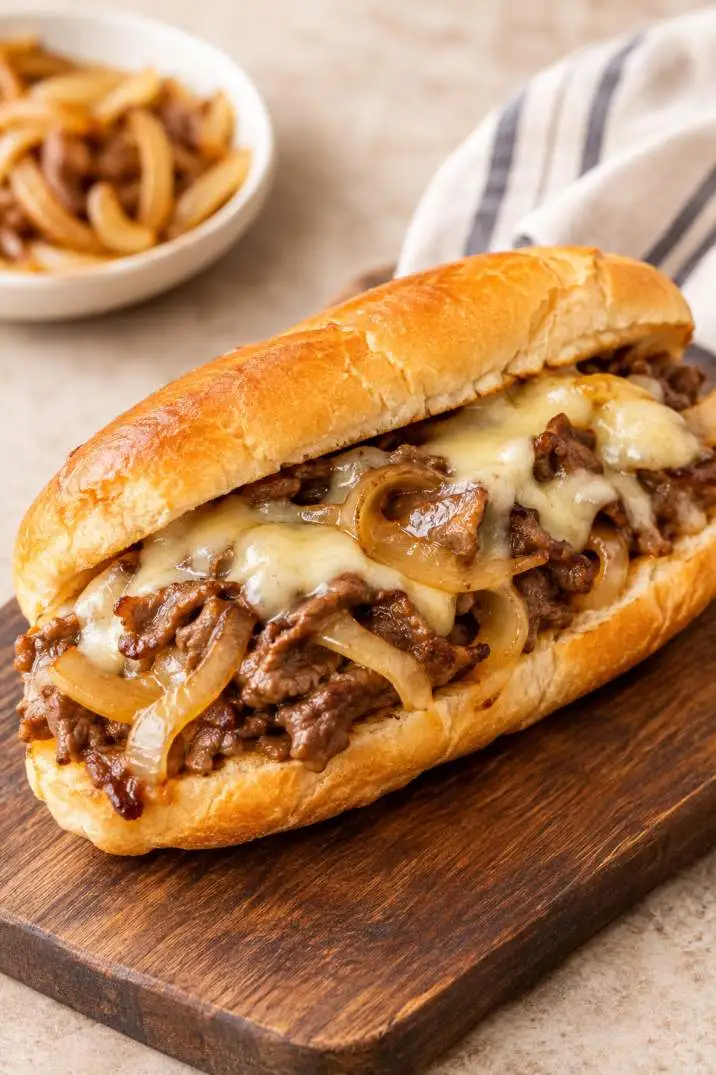
Authentic Philly Cheesesteak
Ingredients
How to Slice Steak Thin Enough for a Cheesesteak
This one step is what separates a tender cheesesteak from a chewy one, and it’s easier than it sounds.
Cut away any thick, hard fat on the outside of the ribeye, but keep the marbling inside. Lay the steak on a plate and put it in the freezer for 30 to 45 minutes. The goal isn’t a frozen block. You want the outside firm and the center still slightly yielding, so the meat holds still while you cut.
With a very sharp knife, slice across the grain into the thinnest pieces you can make, ideally ⅛ inch or less. Perfect slices aren’t required, since the meat gets chopped in the skillet anyway.
No time? Some butchers sell shaved ribeye. Just confirm it’s ribeye and not a leaner cut.
How to Make a Philly Cheesesteak at Home
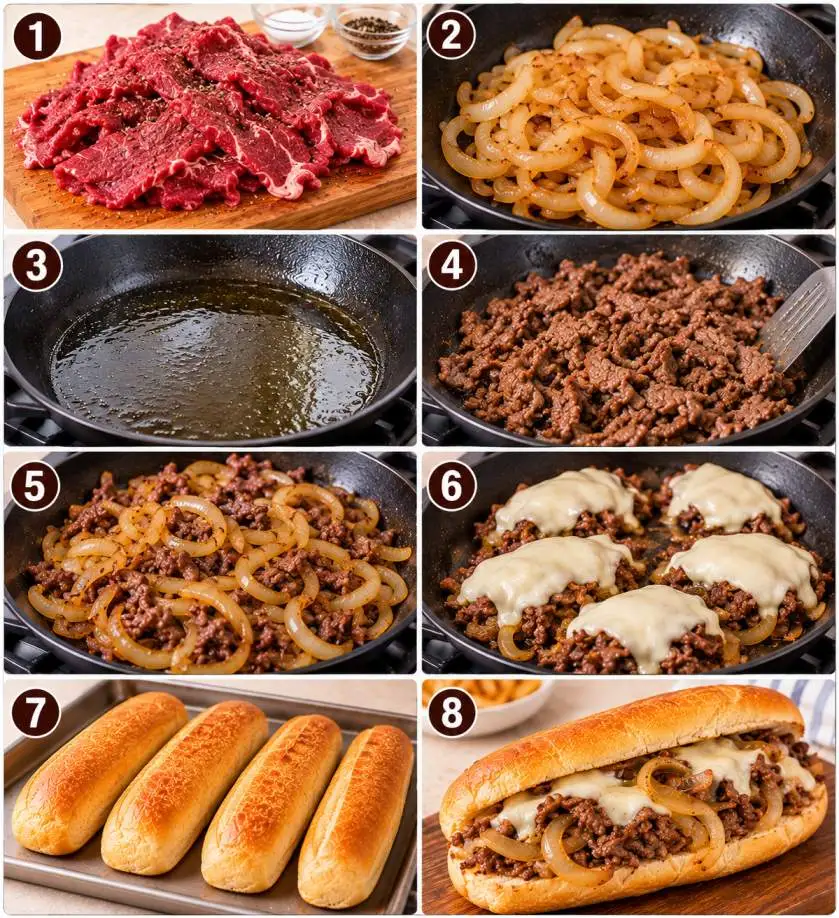
1. Chill and slice. Firm up the trimmed ribeye in the freezer, then slice it very thin against the grain. Toss the slices with ½ teaspoon of the salt and all the pepper.
2. Soften the onions. Melt the butter with half the oil in a big skillet set to medium. Add the onions with the remaining ½ teaspoon of salt and stir every so often for 10 to 12 minutes, until limp and golden at the edges.
3. Get the pan hot. Put the skillet back on the burner, pour in the rest of the oil, and raise the heat to medium-high. Wait until the oil shimmers.
4. Brown the beef in two rounds. Scatter half the slices in an even layer and leave them alone for about 30 seconds so they pick up color. Then chop and turn them with two spatulas for 1 to 2 minutes, until the pink is gone. Stop a touch early, since the cheese will finish the job. Do the same with the second half.
5. Bring it together. Put all the beef and onions back in the skillet, stir for a few seconds, then push everything into four long piles, each about the length of a roll.
6. Melt the cheese. Drape 1½ to 2 slices of provolone over each pile and cover the skillet for 30 to 60 seconds, until the cheese slumps and melts. If the pan looks dry, flick a teaspoon of water along the edge to make steam.
7. Warm the rolls. While the cheese melts, put the split rolls in a 350°F oven for 2 to 3 minutes, long enough to crisp the crust slightly and keep the inside soft.
8. Fill the rolls. Hold an open roll upside down over a pile, slide a spatula under the beef and cheese, and flip the roll right side up so it all drops in together. Eat right away.
Common Mistakes to Avoid
Cutting the steak too thick. Thicker pieces turn chewy. If your slices came out chunky, chop the cooked meat a bit finer.
Buying a lean cut. Lean beef goes dry quickly when it’s this thin.
Cooking the beef all the way before the cheese. Heat from the pan and the melting cheese keeps cooking it, so take it off while it’s just done.
Leaving the pan uncovered. Without a lid or a little steam, cheese can stay firm. One covered minute solves it.
Picking a roll that’s too tender. If it falls apart a few bites in, even great filling won’t save it.
Choosing the Cheese
Provolone is my pick for the main recipe. It melts smoothly, has a mild tang, and holds its own against the beef. Mild provolone is the safe choice, and sharp provolone adds more bite.
White American cheese is a traditional alternative. It’s creamier and milder, and it melts into an almost sauce-like layer, so it suits anyone who likes a softer, gooier sandwich.
Cheez Whiz is the other classic. Warm it gently and spoon it over the meat or inside the roll. Plenty of Philadelphia shops serve it this way. At a classic cheesesteak shop, “wit” means with onions, so “Whiz wit” is Cheez Whiz with onions.
The Roll Matters More Than You Think
A good cheesesteak roll has a tender inside, a thin crust, and enough strength to hold juicy meat. Amoroso’s is a well-known Philadelphia bakery name for this kind of roll, so if you can find it or something similar, use it.
If not, pick up a fresh 8-inch hoagie roll from a bakery counter. Steer away from rolls that are very airy, hard-crusted, or sweet.
Easy Substitutions
- Beef: Top sirloin works if ribeye is too pricey. It’s leaner, so cook it a little less and keep the butter. Shaved ribeye saves time.
- Cheese: Swap provolone for white American or Cheez Whiz, or mix them.
- Rolls: Gluten-free hoagie rolls work. Toast them lightly so they hold up.
If you enjoy hearty beef dinners but prefer a slower cooking method, try this classic beef stew for another comforting meal.
Variations
The classic stays simple, but plenty of people like extras. Green bell peppers and sliced mushrooms are the two most common additions. They’re optional, not essential, so cook them separately with the onions and stir them in when you combine everything. Hot cherry peppers or a few dashes of hot sauce add some heat.
What to Serve With It
Keep sides simple: crispy oven fries, coleslaw, pickles, or a green salad with a sharp vinaigrette to cut through the richness. For something extra comforting, serve your cheesesteaks with these cheesy ranch potatoes, loaded with crispy potatoes and melted cheddar.
Storing and Reheating Leftovers
Store the cooked beef and onions separately from the rolls, in an airtight container in the fridge for up to 3 to 4 days. For longer storage, freeze them for up to 2 to 3 months and thaw overnight in the fridge. Reheat in a skillet over medium heat for a few minutes, add the cheese at the end, and serve on fresh or freshly warmed rolls. Don’t assemble ahead, or the roll turns soggy. Reheat leftovers to an internal temperature of 165°F (74°C) before serving.
Estimated Nutrition Per Sandwich
These are estimates only, calculated from typical ingredient values for the quantities above (one sandwich is one-quarter of the recipe, including the roll and cheese). Brands, roll sizes, and how much fat you trim will change the numbers.
- Calories: about 825
- Protein: about 47 g
- Carbohydrates: about 56 g
- Fat: about 47 g
It’s a hearty sandwich. The fat mostly comes from the ribeye and the cheese. For a lighter version, use less cheese, trim the steak a little more, or choose a smaller roll.
Frequently Asked Questions
Is a Philly cheesesteak really from Philadelphia?
Yes. It’s a Philadelphia sandwich, and the commonly told origin story traces it to a South Philadelphia hot dog stand around 1930.
What is the best cut of beef for a cheesesteak?
Ribeye. Its marbling keeps thin slices juicy. Top sirloin is a decent leaner option.
What kind of cheese is best on a cheesesteak?
Provolone is the recommendation here. White American and Cheez Whiz are the traditional alternatives, and all three are authentic choices.
What bread is best for a cheesesteak?
A soft but sturdy hoagie roll, ideally an Amoroso-style roll, with a thin crust and a tender inside.
Is a Philly cheesesteak healthy?
It’s a rich, indulgent sandwich. A single serving of this recipe is estimated at about 825 calories, so it’s best as an occasional hearty meal.
Final Thoughts
A great Philly cheesesteak isn’t complicated. Slice the ribeye thin, cook it hot and fast, melt the cheese right over the meat, and give it a roll worth eating. Get those few things right and you have a sandwich that tastes like a proper cheesesteak shop made it, right in your own kitchen.