Here’s a sad little story most of us have lived. You make a gorgeous bright green pesto, or you open a good jar. You tip it into a hot pan with your pasta, give it a stir, and watch it turn a dull, swampy brown. The smell of fresh basil disappears, and the oil pools in a greasy puddle at the bottom.
Pesto is one of the simplest sauces in the world, and it’s also one of the easiest to ruin by being too nice to it. The good news is that it takes about 10 minutes to make, and once you know a few rules, you’ll get a vivid, fresh sauce every time.
Table of Contents
Key Takeaways
- Classic pesto is just basil, pine nuts, garlic, olive oil and hard cheese. There’s no cooking involved.
- Don’t heat it. Heat dulls the color, can make the oil separate and turns the cheese stringy.
- Toss pesto with pasta off the heat, loosened with a splash of starchy pasta water.
- Pesto is rich, so a little goes a long way.
- Watch for garlic if you share food with pets, and check the cheese if you have dietary needs.
What Is Pesto Sauce Made Of?
The original pesto comes from Genoa, in Italy’s Liguria region. The classic recipe uses fresh basil, pine nuts, garlic, olive oil and a hard cheese such as Parmigiano-Reggiano, sometimes mixed with Pecorino. The name comes from the Italian word for pounding, because it was traditionally crushed in a marble mortar with a pestle.
That’s the whole list. Nothing in it needs cooking, and that’s exactly why pesto tastes so fresh and grassy.
Easy Homemade Pesto Recipe
Ingredients
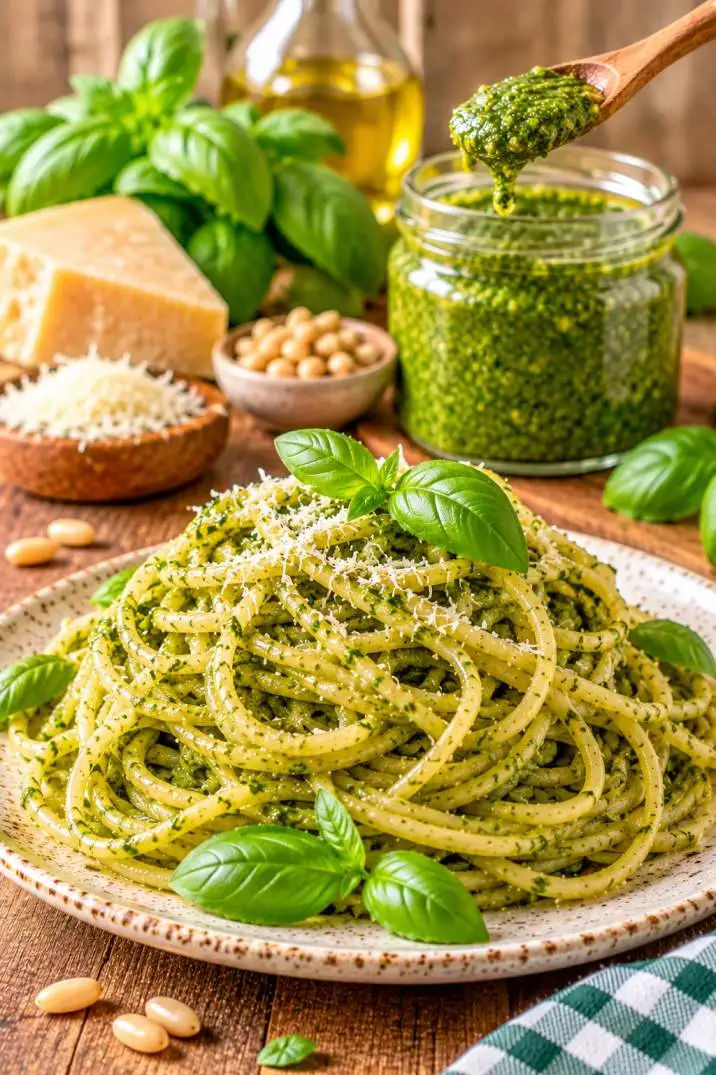
Easy Pesto Sauce Recipe (And How Not to Ruin It)
Ingredients
Instructions
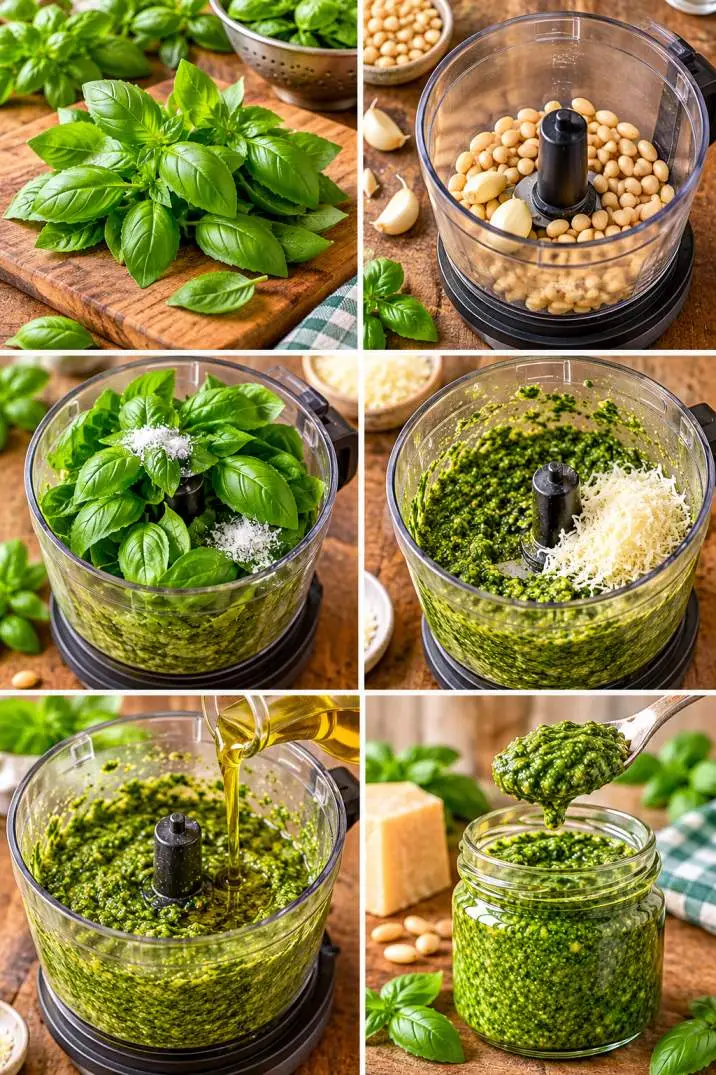
1. Pick the basil leaves off the thick stems. Rinse them and pat them very dry.
2. In a food processor, pulse the pine nuts and garlic a few times until finely chopped.
3. Add the basil and the salt. Pulse in short bursts until the basil is chopped. Don’t run the machine nonstop, because the blade warms the basil and dulls the color.
4. Add the cheese and pulse once or twice.
5. With the machine running on short pulses, drizzle in the olive oil until the pesto is spoonable but still a little textured. Stir in the lemon juice if using.
6. Taste and adjust the salt. Use it right away or store it (see below).
No food processor? A mortar and pestle works beautifully if you have one, and a blender works if you pulse and scrape often. Pine nuts are pricey, so if you’re watching your budget, walnuts or sunflower seeds make a good swap. For a nut-free pesto, just leave the nuts out.
Why Should Pesto Not Be Heated?
This is the question I get asked more than any other, and the answer is simple. Pesto is a raw sauce, and its ingredients don’t like heat.
- The color fades. Fresh basil turns dull and brownish when cooked.
- The texture breaks. The oil can separate from the solids, leaving a greasy, clumpy mess.
- The cheese gets stringy. Instead of melting into the sauce, it can turn gummy.
- The flavor flattens. That fresh, grassy brightness is the first thing to go.
You can still enjoy pesto on warm food. You just add it at the end, off the heat.
How to Mix Pesto Into Pasta (the Right Way)
Do you just mix pesto into pasta? Almost, but there’s one trick that makes all the difference.
- Cook the pasta in well-salted water. Before draining, scoop out about 1/2 cup of the cooking water.
- Put the pesto in a large bowl (not a hot pan) and loosen it with 2 or 3 tablespoons of the warm pasta water.
- Add the drained pasta and toss until every strand is coated. Add more pasta water, a splash at a time, until the sauce is silky.
- Serve right away with a little extra cheese.
The starchy water turns thick pesto into a creamy sauce that clings to the noodles, with no cream needed.
What Do Italians Eat Pesto With?
In Liguria, where pesto was born, the classic pairing is a short, twisty pasta called trofie or a flat, narrow pasta called trenette. And here’s the part that surprises people: it’s traditionally served with potatoes and green beans.
Cooks boil the potatoes, the green beans and the pasta in the same pot, then toss everything with the pesto. The potato starch helps make the sauce creamy, and the vegetables turn it into a complete summer meal. If you can’t find trofie, linguine or fettuccine works well.
What’s the Best Thing to Put Pesto On?
Once you have a jar in the fridge, you’ll find a hundred uses for it:
- Spread it on sandwiches, panini or toast.
- Dollop it on pizza after baking, so it keeps its color.
- Toss it with roasted vegetables or potatoes.
- Spoon it over grilled chicken, fish or eggs.
- Stir a spoonful into minestrone or other soups, off the heat, just before serving.
- Use it as a dip with crusty bread.
Common Pesto Mistakes to Avoid
I’ve made all of these, so no judgment.
Heating it. Covered above, but it’s the number one mistake.
Over-blending. Running the processor too long warms the basil and turns it brown. Pulse, scrape and stop.
Skipping the pasta water. Without it, the pesto sits on the noodles in clumps.
Using too much. Pesto is strong and rich. Start with less than you think you need.
Too much garlic. Raw garlic gets sharper as the pesto sits. One small clove is plenty for most people.
Letting it brown or storing it too long. Basil can oxidize and darken when exposed to air. Transfer homemade pesto to a clean, airtight container, smooth the surface, and refrigerate it promptly. Because this recipe contains fresh garlic in oil, use refrigerated pesto within 4 days. For longer storage, freeze it in small portions. You can leave out the cheese before freezing and stir it in after thawing, if you prefer.
Can I Eat Pesto Straight From the Jar?
Yes. Pesto is meant to be eaten uncooked, so there’s no need to heat it first. If you’ve opened a jar, keep it in the fridge and follow the storage directions on the label. And yes, I know about the spoon-in-the-jar snack. I’ve done it too.
What Makes Store-Bought Pesto Good?
Everyone has a favorite jar, and I won’t pick a brand. But here’s what I look for on the label:
- A short ingredient list, with basil listed first.
- Olive oil rather than a cheaper oil.
- Real cheese.
- A refrigerated jar, if you can find one, since it often tastes fresher than the shelf kind.
To make a jar taste homemade, stir in a squeeze of lemon, some fresh basil and a little extra cheese, and loosen it with pasta water.
Is Pesto Healthy?
It depends on how much you eat. Pesto is made mostly of olive oil, nuts and cheese, so it’s rich and calorie-dense. A spoonful goes a long way for flavor, and jarred versions can be high in salt. As with most rich sauces, portion size matters. If you’re watching your cholesterol or following a specific diet, it’s a good idea to check with your doctor or a dietitian about what works for you.
A Quick Note on Dogs and Dietary Needs
Dogs: Please don’t share your pesto with your pet. It contains garlic, which is toxic to dogs. If your dog gets into some, call your vet.
Dietary needs: The traditional ingredients contain no alcohol or pork. The one thing to check is the cheese. Parmigiano-Reggiano is made with animal rennet, which matters for vegetarians, and Islamic scholars differ on how they view cheese made with animal rennet. If this matters to you, look for a cheese made with microbial or vegetable rennet, or one that carries a halal certification, and check the label on any jar. If you have questions about your own situation, ask someone you trust for guidance.
Frequently Asked Questions
Can I eat pesto straight from the jar?
Yes, pesto is a raw sauce and doesn’t need cooking. Keep opened jars in the fridge.
Do you just mix pesto into pasta?
Almost. Toss it with hot pasta in a bowl, off the heat, and loosen it with a splash of starchy pasta water for a silky sauce.
Why shouldn’t pesto be heated?
Heat dulls the basil’s color and flavor, can make the oil separate and can turn the cheese stringy. Add it at the end, off the heat.
What do Italians eat pesto with?
In Liguria, the classic dish is trofie or trenette tossed with pesto, potatoes and green beans.
How long does homemade pesto last?
Store homemade pesto in a clean, airtight container in the refrigerator and use it within 4 days. For longer storage, freeze it in small portions. If you freeze it without the cheese, stir in freshly grated Parmesan after thawing.
Your Turn
The next time you reach for the pesto, remember the golden rule: go gently. Skip the hot pan, save a little pasta water, and let the basil do the talking. Pair it with freshly cooked pasta, and you can have a flavorful meal on the table in about 20 minutes.
If you’re building a little pasta sauce collection, try my easy marinara sauce or my creamy Alfredo sauce next.