Picture yourself in the grocery store aisle, holding two jars. One says marinara. The other says spaghetti sauce. A third, just beside them, says tomato sauce, and then there’s that carton of passata you were told to buy for a recipe. They’re all red. They’re all tomatoey. So what on earth is the difference?
I’ve stood in that aisle more times than I’d like to admit, and the answers online contradict each other all the time. So here’s the plain-English version, with a quick, fresh-tasting marinara you can make in about 25 minutes. Once you’ve made it, you may never buy the jar again.
Table of Contents
Key Takeaways
- Marinara is a quick, meatless tomato sauce made with tomatoes, garlic, olive oil and herbs.
- Spaghetti sauce is a broader term and often includes meat, onions and a longer simmer.
- Passata is just strained tomatoes. It’s an ingredient, not a finished sauce.
- In the UK and Australia, “tomato sauce” often means ketchup, and “marinara” can mean something with seafood.
- You can use marinara on pizza, with a few small tweaks.
The Red Sauce Cheat Sheet
Let’s clear up the confusion first. Here’s how the most common names compare.
| Sauce | What it is |
|---|---|
| Marinara | Quick-cooked, meatless sauce of tomatoes, garlic, olive oil and herbs. Typically ready in about 30 minutes. |
| Spaghetti sauce | A broad, everyday term. Often seasoned more heavily and sometimes made with meat, onions, carrots or celery. |
| Tomato sauce | In the US, a smooth, cooked tomato sauce (often a plain, mild canned one). In the UK and Australia, usually ketchup. |
| Pizza sauce | Usually smoother and sometimes uncooked, spread thinly on dough. |
| Bolognese / ragù | A meat-based sauce, usually simmered for hours. |
| Napolitana | A tomato sauce without meat or seafood. The term is common in Australia and in Italian restaurants. |
| Passata | Strained, uncooked tomatoes with no seasoning. A base for sauces. |
Is ragù a marinara? No. Ragù is a meat sauce that simmers slowly, while marinara is quick and meat-free. They’re both red, but they’re different dishes.
Why Is It Called Marinara?
The word comes from the Italian for “sailor style”, as in alla marinara. Nobody knows the exact story, and there are several folk tales. One says sailors’ wives made it from pantry basics when the ships came home. Another says it was something sailors could cook quickly on long voyages. What we do know is that it has nothing to do with seafood in the classic version.
That detail trips people up. In Australia, “marinara” often means a tomato dish with seafood in it, like spaghetti marinara. In the US, it means a simple meatless sauce. Same word, different plates.
Easy Homemade Marinara Sauce
Ingredients
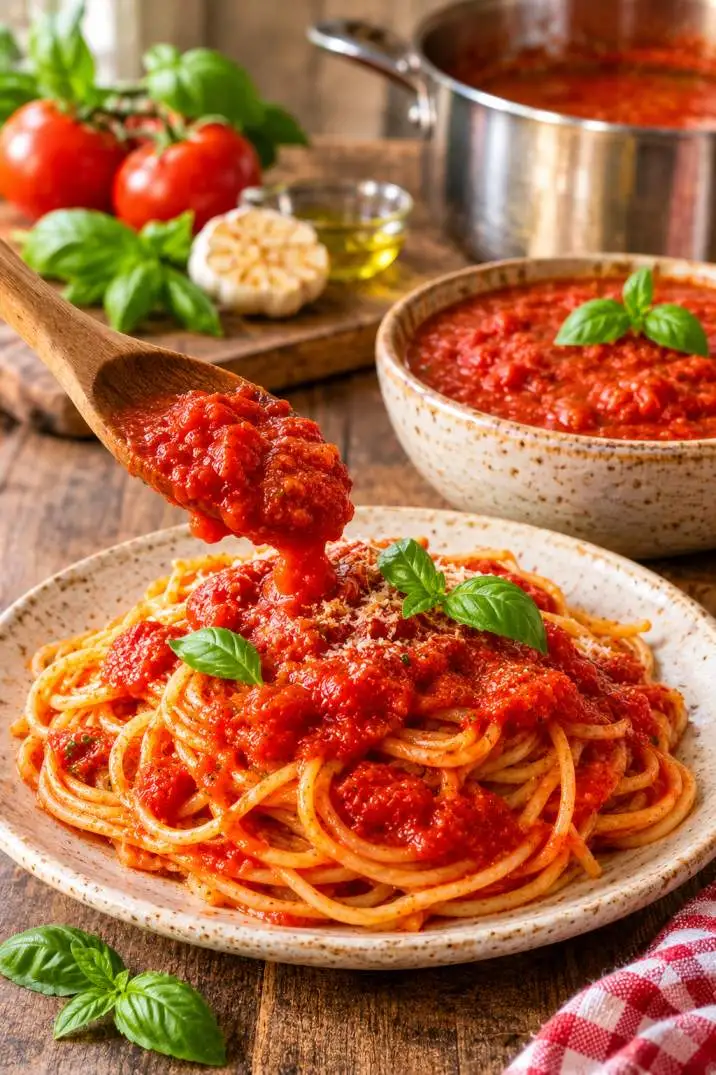
Easy Marinara Sauce Recipe (And What Makes It Different from Every Other Red Sauce)
Ingredients
Instructions
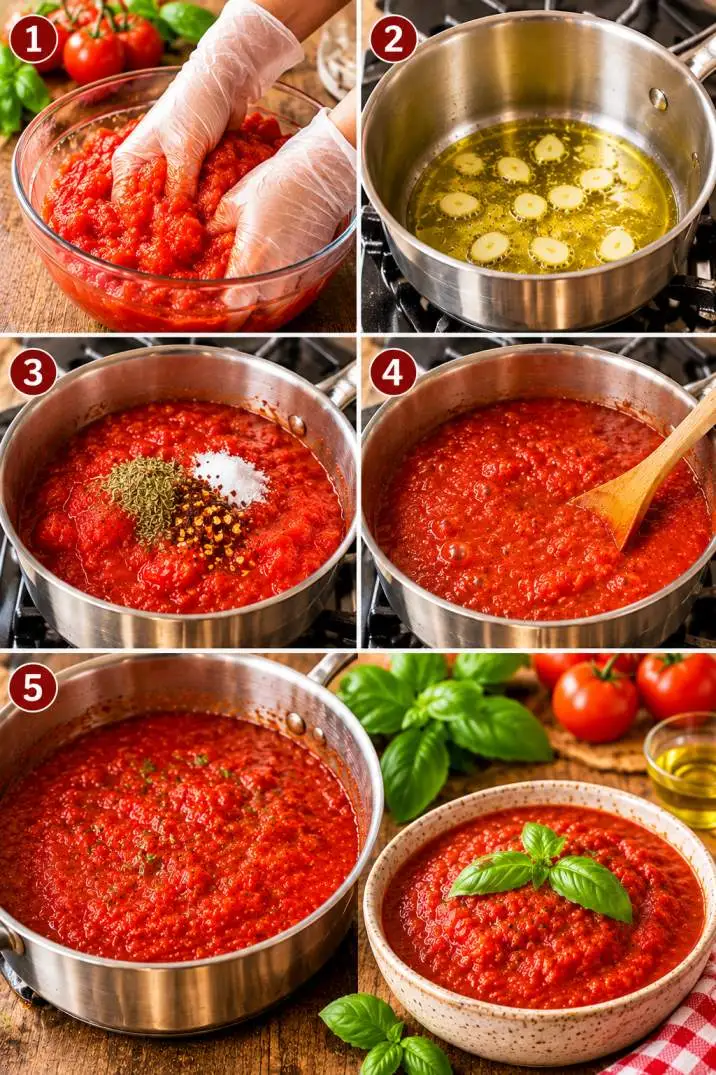
1. Pour the tomatoes into a bowl and crush them with your hands until mostly broken up. It’s messy and kind of fun.
2. Warm the olive oil in a saucepan over medium-low heat. Add the garlic and cook for about a minute, until fragrant. Don’t let it brown, or it turns bitter.
3. Add the tomatoes with their juices, plus the salt, oregano and red pepper flakes.
4. Bring to a gentle simmer and cook uncovered for about 20 minutes, stirring now and then, until the sauce thickens slightly.
5. Taste. Add sugar only if it needs it, and adjust the salt. Tear in the basil at the very end.
That’s the whole thing. What does marinara taste like? Bright, tomatoey and garlicky, with a light herb note. It tastes fresher and cleaner than a long-simmered meat sauce.
Can You Cook Pasta in Marinara Sauce?
Sort of. The best way is to cook the pasta in salted water until it’s about a minute short of done, then finish it in the pan with the sauce and a splash of pasta water. The noodles soak up flavor and the sauce clings to them. Cooking dry pasta entirely in marinara is possible, but it needs extra liquid and some stirring, so I’d stick with the first method.
What Can I Add to Marinara for Spaghetti?
Marinara is a blank canvas. Here are a few easy upgrades:
- Meat: Brown ground beef or Italian sausage first, then add the sauce.
- Vegetables: Mushrooms, spinach or sautéed onions.
- Briny bits: Olives or capers for a punchy, puttanesca-style twist.
- Heat: More red pepper flakes.
- Finish: Grated Parmesan and a drizzle of olive oil.
Add enough meat and a long simmer and you’re heading toward a Bolognese-style sauce. That’s the main difference between the two. Bolognese is built around meat, and marinara is not.
Marinara vs. Tomato Sauce: Can I Substitute?
In the US, tomato sauce usually means a smooth, mild canned sauce. It works as a stand-in for marinara, but it needs help. Simmer it for 10 minutes with olive oil, garlic, oregano and a little salt, and it gets very close.
Which is healthier? Honestly, it depends. Both are tomato-based, and the real difference is what’s added: salt, sugar and oil. Check the label on jars, or make your own so you control what goes in.
Can I Use Marinara on Pizza?
Yes, and plenty of people do. Pizza sauce is usually smoother and often not cooked before baking, while marinara is cooked and can be chunkier. If your marinara is loose, simmer it a few minutes longer so it doesn’t soak the dough, and spread it thinly. Traditional Neapolitan pizza uses a very simple sauce of tomatoes, basil, salt and olive oil, so keeping it simple is a good move.
What About the UK, Australia and Italy?
Here’s where the names get funny.
- UK: “Tomato sauce” generally means ketchup. For a marinara-style sauce, people usually make a quick sauce from passata or canned tomatoes, or buy a jar labeled “pasta sauce”.
- Australia: “Tomato sauce” is also ketchup, “marinara” often means seafood, and a plain tomato sauce is usually called napolitana.
- Italy: What Americans call marinara is often called pomarola or salsa di pomodoro alla napoletana.
Passata deserves its own note. It’s simply strained tomatoes, with no seasoning, and it’s common in the UK, Europe and Australia. It makes a great shortcut. Simmer it with garlic, olive oil and herbs and you have marinara.
Frequently Asked Questions
Is marinara sauce the same as tomato sauce?
Not exactly. Marinara is a seasoned, quick-cooked sauce with garlic and herbs. In the US, plain tomato sauce is smoother and milder, and in the UK and Australia the term usually means ketchup.
What do you use marinara sauce for?
Pasta, pizza, dipping breadsticks and mozzarella sticks, chicken or eggplant Parmesan, and as a base for soups and meat sauces.
Can I use marinara sauce for pizza?
Yes. Spread it thinly, and simmer it a bit longer first if it’s watery.
What’s the difference between marinara and Bolognese?
Bolognese is a meat sauce that simmers for hours. Marinara is meatless and ready in about half an hour.
How long does homemade marinara last?
Store homemade marinara in a clean, airtight container in the refrigerator for 3 to 4 days. Refrigerate it within 2 hours of cooking. For longer storage, freeze it in airtight, freezer-safe containers for up to 3 months. Thaw frozen sauce in the refrigerator before reheating.
Your Turn
The next time you’re staring at that wall of jars, remember this: marinara is simply a fast, bright tomato sauce, and you already have the pantry skills to make it. In just 25 minutes, with one can of tomatoes and a few pantry staples, your kitchen can smell like an Italian restaurant.
If you want something richer, try my creamy Alfredo sauce or my creamy garlic pasta next.