Last stop of every pumpkin-carving session: a bowl of orange goo with seeds floating in it. Most people tip it straight into the bin. That’s a shame, because inside that mess is a toasty, salty, addictive snack that costs you almost nothing.
The catch is that the advice online contradicts itself. One site swears by an overnight soak, the next says boil, the third says never touch water. After a few soft, leathery batches, it’s easy to give up. So here’s a straight account of what each step does to the seed, which ones earn their place, and how to end up with a bowl you can’t stop snacking on.
Table of Contents
Short Answers First
- Washing off the pulp is non-negotiable, because leftover strands burn.
- A salty simmer is a bonus step that seasons the seed all the way through.
- Moisture is the enemy of crunch, so the seeds must be bone dry before they go in the oven.
- Gentle heat, about 325°F (165°C), beats a blast of high temperature.
- Chewy seeds nearly always mean too much water or too little room on the tray.
Washing, Soaking, Simmering: Which Ones Matter?
Washing comes first. Pumpkin pulp is stringy and full of sugar, so whatever stays on the seeds will blacken and taste bitter. Swish the seeds around in a big bowl of cool water, rub them between your fingers so the fibers float away, then tip everything into a strainer.
Soaking is a nice-to-have. A saltwater bath adds a hint of seasoning, but it won’t make a seed crunchier.
Simmering is the step I’d recommend if you have ten spare minutes. Seeds cooked briefly in heavily salted water absorb seasoning through the shell, so the flavor goes beyond the surface. Plenty of cooks also say it softens the hulls enough to make them pleasant to chew. In a hurry? Skip it.
The Step That Decides Everything: Getting Them Dry
Think about what happens when you put wet food into a hot oven: it steams. Seeds that steam never develop that brittle, toasty crunch. They stay soft, and they look pale and tired.
Tip the washed seeds onto a dishcloth or a few paper towels and blot them firmly, rolling them around so every side gets touched. Then leave them alone for 20 to 30 minutes. You don’t need to wait overnight. If you’re in a rush, a short stint in a 200°F (95°C) oven for 10 to 15 minutes does the same job, as long as you give them a shake once. They’re ready when a seed feels dry and slightly papery between your fingers.
Ingredients
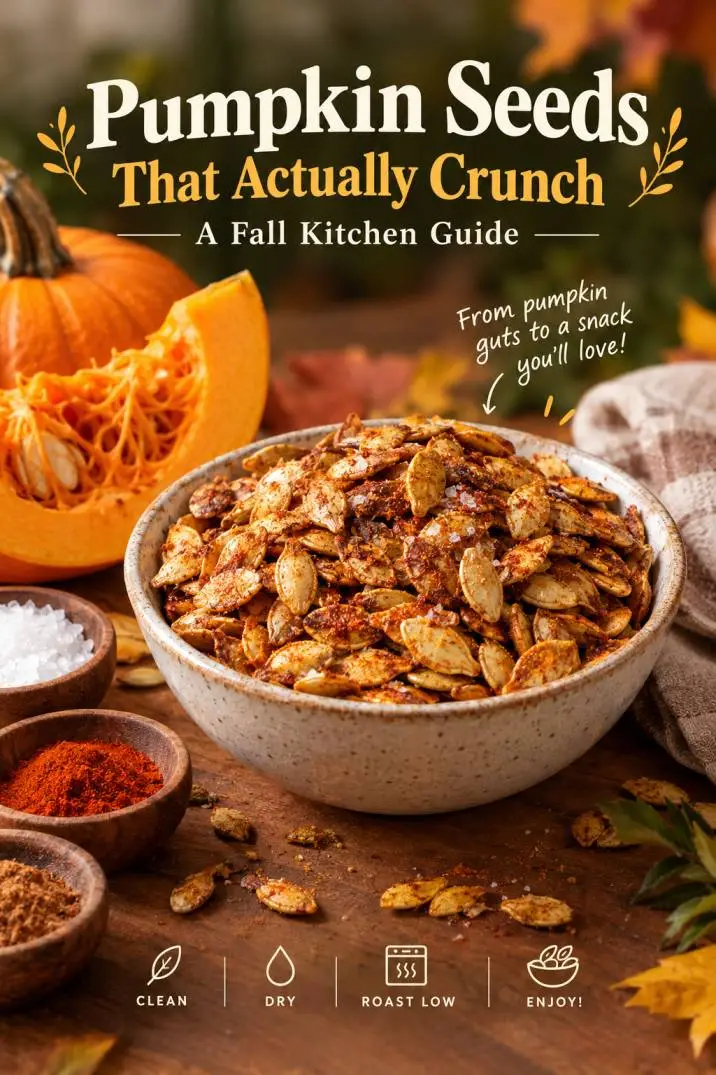
Pumpkin Seeds That Actually Crunch: A Fall Kitchen Guide
Ingredients
How to Do It, Start to Finish
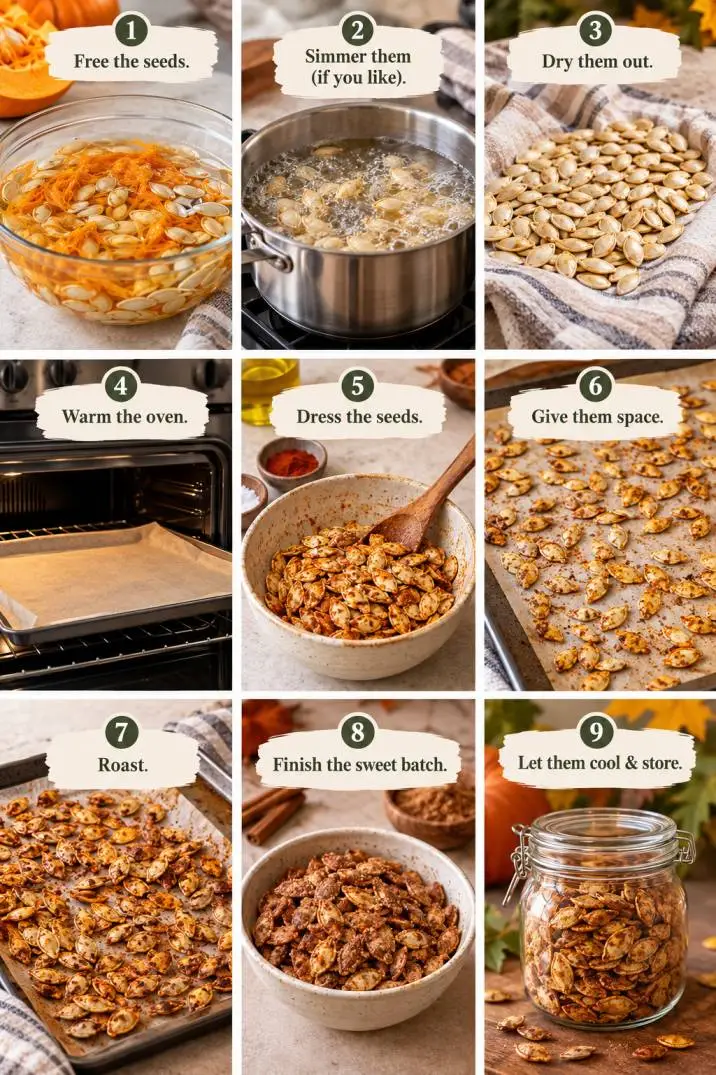
1. Free the seeds. Work them loose from the pulp in a bowl of water, then drain.
2. Simmer them (if you like). Bring the salted water to a boil, add the seeds, and let them bubble for about 10 minutes. Drain well.
3. Dry them out. Blot the seeds on a dishcloth and let them rest until they’re dry to the touch, 20 to 30 minutes.
4. Warm the oven. Preheat the oven to 325°F (165°C). Line a rimmed baking sheet with parchment paper.
5. Dress the seeds. Divide the dried seeds into separate batches if making both flavors. For the savory batch, toss the seeds with the olive oil or melted butter, fine salt, garlic powder, smoked paprika, and black pepper. For the sweet batch, toss the seeds with the oil or melted butter and a small pinch of salt. Save the brown sugar and cinnamon for after roasting.
6. Give them space. Scatter them across the tray so they sit one seed deep and barely touch. Use two trays if one looks crowded.
7. Roast. Bake for 25 to 35 minutes, shaking or stirring the tray every 10 minutes, until the seeds smell nutty and have turned a light toasty tan.
8. Finish the sweet batch. While the seeds are still hot, toss them with the brown sugar, cinnamon, and salt so the sugar melts onto them without scorching.
9. Let them cool completely. They firm up as the temperature drops, so wait at least 15 minutes before tasting.
10. Store. Let the roasted seeds cool completely before storing them in a clean, airtight jar or container. Keep them at room temperature in a cool, dry place and enjoy them within 1 week for the best crunch. Make sure they are completely cool before sealing to prevent trapped moisture from making them soft.
Troubleshooting: Chewy, Tough, Pale, or Burnt
- Chewy: Too much moisture or too little time in the oven. Dry them longer and extend the roasting a few minutes.
- Tough: Some pumpkin varieties naturally have thicker, tougher shells. Simmering the seeds in salted water before roasting may help soften the hulls slightly. Avoid over-roasting, which can make the seeds too hard.
- Pale and soft: They steamed. Make sure they’re dry and spread thinly.
- Dark specks and a bitter taste: Bits of pulp scorched. Wash them more thoroughly next time.
What You’re Actually Eating
Pumpkin seeds pack a lot into a small handful: protein, healthy fats, and minerals like magnesium, zinc, and iron, plus fiber if you eat the shells. That makes them a smart snack, as long as you remember they’re dense in calories and that salt adds up fast.
As for the claim that they lift your mood, the truth is more modest. They contain nutrients the body uses in mood-related processes, but a snack isn’t a treatment for how you feel. Enjoy them as part of a balanced diet, and keep to a small handful at a time.
Quick Questions, Quick Answers
Do I eat the shell?
You can. Roasted shells are safe and add fiber and crunch, and most people simply chew them thoroughly. If you dislike the texture, look for hulled seeds (pepitas), which come without a shell.
Are raw seeds okay, or is roasted better?
Raw seeds are safe to eat, but roasting brings out a deeper, nuttier taste and a much crisper bite. Raw seeds from the store can also go in your oven at home.
Must the seeds dry overnight?
No. Half an hour is plenty. The test is how they feel, not how long they waited.
Can my dog have some?
A few plain, unsalted seeds are generally considered fine for dogs. Anything seasoned is a no, especially with garlic powder, which is harmful to them. Ask your vet if you’re unsure.
Over to You
If you remember only one thing, make it this: wash them, dry them, and roast them low. Those three habits turn leftover pumpkin guts into a snack you’ll start looking forward to every October.