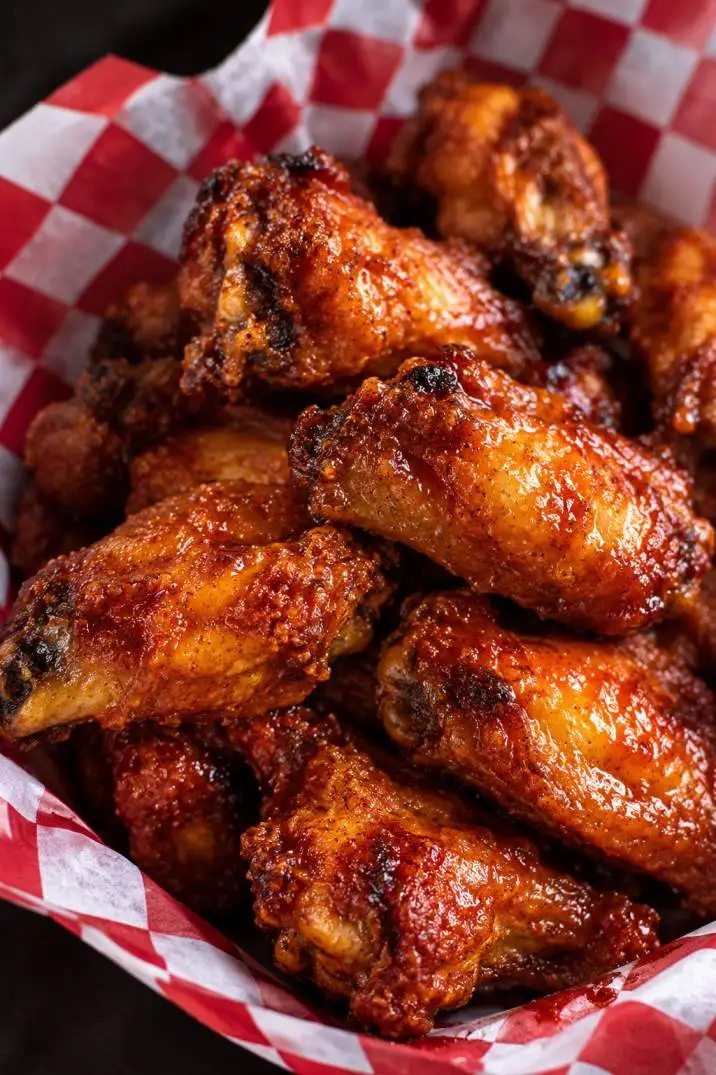
Picture a platter of wings arriving at the table on game day. One version is lacquered in tangy orange sauce with skin that crackles when you bite it. The other is pale, a little rubbery, and sitting in a puddle. If you’ve ever made both, you know the sauce had very little to do with it.
What separates the two is how the skin is handled before it goes into the oven and what happens the moment it comes out. Below you’ll find the full method, plus a quick glaze made from pantry staples that comes together while the wings finish. I’ll also settle the debates that never seem to die: sauce before or after, 350°F or 400°F, covered or uncovered, soaked or not.
Table of Contents
The Short Version
- An oven can match a fryer if the wings are bone dry, lightly dusted with baking powder and baked hot.
- Add the sauce once the wings are out of the oven, while they’re still steaming.
- Cook them uncovered on a wire rack at 425°F (220°C). Gentler heat leaves the skin tough.
- The glaze needs only hot sauce, butter, a little vinegar and garlic powder, and the butter amount sets the heat.
- No oven? There’s an air fryer method below, plus a short note for deep frying.
What Makes a Buffalo Wing a Buffalo Wing?
“Chicken wing” names the cut of meat. “Buffalo wing” describes how it’s served: cooked until crisp, then coated in a tangy, buttery sauce built on cayenne pepper. The name nods to the city of Buffalo, New York, where the dish is said to have started.
The version most people repeat gives the credit to Teressa Bellissimo, who ran the Anchor Bar, and dates it to 1964. One account says a supplier sent wings by mistake when chicken necks had been ordered for spaghetti sauce. Another says she made a late-night snack for her son and his friends. In both, the first sauce supposedly combined cayenne pepper, vinegar, garlic and margarine, and the wings landed on the plate with blue cheese and a celery stick, because those were the items sitting in the kitchen. Wings were then usually saved for making stock, which is why selling them as a snack was a novelty.
Exactly how it all happened is still up for debate, and no one can settle it for certain. What we do know is that crisp skin plus tangy, buttery heat was a winning idea that never went out of style.
How an Oven Gets Wings Crispy
Chicken skin holds a lot of water and a lot of fat. To crisp up, it has to lose the water as steam and let the fat melt out, and a deep fryer does both in minutes. Your oven can manage the same thing, as long as you start with dry skin and give it plenty of heat.
Baking powder is the quiet helper here. It’s mildly alkaline, which encourages deeper browning and helps the skin form small bubbles as it cooks, and those bubbles turn into crunch. Pick an aluminum-free brand, because the aluminum versions can leave a slight metallic taste.
Temperature does the rest. At 350°F (175°C) the fat melts out slowly and the surface never quite dries, so the skin turns chewy. At 425°F (220°C) the surface dries and crisps before the meat has time to dry out.
Your Shopping List
- Chicken wings. Party wings come already separated. If you start with whole wings, cut through each joint and keep the pointy tips for stock.
- Aluminum-free baking powder and kosher salt. Together they give the skin its crunch.
- Garlic powder, paprika and black pepper. A light seasoning, since the sauce carries most of the flavor.
- Cayenne-based hot sauce. Many cooks use Frank’s RedHot, and any vinegary cayenne sauce will do.
- Unsalted butter. It softens the heat and gives the sauce its shine.
- White vinegar and a pinch more garlic powder. They sharpen the tang and add depth.
- Celery, carrots and a dip. Blue cheese or ranch are the classics, and they put out the fire.
Crispy Baked Buffalo Wings Recipe
Ingredients
Crispy Baked Buffalo Wings
Ingredients
Instructions
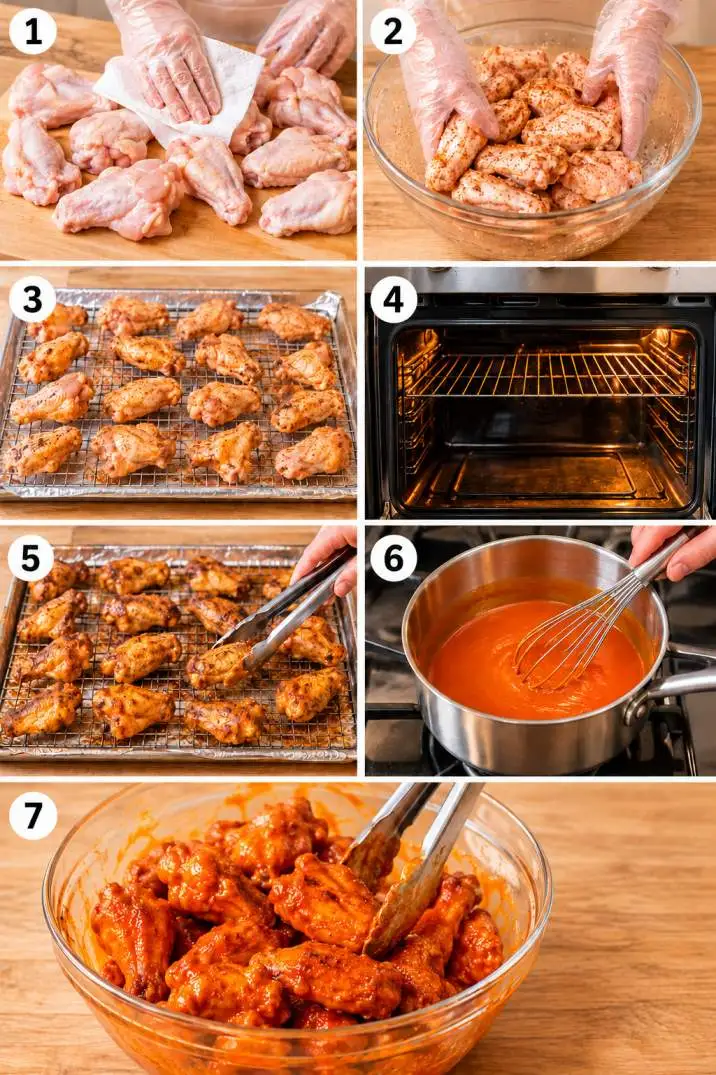
1. Blot them dry. Press paper towels against each wing until the skin feels tacky rather than damp, and repeat if any wetness remains. Nothing else in this recipe affects the crunch as much as this.
2. Add the dry coating. Drop the wings into a big bowl and scatter the baking powder, salt, garlic powder, paprika and pepper over them. Turn them with your hands until a thin, even film covers every wing, with no pasty patches.
3. Set them up. Space the wings out on a wire rack sitting inside a foil-lined baking sheet. When time allows, refrigerate the tray uncovered for an hour so the skin dries even more. If you’re in a hurry, go straight to the oven.
4. Heat the oven. Put a rack in the upper third and bring the oven to 425°F (220°C).
5. Bake in two stages. Cook for 20 minutes, flip each wing with tongs, then bake 20 to 25 minutes more, until the skin is deep golden, bubbly and crisp. The thickest pieces need to reach 165°F (74°C) at a minimum, though I like to push them toward 175°F (80°C).
6. Stir up the glaze. As the wings finish, melt the butter in a small pan over low heat, then whisk in the hot sauce, vinegar and garlic powder. Warm it gently for 2 to 3 minutes until smooth, and keep it below a boil so the butter doesn’t split.
7. Coat and eat. Move the hot wings to a large bowl, pour the sauce over them, and toss until glossy all over. Bring them to the table right away with celery, carrots and your favorite dip.
Pick Your Heat
- Mild: Use 8 tablespoons (1 stick, 113 g) of butter with the same ½ cup of hot sauce. It’s rounder, richer and easy on the tongue.
- Medium: The recipe as written, with a bright tang and a slow, steady burn.
- Hot: Cut the butter to 2 tablespoons and stir in ¼ teaspoon of cayenne pepper. The sauce gets thinner, sharper and much spicier.
If You’d Rather Use an Air Fryer or a Fryer
Air fryer: Season the wings the same way. Cook them in one layer at 400°F (200°C) for about 20 minutes, turn them over, and give them another 5 to 8 minutes until crisp and cooked through. Large batches may take two rounds. Toss them in the warm sauce right out of the basket.
Deep frying: Leave out the baking powder and any flour, and make sure the wings are dry. Fry in batches at 375°F (190°C) for 10 to 12 minutes, until golden and cooked through. Let them drain for a moment on a rack, then coat them in sauce while they’re hot. For a breaded, extra-thick style, try our crispy fried chicken drumsticks, which rely on a buttermilk coating.
Health, Gluten and Labels
Wings are party food, and baking them takes a lot less oil than frying. This version has no flour in it, so it can work for people avoiding gluten, but read the labels on your hot sauce and baking powder to be certain.
What Goes on the Side
Celery and carrot sticks are the usual partners, and blue cheese or ranch dip is the cooling counterpoint. For something heartier, our roasted vegetables guide has plenty of side dish ideas. Keep plenty of napkins within reach.
How to Store and Reheat Buffalo Wings
Let leftover wings cool slightly, then place them in shallow, airtight containers and refrigerate within 2 hours of cooking. Store them in the refrigerator for 3 to 4 days. To reheat, arrange the wings on a wire rack over a baking sheet and warm them in a 375°F (190°C) oven until heated through and the skin is crisp again. Make sure the internal temperature reaches 165°F (74°C) before serving.
Buffalo Wings FAQ
Should buffalo sauce go on before or after baking?
Afterward. Sauce brushed onto raw wings turns the skin soggy and can burn on the pan. Bake until crisp, then coat the hot wings in warm sauce just before they hit the table.
What is the best oven temperature for crispy baked wings?
For this recipe, 425°F (220°C) gives the wings their signature crispy skin. A lower temperature may require a longer cooking time and may not produce the same crisp texture. Always check that the thickest wings reach at least 165°F (74°C) internally.
Do I need to soak wings first or dredge them in flour?
Not for this method. Soaking only adds moisture, which works against crisp skin. Flour belongs to the breaded, fried style, and baking powder already gives you crunch without it.
Should wings be baked covered or uncovered?
Uncovered. A lid or foil traps steam and softens the skin, and the wire rack lets hot air flow under the wings so the bottoms crisp too.
What’s the difference between chicken wings and Buffalo wings?
Chicken wings are simply the cut of meat. Buffalo wings are wings cooked until crisp and then tossed in a tangy, buttery cayenne sauce.
Why do wings from restaurants often taste better?
Usually it’s technique: fierce heat that crisps the skin, then a sauce that goes on at the last second while the wings are still piping hot. A hot oven and a warm butter glaze get you very close at home.
Ready for the Next Big Game?
The formula is easy to remember: dry skin, baking powder, a hot oven, sauce at the end. Once it’s second nature, you can play with the heat level, switch to the air fryer, or try a new dip without changing the method.
Make a batch this weekend and save the recipe for the next big game. If you’d like another chicken dish for the same table, take a look at our crispy fried chicken drumsticks.