Homemade pepperoni pizza goes wrong in a handful of familiar ways. The center stays pale and droopy. The pepperoni lies flat, floating in a puddle of orange grease. And when you lift a slice, all the cheese slides off in one sheet and lands on your plate.
The toppings aren’t the culprit. It’s the oven temperature, the amount of sauce and the cheese you pick. Fix those three, and even a plain pepperoni pizza comes out with a crunchy base, a bubbling top and pepperoni that curls into little browned cups.
Table of Contents
The Short Version
- Heat a pizza stone or steel for a full hour at your oven’s top temperature.
- Use a thin layer of sauce: roughly ⅓ cup for each 12-inch pizza.
- Grate low-moisture mozzarella from a block. Fresh mozzarella and bagged shreds act differently.
- Lay the pepperoni over the cheese with gaps between the slices so the edges can curl and crisp.
- Let the dough rest in the fridge for 1 to 3 days. It tastes better and stretches more easily.
Why Use a Pizza Stone or Steel?
No home oven can copy a pizzeria’s deck oven, but a stone or steel comes surprisingly close. Both soak up plenty of heat and pass it directly into the underside of the dough, which is how you get a crisp, browned bottom rather than a soft one.
Steel moves heat faster, so it browns the base sooner. Stone is a bit gentler and more forgiving. Whichever you use, give it a long preheat. A hot oven with a cold stone gives you a pale, limp crust.
How to Make Pepperoni Curl and Crisp
Pepperoni is a cured, spiced sausage, and as it bakes the fat inside melts out. If the slices sit on top of the cheese with a little room around each one, their edges dry, curl upward into small cups and darken. If they’re crowded together or hidden under the cheese, they steam and turn greasy.
Some pepperoni is cut thicker, and some comes in a natural casing, which cups even more. You’ll often see it sold as “cup and char” or “old world” pepperoni. This recipe doesn’t need it, but it’s fun to try if you spot it. Regular thin slices work well too.
Which Pepperoni Should You Buy?
Many shops carry beef pepperoni and turkey pepperoni as well as the classic kind, and some carry halal-certified versions. I make this pizza with beef or turkey pepperoni, so it’s pork-free. Whichever you pick, check the label, because the type of meat is listed there.
Three Habits That Prevent a Soggy Pizza
Keep the sauce thin. Too much sauce soaks into the dough and stops the middle from browning. A light coating is enough, and it keeps the tomato flavor fresh.
Choose low-moisture mozzarella. Fresh mozzarella is wonderful on other pizzas, but it releases a lot of water. Low-moisture whole-milk mozzarella melts nicely and stays where you put it.
Blot the pepperoni. Pressing the slices gently with a paper towel lifts off a little surface grease before baking. You don’t have to, but it helps if your pepperoni is very oily.
Homemade Pepperoni Pizza (Makes Two 12-Inch Pizzas)
This pizza uses a simple dough that rests in the fridge, an uncooked tomato sauce and low-moisture mozzarella. It bakes on a blazing-hot stone or steel until the crust is crisp and the pepperoni is curled and browned at the edges.
Ingredients
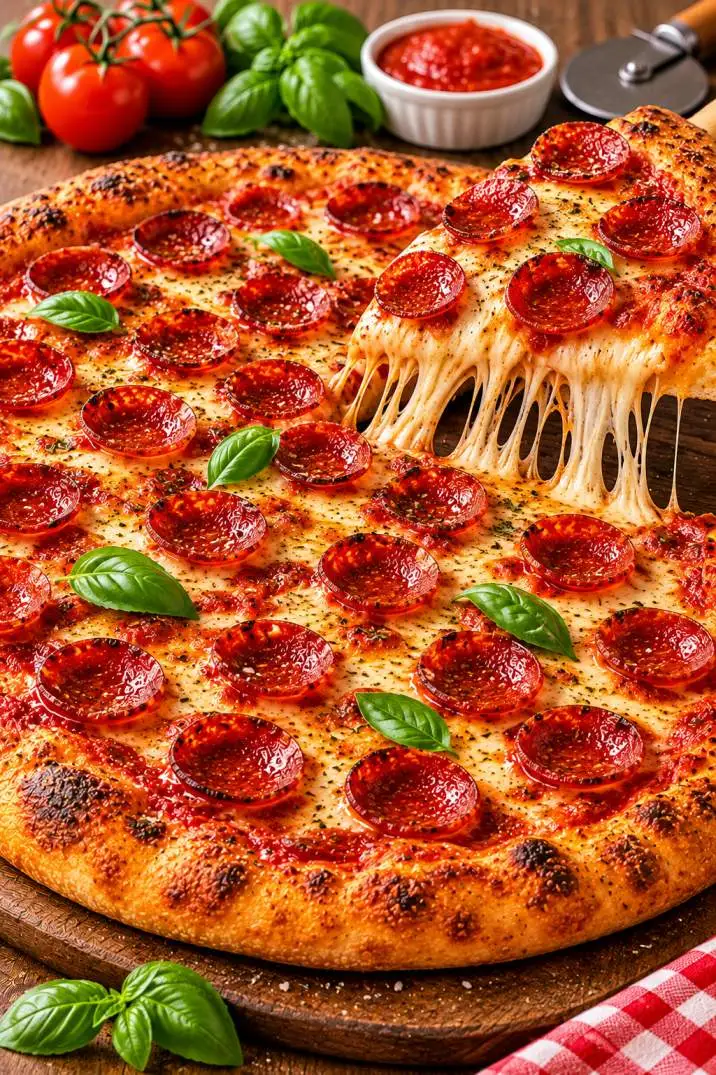
Homemade Pepperoni Pizza
Ingredients
Notes
Method
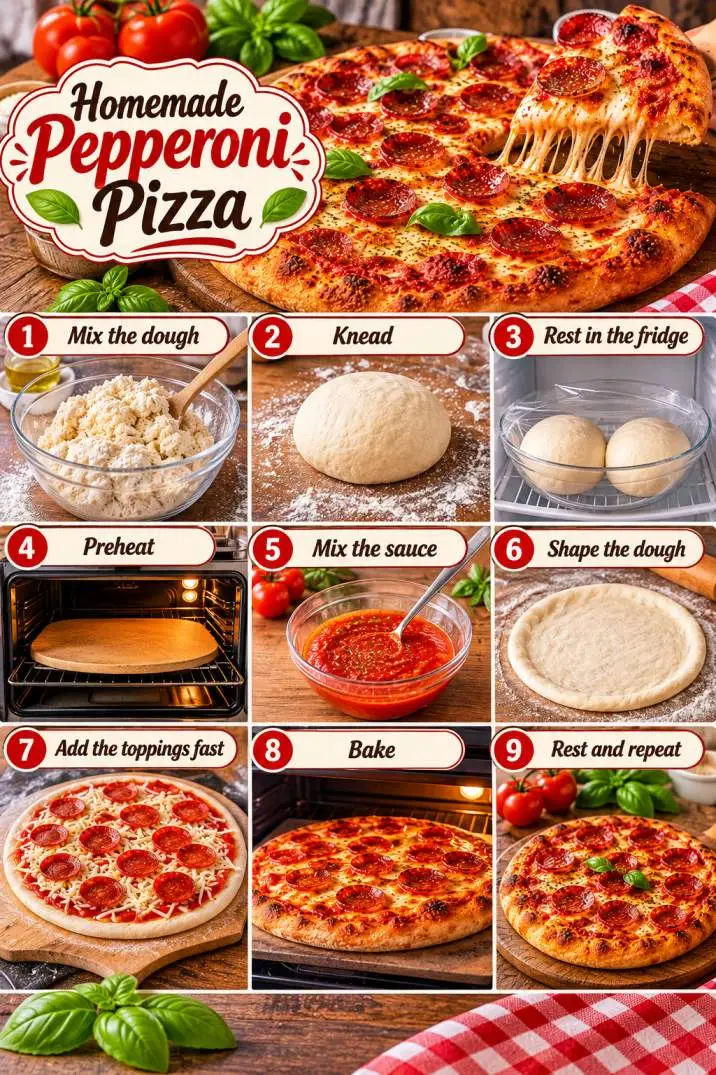
1. Mix the dough. Combine the flour, salt and yeast in a big bowl. Pour in the water and oil and stir until you can’t see any dry flour. It will look rough and shaggy. Cover the bowl and leave it for 20 minutes.
2. Knead. Turn it out onto a lightly floured counter and knead for about 5 minutes, until it feels smooth and stretchy. A little stickiness is normal.
3. Rest in the fridge. Cut the dough in half and shape each piece into a ball. Place each in a lightly oiled container or bowl, cover and chill for 24 to 72 hours. In a hurry? You can let the balls rise at room temperature for 2 to 3 hours instead, though the flavor and texture will be different from the long fridge rest.
4. Preheat. An hour before you want to bake, put a rack in the upper-middle of the oven, set the stone or steel on it and turn the oven to its highest setting, usually 500°F to 550°F (260°C to 290°C). Pull the dough from the fridge at the same time so it can come up to room temperature.
5. Mix the sauce. Stir the crushed tomatoes with the oil, garlic, salt and oregano, plus the sugar and chili flakes if you’re using them. No cooking required.
6. Shape the dough. On a floured work surface, press and stretch one ball by hand into a 12-inch circle, keeping the rim a little thicker than the center. If it keeps shrinking back, walk away for 10 minutes and try again. Slide it onto a peel dusted with semolina or cornmeal and jiggle the peel to check that the dough moves freely.
7. Add the toppings fast. Spread about ⅓ cup of sauce across the dough, leaving a ½-inch edge bare. Sprinkle over half the mozzarella, then arrange the pepperoni in one layer with small gaps between slices. Add a little Parmesan if you like.
8. Bake. Slide the pizza onto the preheated stone or steel. Bake for about 6 to 9 minutes, depending on your oven, until the crust is deep golden, the cheese is bubbling and the pepperoni edges are curled and dark. If the top still looks pale, slip it under the broiler for 30 to 60 seconds, and watch it closely.
9. Rest and repeat. Transfer the first pizza to a cutting board and let it rest for a couple of minutes before slicing. Allow the pizza stone or steel a few minutes to recover its heat, then place the second prepared pizza on it. Bake for 6 to 9 minutes, until the crust is golden and the cheese is bubbling. Finish with fresh basil or oregano, if desired.
If Your Pizza Goes Wrong
The center is soggy. Most likely the stone or steel wasn’t hot enough, or there was too much sauce or wet cheese. Preheat for longer, use less sauce and stay with low-moisture mozzarella.
The top is pale but the bottom is done. Next time, move the rack higher, or finish the pizza under the broiler for its last minute.
The bottom is too dark. Shorten the preheat or lower the rack a notch. Steel gets hotter than stone.
The dough keeps shrinking back. It’s too cold or too tight. Let it rest for 10 to 15 minutes, or give the dough ball more time to warm up before you shape it.
The pizza sticks to the peel. Add more semolina or cornmeal, and slide the pizza into the oven soon after topping it. The longer it sits, the more it grips.
The pepperoni is flat and greasy. Leave gaps between the slices, blot them and look for thicker-cut or “cup and char” pepperoni.
What Goes Well on Pepperoni Pizza?
Pepperoni is spicy, salty and rich, so it shines next to toppings that add freshness, tang or a hint of sweetness. Popular choices include mushrooms, sliced jalapeños, banana peppers, red onion and pineapple. Once it’s out of the oven, fresh basil, a pinch of chili flakes or a drizzle of hot honey adds a nice contrast.
Want to jazz up a pepperoni pizza without much effort? Brush the crust edge with garlic-infused olive oil before baking, add a little Parmesan, or finish with fresh herbs. Keep extra toppings modest, because a heavily loaded pizza is more likely to turn soggy.
Make-Ahead and Leftovers
The dough balls keep in the fridge for up to about three days, and many people find the flavor deepens as they sit. Many bakers also freeze dough balls in oiled bags for a few weeks and thaw them overnight in the fridge. If you plan to freeze yours, try a small batch first to see how you like the results.
Store leftover pizza in a shallow, airtight container in the refrigerator within 2 hours of baking. Keep it refrigerated for 3 to 4 days. To bring back the crunch, reheat slices in a skillet over medium heat, covering the pan for the last minute or two to melt the cheese, or in a preheated oven until heated through. The microwave is faster but makes the crust soft.
What to Serve With It
A crisp green salad with a sharp vinaigrette cuts through the richness. For more weeknight ideas, browse our dinner recipes.
A Quick Note on Dietary Needs
This recipe is alcohol-free, and it’s pork-free when you use beef or turkey pepperoni. Check the pepperoni label, and check the mozzarella as well. Some cheeses are made with animal rennet, which matters for vegetarians, and Islamic scholars differ on how they view cheese made with animal rennet. If this matters to you, look for a cheese made with microbial or vegetable rennet, or one that carries a halal certification. If you have questions about your own situation, ask someone you trust for guidance.
Frequently Asked Questions
What is pepperoni made of?
Pepperoni is a cured, spiced sausage. In the United States it’s usually made from pork or a mix of pork and beef, seasoned with paprika, chili, garlic and fennel, among other things. Some versions use turkey, and plant-based pepperoni exists too.
Is pepperoni pork or beef?
A lot of pepperoni contains pork, often blended with beef. Beef-only and turkey versions are sold and named on the package. If you avoid pork, including for religious reasons, read the label and look for a certification rather than assuming.
How do you make pepperoni crispy?
Set the slices on top of the cheese with a little space between them, bake on a very hot stone or steel, and consider thicker-cut or “cup and char” pepperoni, which curls more.
Is pepperoni pizza unhealthy?
Pepperoni is salty and fatty, so a pizza topped with it is a rich food. Pairing a slice or two with a salad or vegetables works for many people. Nutrition information hasn’t been calculated for this recipe, so use a nutrition calculator if you need figures.
Can you make pepperoni pizza without a stone or steel?
Yes. Preheat a heavy baking sheet, turned upside down, for the same length of time and bake on that. The crust won’t be quite the same, but it’s a good stand-in.
Can you use store-bought dough?
You can. Let it warm to room temperature before stretching it, then follow the same steps.
Over to You
It all comes down to a hot stone, a thin layer of sauce and pepperoni with room to curl. Do it once, and you’ll find it simple to repeat and tweak.