You’ve been planning this meal for days. The guests are seated, the side dishes are steaming, and the turkey comes out of the oven looking like a magazine cover. Then the knife goes in, and the slices crumble like cardboard.
Almost everyone who searches for turkey help is trying to dodge exactly that outcome. The questions come in over and over: which fat goes on the skin, what the oven dial should say, whether the pan needs liquid, and how many hours the bird will take. Behind each one sits the same worry.
So here’s a calmer plan. We’ll settle those four debates first, then walk through a single roast turkey recipe from the fridge to the carving board.
Table of Contents
Key Takeaways
- Dry turkey is nearly always overcooked turkey, so cook by temperature, not by time alone.
- The safe finish line is 165°F inside the meat.
- Butter beneath the skin and oil on top covers both flavor and crunch.
- A 10 lb bird at 325°F generally needs about 2¾ to 3 hours.
- Give the cooked turkey 20 minutes off the heat before you slice.
Why Turkey Turns Dry (and How to Stop It)
Turkey breast has very little fat, which means it forgives almost nothing. A few extra minutes in a hot oven can be the gap between tender and chalky.
The cure is a digital thermometer. The USDA calls 165°F the minimum safe temperature for a whole turkey. Probe the thigh first, since it’s the last part to finish, then check the wing and the breast. If any of them is still behind, the bird goes back in.
Honestly, this one gadget does more for your dinner than any marinade, brine, or family secret. It replaces guessing with a number.
Butter vs. Olive Oil: Which One Wins?
Here’s a fun detail: butter is about one-sixth water. That moisture can leave the skin a little blotchy and less crisp. Oil has none, so it browns more evenly and gets crackly.
Butter, on the other hand, tastes fantastic. So the practical move is to use each where it shines. Tuck seasoned butter under the skin over the breast, and brush oil across the outside. If your pantry only has one of them, go with it and don’t lose sleep. Olive oil works well for anyone avoiding dairy.
Oven Temperature: 325°F or 350°F?
Take a breath, because neither choice is a mistake. The slower 325°F oven is gentler on the meat and gives you a wider margin if dinner gets delayed. At 350°F the turkey finishes sooner and the skin tends to crisp a bit more. The USDA simply asks that you stay at or above 325°F.
For a first attempt, I’d pick 325°F. The published roasting times are written around it, so you’ll have a reliable guide in your hands.
Does the Pan Need Water?
Opinions clash here, and both camps are confident. Some cooks pour in a little broth, believing it adds moisture. Others, Butterball among them, say to leave the pan dry.
The truth is that steam from the pan doesn’t soak into the meat. Plan on a dry pan unless gravy is on the menu. In that case, a small splash of broth stops the drippings from burning, which keeps your gravy tasting rich instead of bitter.
How Long Will It Take?
For an unstuffed turkey in the 8 to 12 lb range, expect roughly 2¾ to 3 hours at 325°F. Bigger birds take longer, and the times assume the turkey is fully thawed.
Plenty of things can speed up or slow down the clock: a turkey that’s still icy in the middle, a dark metal pan, a lid, or an oven that isn’t quite accurate. A bird with stuffing inside also needs extra time, which is why beginners are better off baking the stuffing separately. Use the clock to plan your afternoon, and the thermometer to decide when it’s done.
The Recipe: Simple Herb-Butter Roast Turkey
Ingredients
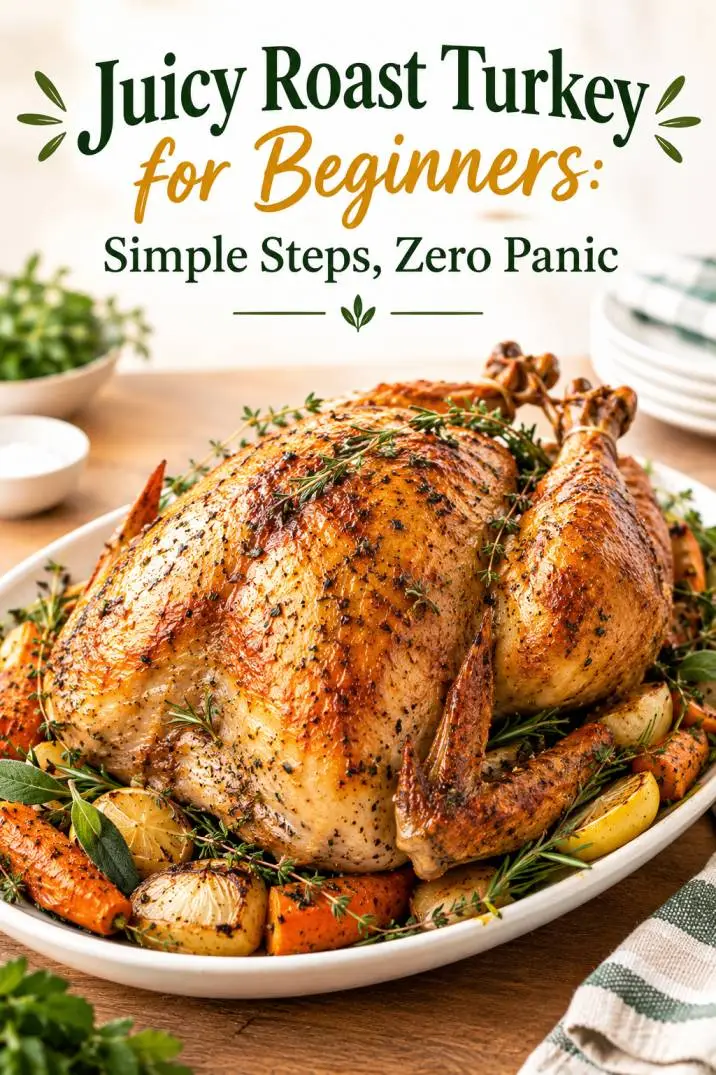
Juicy Roast Turkey for Beginners: Simple Steps, Zero Panic
Ingredients
Instructions
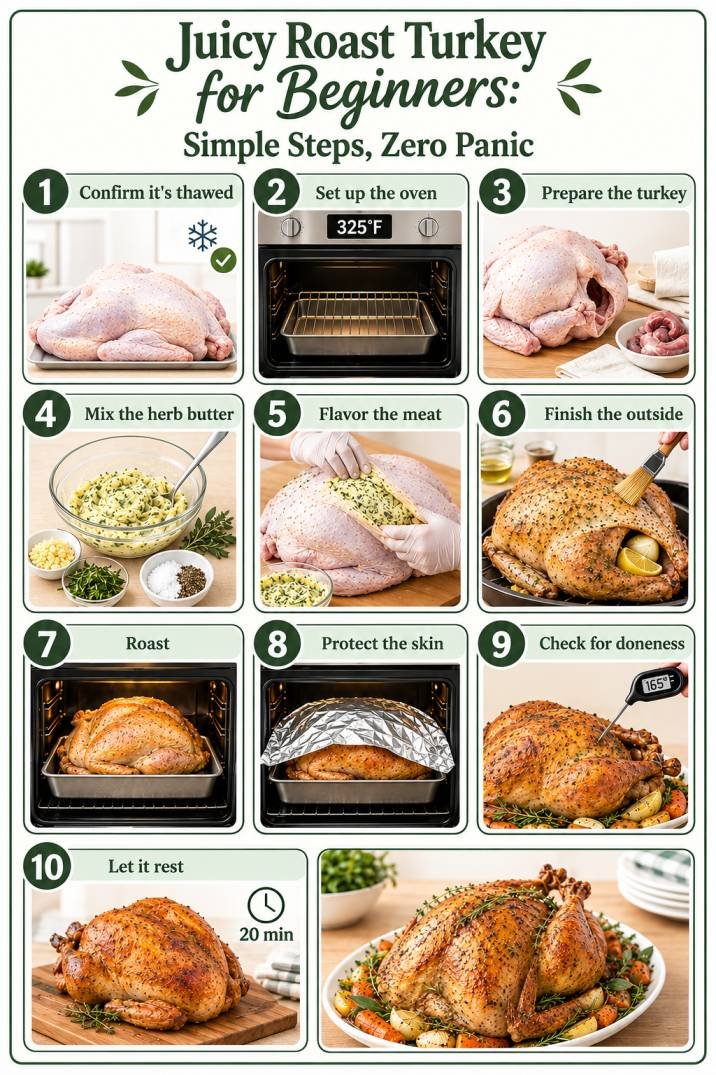
1. Confirm it’s thawed. Thaw the turkey in the refrigerator, allowing about 24 hours for every 4 to 5 pounds. A 12 lb turkey usually needs 3 days to thaw. Keep it in its original wrapping and place it on a tray or in a pan to catch any drips. Never thaw a turkey on the kitchen counter.
2. Set up the oven. Heat it to 325°F and put a rack inside a shallow roasting pan.
3. Prepare the turkey. Pull out the neck and giblet packet from inside. Skip the rinse; a thorough pat-down with paper towels is all it needs. Dry skin browns better.
4. Mix the herb butter. Blend the soft butter with the garlic, the sage, and half the salt and pepper.
5. Flavor the meat. Gently slide your fingers under the skin over the turkey breast to create a pocket. Spread the herb butter evenly beneath the skin, covering as much of the breast meat as possible.
6. Finish the outside. Brush the skin with olive oil and dust it with the remaining salt and pepper. Drop the onion and lemon into the cavity.
7. Roast. Set the turkey breast-up on the rack, pour in the broth if you’re using it, and slide the pan into the oven. Begin checking the temperature around the 2½-hour mark.
8. Protect the skin. If it’s turning deep brown too early, drape a loose sheet of foil on top.
9. Check for doneness. Test the thigh, the wing, and the breast, keeping the probe away from bone. Every spot should show at least 165°F. Anything lower means more oven time.
10. Let it rest. Transfer the turkey to a board for 20 minutes. The juices settle back into the meat, and carving gets much neater.
Storage and Reheating
Refrigerator: Remove the meat from the bones and divide it into smaller portions. Transfer it to shallow, airtight containers and refrigerate within 2 hours of cooking. Store for 3 to 4 days.
Reheating: Place the turkey slices in an oven-safe dish with a splash of broth. Cover with foil and warm in a 325°F (165°C) oven until heated through. Reheat leftovers to an internal temperature of 165°F (74°C).
Freezing: Place cooled turkey portions in airtight, freezer-safe containers or bags. Freeze for up to 2 to 3 months for the best quality. Thaw overnight in the refrigerator before reheating.
Turkey FAQ: Quick Answers
Butter or olive oil on the skin: which is better?
Neither loses. Butter gives richer taste, while oil crisps the skin better since it has no water in it. Slip butter beneath the skin and brush oil on top to get both benefits.
Should the oven be set to 325°F or 350°F?
Both are fine. 325°F cooks more slowly and gently, so it leaves more room for error. 350°F finishes sooner and can help the skin crisp. Avoid setting the oven below 325°F.
Is water in the roasting pan necessary?
No. Cooks are split on this, and water does not make the meat itself juicier. A splash of broth is only worth adding if you plan to make gravy from the drippings.
What is the cooking time for a 10 lb turkey at 325°F?
An unstuffed bird in that size range usually needs about 2¾ to 3 hours. Treat that as a rough guide and confirm doneness with a thermometer.
Four Easy Ways to Rescue Your Dinner
Ignore the plastic pop-up button. It isn’t a dependable signal. Your own thermometer is.
Keep the oven door shut. Each time it opens, heat escapes and the timeline slips. Look only when you need a reading.
Be patient at the cutting board. Slicing immediately lets the juices run out onto the board instead of staying in the meat.
Dry the skin before you season. A wet surface steams instead of browning, so blot it well.
Your First Turkey Doesn’t Have to Be Perfect
Think back to that crumbly slice at the start. You now have everything you need to avoid it: a thermometer, a smart two-fat rub, a calm 325°F oven, and a short rest before carving.
Even if something goes slightly sideways, the table will still be full of people happy to be there. And every bird you roast teaches you something for the next one.