There’s a particular kind of hunger that shows up around 10:30 a.m. It arrives right after a “light” breakfast, it’s loud, and it sends you digging through a desk drawer for something crunchy and not especially good for you.
I think the fix isn’t willpower. It’s a breakfast with enough protein to carry you to lunch, and a lot of us skip that because the usual advice involves frying a pan of eggs while we’re hunting for car keys.
So here’s a different route: one bowl, one spoon, zero cooking. Thick Greek yogurt forms the base, and a few pantry toppings bring the crunch, the creaminess, and the extra grams. It comes together faster than most people’s coffee order, and it’s built around 30 grams of protein.
Table of Contents
Key Takeaways
- The bowl provides an estimated 32 to 34g of protein, depending on the Greek yogurt brand and the exact ingredients used.
- Plain Greek yogurt supplies the bulk of it. Peanut butter, oats, and almonds fill in the rest.
- No eggs, no stove, and about five minutes from fridge to table.
- Protein varies from brand to brand, so a quick look at your yogurt label is the smartest step you can take.
The Thinking Behind the Bowl
A bowl that keeps you full isn’t just a heap of wholesome food. Every component earns its place by doing one specific thing.
Start with the yogurt: cold, tangy, and packed with protein. The peanut butter adds creamy richness and some fat, so the bowl reads as a proper meal instead of a snack. Oats give it a chewy texture and carbohydrates that release energy slowly. Chopped nuts bring the crunch, while fruit cuts through the richness with a little tartness and fiber.
Take any one of those away and you’d notice. That balance is what keeps the bowl satisfying for hours.
It also happens to be forgiving. No timing, no pans, no precise technique. If you can open a tub and hold a spoon, you can make a bowl that looks like something from a café menu, and that matters more than it sounds on mornings when your energy is already spoken for.
The five-minute promise holds up, too. Most of that time is chopping a few almonds and rinsing the fruit, and if you buy the nuts pre-chopped, you can shave it down even further.
Where the Protein Comes From
I’d rather show my math than wave a big number at you. Here’s how a single bowl adds up, using typical values:
- 1 cup (about 227g) plain nonfat Greek yogurt: roughly 22 to 23g
- 1 tablespoon peanut butter: roughly 3.5 to 4g
- 1/4 cup rolled oats: roughly 3g
- 2 tablespoons chopped almonds: roughly 3g
- 1/2 cup berries: roughly 1g
That’s about 32 to 34 grams. Of course, brands differ, which is why the yogurt label matters so much. Some tubs hold closer to 17g per 170g container, and others run higher, so check yours and adjust the portion if you want to hit a specific target.
The Recipe
Ingredients
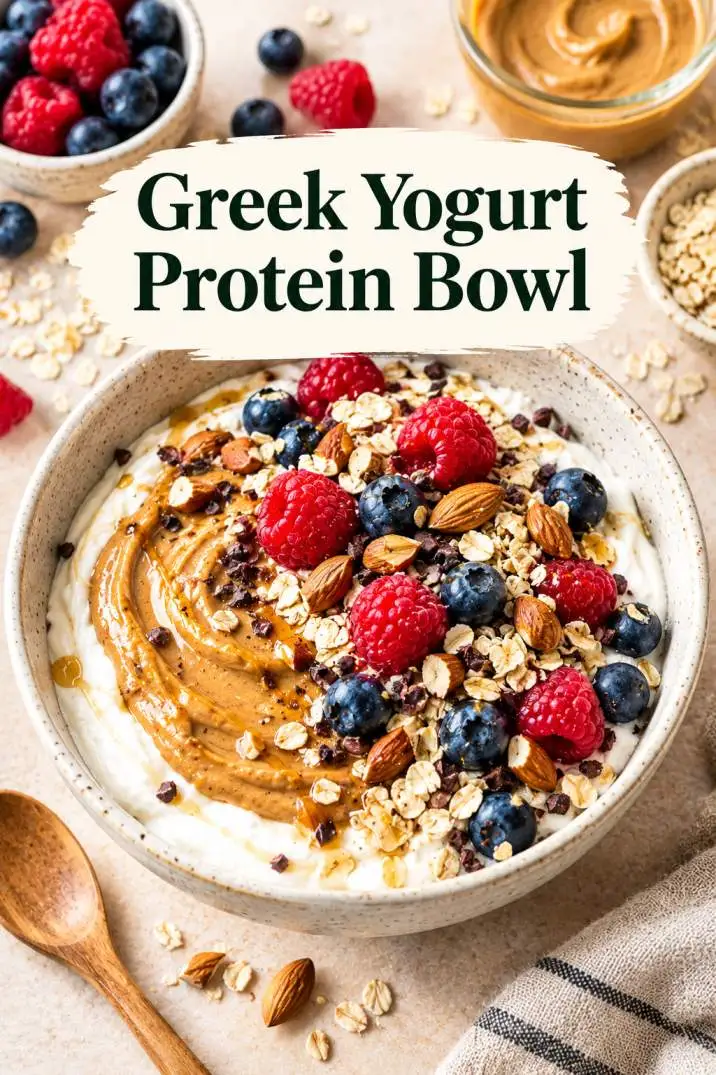
Greek Yogurt Protein Bowl Recipe
Ingredients
Notes
Instructions
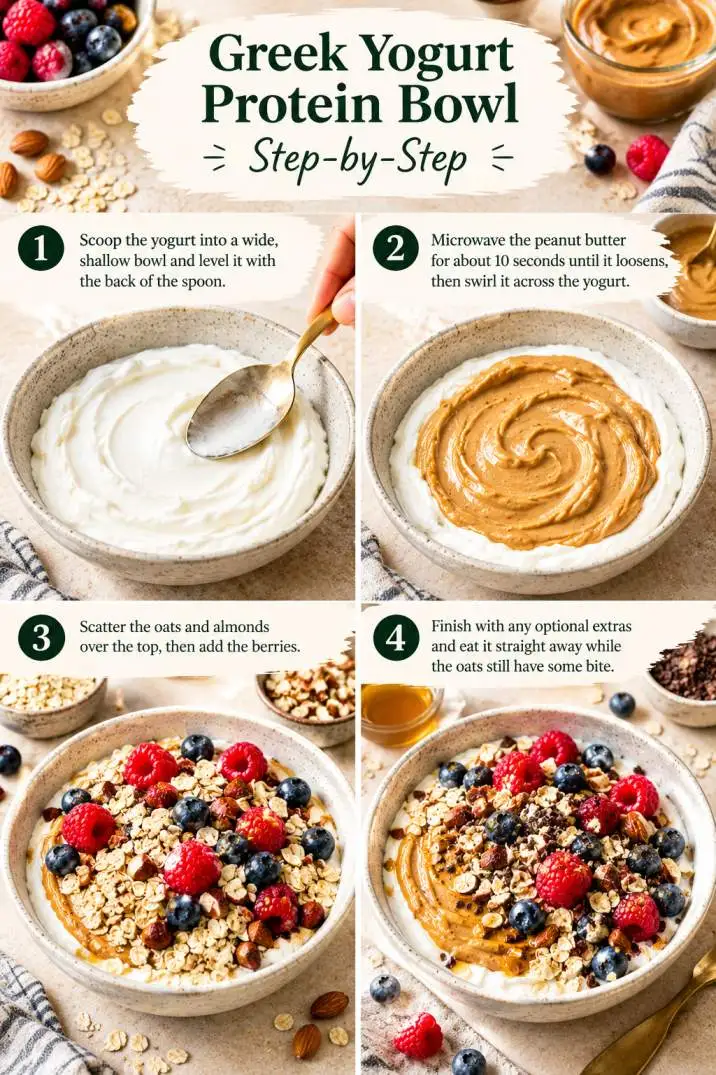
1. Scoop the yogurt into a wide, shallow bowl and level it with the back of the spoon.
2. Stir the peanut butter until smooth and easy to drizzle. If it is too thick, mix in a teaspoon of warm water until it reaches a pourable consistency, then swirl it over the yogurt.
3. Scatter the oats and almonds over the top, then add the berries.
4. Finish with any optional extras and eat it straight away while the oats still have some bite.
Notes
- Prefer a softer texture? Fold the oats into the yogurt first and give them ten minutes to swell.
- Choose plain yogurt. Fruit-flavored cups usually carry less protein and more sugar.
Three Ways to Change It Up
Eating the same thing every day gets old, so here are a few easy riffs that keep the protein in the same neighborhood.
The jar version. Stir the yogurt and oats together in a jar the night before. At breakfast, add the peanut butter, nuts, and fruit. It travels well, which makes it a lifesaver for commuters.
The cocoa version. Whisk a spoonful of unsweetened cocoa powder into the yogurt and swap the berries for sliced banana. It eats like a chocolate pudding, yet it’s built to carry you through a long morning.
The tropical version. Use diced mango and a sprinkle of unsweetened coconut instead of berries and almonds. Protein dips slightly, so add a second spoon of peanut butter or a handful of pumpkin seeds to compensate.
If you need a dairy-free option, an unsweetened soy yogurt is usually the best plant-based pick for protein, though labels vary widely, so compare before you buy.
What to Check in the Dairy Aisle
Since most of the protein sits in the tub, the tub you pick makes or breaks the numbers. Here’s what I’d glance at before it goes in your cart.
- The flavor. Plain wins here. Sweetened, fruit-on-the-bottom cups usually deliver less protein per spoonful along with added sugar.
- The wording on the front. A thick yogurt isn’t always a strained one. Some are thickened with additives and hold noticeably less protein, so flip the tub over and read the panel.
- The fat level. Nonfat, low-fat, and whole-milk Greek yogurt can all provide plenty of protein. The main differences are usually in fat and calories, so compare the nutrition labels and choose the one that fits your preferences.
- Your own scoop. A cup poured by eye often ends up well short of a real cup, and the protein shrinks with it.
For more ways to keep your kitchen routine from falling apart on busy days, my piece on making everyday cooking easier is worth a read. And if you enjoy bowls for lunch too, try the Mediterranean chicken and chickpea bowls. You’ll find more morning ideas in the breakfast recipes collection.
Quick Answers to Common Questions
Is 30 grams of protein too much for one breakfast?
For most healthy adults it’s well within a normal range. If you have kidney problems or a medical condition that changes your dietary needs, ask your doctor or a dietitian what’s right for you.
What’s the 30-30-30 idea about?
It’s a social media routine that suggests having 30 grams of protein soon after you wake up and following it with half an hour of gentle movement. The full package hasn’t been studied much, but the protein half of the plan makes sense on its own.
Should breakfast be protein or carbs?
You don’t have to choose. This bowl has both, with the protein from yogurt and nuts and the carbs from oats and fruit, and that mix tends to feel steady and satisfying.
Will it help with weight loss?
Protein can make you feel full, which may help you avoid grazing later. But no single meal melts fat on its own. Treat this as a dependable, balanced start to your day, not a shortcut.
Can I reach 30g without eggs?
Absolutely. Dairy, nuts, seeds, and oats can get you there together, and this bowl is one tasty example.
Your Turn
Go back to that 10:30 craving for a second. The goal here isn’t a perfect breakfast. It’s a good one that you can actually make on a normal Tuesday.
Try the bowl once this week and share it with us on Pinterest or Instagram. I’d love to see how yours turns out.