A great cheeseburger isn’t complicated. It’s a juicy beef patty, cheese that melts into every crevice, a soft toasted bun and a few cold, crunchy toppings. But anyone who’s pulled a dry, shrunken puck off the grill knows how easily it can go wrong.
The good news is that the difference between a sad burger and a great one comes down to a few small habits: the right beef, gentle handling, salt at the right moment and a hot pan. This recipe walks you through them, and answers the questions people ask most about making cheeseburgers at home.
Table of Contents
Key Takeaways
- Choose ground beef with about 20% fat (80/20). Leaner beef tends to turn out dry.
- Handle the meat as little as possible, and don’t mix in extras like egg or breadcrumbs.
- Press a shallow dimple into the center of each patty so it stays flat as it cooks.
- Season the outside generously with salt and pepper just before cooking.
- Cook to an internal temperature of 160°F (71°C), and add the cheese during the last minute.
Juicy Homemade Cheeseburgers
Ingredients
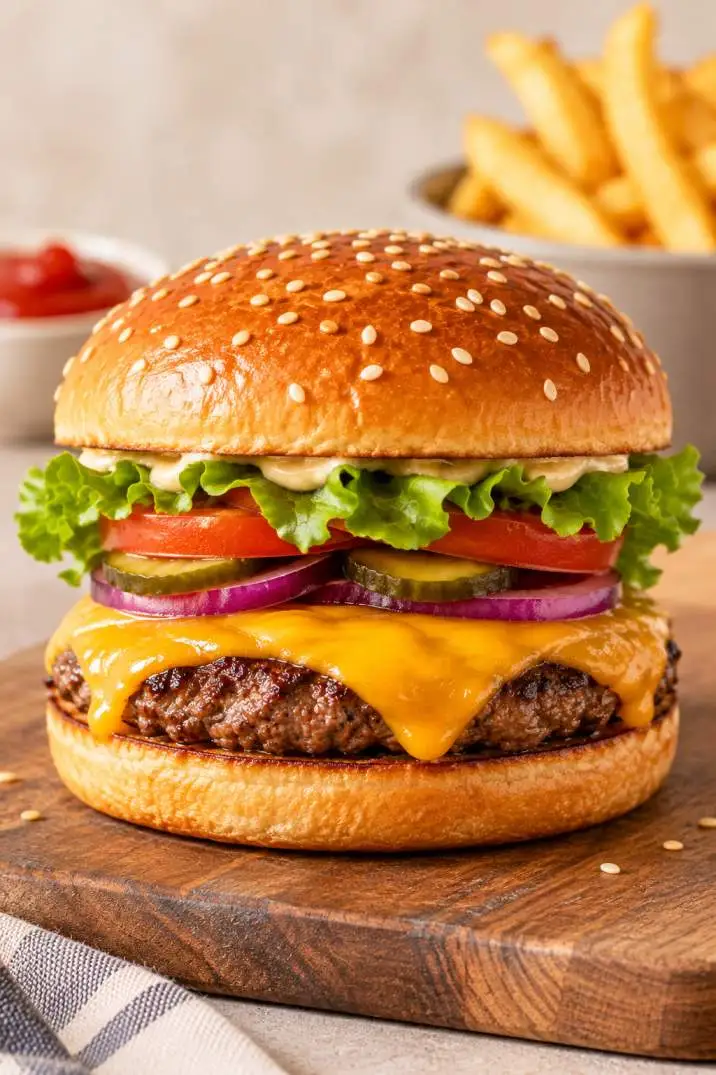
Classic Cheeseburger
Ingredients
Instructions
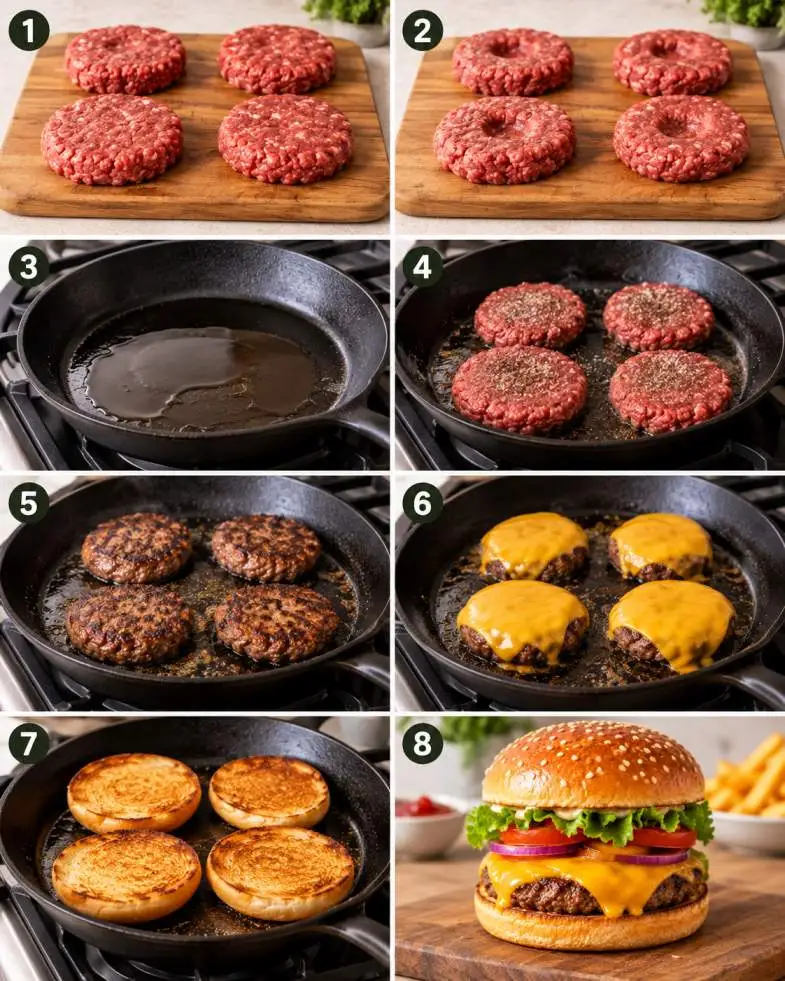
1. Divide the beef into 4 equal portions, about 6 oz (170 g) each. Gently shape each into a patty about 3/4 inch thick and slightly wider than the bun, since patties shrink as they cook.
2. Press a shallow dimple, about the size of your thumb, into the center of each patty. Chill the patties for 10 to 15 minutes if you have time.
3. Heat a cast iron or heavy skillet over medium-high heat until very hot. Add the oil.
4. Season both sides of each patty with the salt, pepper and garlic powder just before they go in the pan.
5. Cook the patties for 4 minutes without moving them, until a deep brown crust forms. Flip once.
6. Cook for another 3 to 4 minutes, until the burgers reach 160°F (71°C) in the center. Lay a slice of cheese on each, cover the pan and cook for 1 minute, until melted.
7. While the burgers rest for 2 to 3 minutes, butter the cut sides of the buns and toast them in a second pan or on the grill until golden.
8. Assemble with your favorite toppings and serve right away.
What’s the Best Beef for Cheeseburgers?
Look for ground beef with about 20% fat, labeled 80/20. The fat is what keeps the burger juicy and carries flavor, and leaner blends (90/10 and up) often turn out dry. Ground chuck is a popular choice because it has good beefy flavor and the right amount of fat.
If you want to experiment, ask the butcher for a custom blend, such as chuck mixed with a little brisket or short rib. It’s a nice upgrade, but a plain 80/20 chuck makes a great burger.
Why Put a Dimple in a Burger Patty?
As a patty cooks, the proteins tighten and the edges pull in, which pushes the center up into a dome. A shallow thumbprint in the middle helps the burger cook flat, so toppings and cheese sit properly and the bun doesn’t slide off.
Do You Add Egg to Burger Meat?
You don’t need to. An egg is a binder, and beef patties hold together fine without one. Adding egg and breadcrumbs tends to give a texture closer to meatloaf than to a burger. Keep it simple: beef, salt and pepper.
Is Worcestershire Sauce Good in Burgers?
It’s a matter of taste. A teaspoon of Worcestershire sauce adds a savory, tangy note, and many cooks like it. But it isn’t essential, and the traditional sauce contains anchovies, so check the label if that matters to you. If you want the savory boost, mix it in gently, or brush it on the cooked patties.
How Do You Season Burgers?
Season the outside, and do it just before cooking. Salt mixed deep into ground beef too early can make the texture firm and a little sausage-like, while salt on the surface helps form a flavorful crust. A generous sprinkle of salt and pepper is the classic approach. Garlic powder and a pinch of onion powder are easy extras.
Which Cheese Is Best on a Cheeseburger?
- American: melts into a smooth, creamy blanket, the classic diner choice.
- Cheddar: sharper flavor, and a medium or sharp slice melts well.
- Swiss or provolone: mild and stretchy.
- Pepper jack: for a little heat.
Add the cheese in the last minute of cooking and cover the pan, so the steam melts it quickly. Want to go the extra mile? Spoon some warm homemade cheese sauce over the top instead of a slice.
How to Cook a Cheeseburger: Other Methods
- On the grill: heat the grill to medium-high (about 400°F / 200°C). Cook the patties for 4 to 5 minutes per side, with the lid closed, until they reach 160°F (71°C). Add the cheese in the last minute.
- In the air fryer:cook at 370°F (188°C) for about 8 to 10 minutes, flipping halfway through. Cooking time may vary depending on patty thickness and your air fryer, so use an instant-read thermometer to check that the center reaches 160°F (71°C).
- In the oven: bake on a rack over a baking sheet at 425°F (220°C) for 15 to 20 minutes, flipping once, until done.
Burger Food Safety
Ground beef should reach an internal temperature of 160°F (71°C), because grinding spreads surface bacteria throughout the meat. Use an instant-read thermometer in the thickest part of the patty, and wash your hands and any surfaces that touched raw meat.
A Quick Look at the Cheeseburger’s Origins
Who invented the cheeseburger? Nobody agrees. Several restaurants in different parts of the United States claim to have been first, including places in California, Kentucky and Colorado, and the story is a mix of memory, family lore and early trademarks. So there’s no single, settled answer, and that’s part of its charm: it seems to have appeared in more than one kitchen around the same time.
Easy Variations
- Smash burger: roll the beef into loose balls, press them very thin on a very hot skillet, and cook for 1 to 2 minutes per side.
- Double cheeseburger: use two thinner patties, each with a slice of cheese.
- Turkey or chicken burgers: use ground turkey or chicken, which is leaner, so add a little oil or grated onion, and cook to 165°F (74°C).
- Burger sauce: stir together 3 tablespoons mayonnaise, 1 tablespoon ketchup, 1 teaspoon mustard and 1 teaspoon pickle relish.
- Lettuce wrap: skip the bun and wrap the burger in crisp lettuce leaves.
What to Serve With Cheeseburgers
Classic sides are fries, coleslaw and a crisp salad. For something cozier, try my cheesy ranch potatoes on the side.
Storing and Reheating
- Refrigerator: Refrigerate cooked patties within 2 hours of cooking. Store them separately from the buns in a shallow, airtight container for 3 to 4 days.
- Reheating: Warm patties in a covered skillet over medium-low heat with a small splash of water until heated through. Reheat leftovers to an internal temperature of 165°F (74°C).
- Freezer: Freeze raw patties with parchment paper between them in a freezer-safe bag or airtight container for up to 3 to 4 months. Thaw in the refrigerator before cooking.
A Quick Note on Richness
A cheeseburger is a hearty, indulgent meal, so a little balance helps. Serve it with a fresh salad or vegetables and keep portions in mind if you like.
A Quick Note on Dogs
Please keep burgers with garlic or onion away from pets. Garlic and onion are toxic to dogs. If yours gets into some, call your vet.
Frequently Asked Questions
What is the best beef for cheeseburgers?
Ground beef with about 20% fat (80/20), such as ground chuck, for a juicy, flavorful burger.
Why put a dimple in a burger patty?
It keeps the center from puffing up as the burger cooks, so the patty stays flat.
Should you add egg to hamburger meat?
No. Patties hold together without it, and egg can make the texture more like meatloaf.
When should I add the cheese to a cheeseburger?
During the last minute of cooking. Cover the pan so steam melts the cheese quickly.
What temperature should a cheeseburger be cooked to?
160°F (71°C) in the center, checked with an instant-read thermometer.
Your Turn
A good cheeseburger comes from a few simple habits: the right beef, a gentle hand, a hot pan and cheese added at the right moment. Master those, and your kitchen will beat most drive-throughs.
If you love comfort food, try my cheese sauce or my cheesy ranch potatoes next. Save this recipe for your next burger night.