Homemade chicken shawarma often misses in one of two ways. It tastes spiced but looks pale, because the chicken steamed in its own marinade. Or it’s dry, because someone cooked lean breast meat for too long. Neither one tastes like the wrap you get from a good shawarma shop.
The shop version gets its edges from a vertical spit, where the outer layer browns and is shaved off in thin, crisp-edged slices. Most home kitchens don’t have a spit, but a cast iron skillet gets surprisingly close. The trick is simple: cook the chicken, slice it thin, then sear the slices again for a minute or two.
Table of Contents
The Short Version
- Use boneless, skinless thighs. They stay juicy and take well to a yogurt marinade.
- Marinate for at least an hour, and overnight if you have the time.
- Sear the thighs whole, rest them, slice thinly, and give the slices a second sear in the hot skillet.
- Make the garlic yogurt sauce while the chicken rests.
- Warm the pita, add sauce first, then chicken, then the fresh toppings.
What Is Chicken Shawarma?
Shawarma is a Middle Eastern dish of marinated meat, traditionally stacked on a vertical spit and roasted as it turns. Cooks shave off the browned outer layer in thin slices and serve it in flatbread or on a plate. The name is usually traced to a Turkish word meaning “turning,” which describes the rotating spit.
Chicken, lamb and beef are all common. Chicken shawarma is typically seasoned with warm spices such as cumin, coriander, turmeric and cinnamon, along with garlic and lemon. It’s usually served with a garlic or tahini sauce, pickles, and fresh vegetables.
Shawarma vs. Gyro vs. Kebab
They’re related, and they’re often confused. Gyro is the Greek take: its seasoning tends toward oregano and thyme, and the sauce on top is usually cool, cucumber-flecked tzatziki. Shawarma comes from the Middle East and leans on warmer spices and garlic or tahini sauces. Doner kebab is the Turkish cousin. All three are cooked on a vertical spit, so the differences lie mostly in the seasoning, the sauce and the tradition behind them.
(In the U.S., you’ll often see gyro and shawarma sold side by side. Gyro is pronounced “YEE-roh,” and shawarma is usually said as “shuh-WAR-muh.”)
Why Thighs, and Why a Yogurt Marinade
Thighs have more fat than breasts, so they stay tender and tolerate high heat. They’re also easier to brown properly. Breast meat is leaner and dries out fast, though it can be used if you watch it closely.
The yogurt in the marinade helps keep the chicken moist, and the lemon adds brightness. Olive oil carries the spices onto every surface of the meat, and that thin seasoned film is the first thing to darken once the chicken meets hot iron.
The Second Sear
This is the step that sets the recipe apart. After the thighs are cooked and rested, you slice them into thin strips and return them to the hot skillet for a minute or two. The cut edges pick up color and turn slightly crisp, like the shaved edges from a spit. It takes very little time and changes the texture of the whole wrap.
Chicken Shawarma Wraps in a Cast Iron Skillet: Charred Edges, Juicy Thighs, Garlic Yogurt Sauce
Chicken thighs are marinated in yogurt, lemon, garlic and warm spices, seared in a cast iron skillet, then sliced and seared again for crisp edges. Stuff them into warm pita with garlic yogurt sauce, cucumber, tomato and red onion for an easy shawarma wrap at home. Makes 4 wraps.
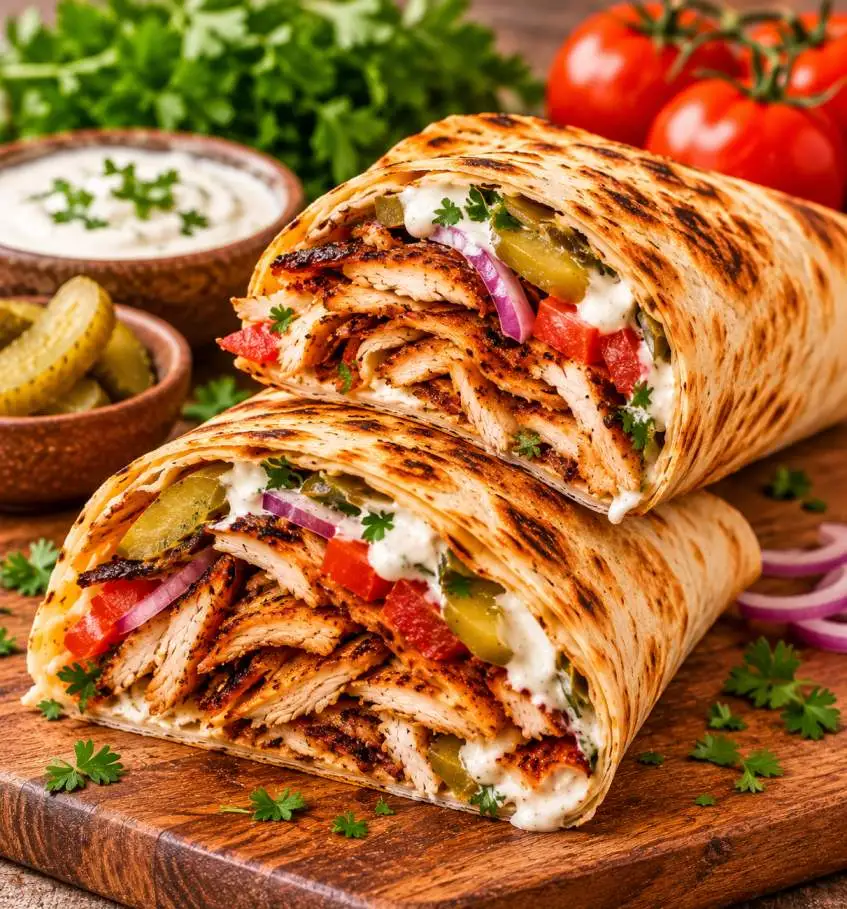
Chicken Shawarma Wraps in a Cast Iron Skillet
Ingredients
Method
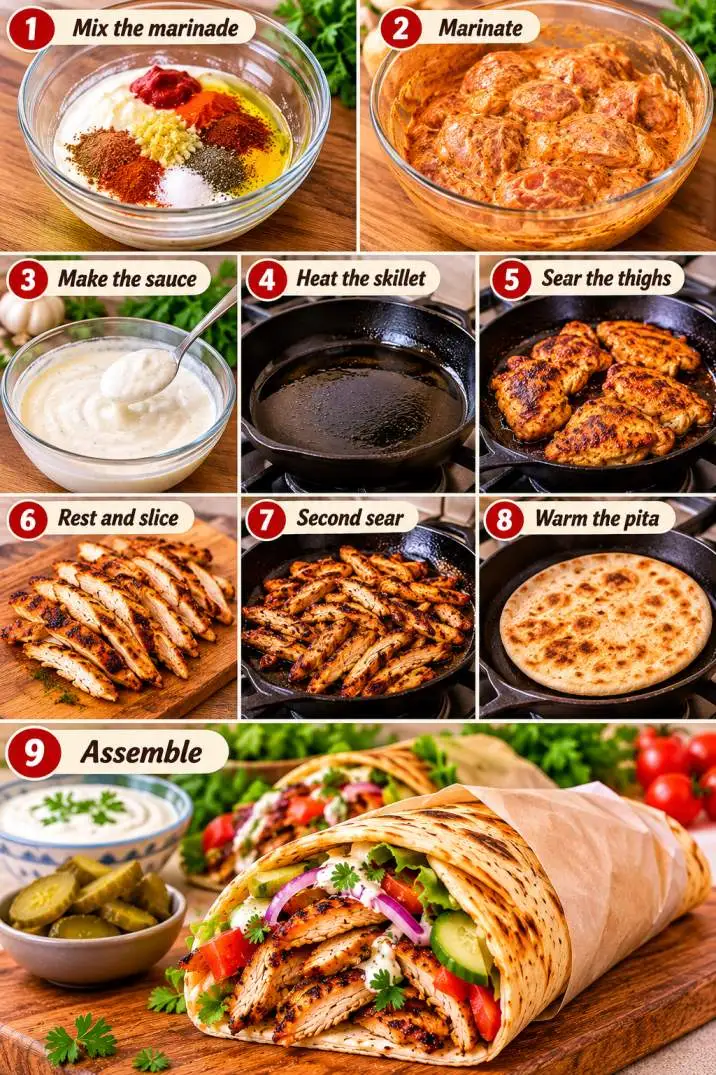
1. Mix the marinade. In a large bowl, stir together the yogurt, oil, lemon juice, garlic, tomato paste if using, all of the spices, the salt and the pepper.
2. Marinate. Drop in the thighs and toss them with your hands or tongs so the marinade reaches every surface. Cover the bowl and refrigerate for at least 1 hour or overnight for deeper flavor. For the best texture, keep the marinating time to no more than 24 hours.
3. Make the sauce. Stir together the yogurt, garlic, lemon juice, oil and salt. Add water a tablespoon at a time until it’s pourable but still thick. Taste, adjust, and let it sit while you cook so the garlic softens a little.
4. Heat the skillet. Set a large cast iron skillet over medium-high heat for a few minutes, then add the tablespoon of oil. Lift each thigh from the marinade, let the excess drip off, and lay it in the skillet. Cook in two rounds. If the thighs touch each other, they steam instead of browning.
5. Sear the thighs. Cook the thighs for 5 to 6 minutes per side, until deeply browned and cooked through. A thermometer inserted into the thickest part should read at least 165°F (74°C). If the marinade is darkening too quickly, lower the heat slightly.
6. Rest and slice. Move the chicken to a board and let it rest for 5 minutes. Slice it thinly across the grain into strips.
7. Second sear. Return the slices to the hot skillet in a single layer and cook for 1 to 2 minutes, tossing once, until the edges are browned and slightly crisp. Work in batches if needed.
8. Warm the pita. While the chicken sears, warm the pita in a dry pan for about 20 to 30 seconds per side, or wrap it in foil and warm it in the oven.
9. Assemble. Spread a spoonful of garlic yogurt sauce over each pita. Add the chicken, then the cucumber, tomato, onion, parsley and pickles. Drizzle with a little more sauce, fold in the sides and roll tightly. Wrapping the bottom half in parchment or foil keeps it tidy.
If the Skillet Misbehaves
The chicken is pale. The skillet wasn’t hot enough, or the pan was crowded. Heat the pan properly, let excess marinade drip off, and cook in two batches.
The marinade is burning. Yogurt and spices darken quickly. Lower the heat a notch and make sure there isn’t a thick coating left on the chicken.
The chicken is dry. It may have been cooked too long, or you used breast. Check the temperature early and take it off the heat as soon as it reaches 165°F (74°C).
The wrap gets soggy. Don’t overfill with sauce or wet vegetables. Pat the cucumber and tomato dry, add the sauce first, and eat soon after wrapping.
The sauce tastes too sharp. Raw garlic can be intense. Use one clove, let the sauce rest for 10 minutes, and add a little more oil or yogurt to mellow it.
The spices taste flat. Add a pinch more salt and a squeeze of lemon at the end. Both lift the flavor.
Ways to Change It
If you’d rather skip the wrap, serve the chicken over rice or salad as a bowl, with the same sauce on top. You can also cook the chicken on a sheet pan in a hot oven and finish it under the broiler, which gives a similar result with less splatter. For more heat, add more cayenne or a teaspoon of Aleppo pepper. Breast meat works too: use the same marinade, and watch the temperature closely. For a dairy-free version, replace the yogurt in the marinade with olive oil and extra lemon juice, and use a dairy-free yogurt for the sauce.
Make-Ahead and Leftovers
The spice blend can be mixed in advance and stored in an airtight jar. You can also marinate the chicken ahead of time and keep it covered in the refrigerator for up to 24 hours.
The garlic yogurt sauce can be prepared up to 3 days ahead and stored in a covered, airtight container in the refrigerator.
For leftover cooked chicken, refrigerate it within 2 hours of cooking in a shallow, airtight container. Store it in the refrigerator for 3 to 4 days. Reheat it in a hot skillet until heated through and it reaches an internal temperature of 165°F (74°C), then assemble fresh wraps with warm pita and fresh vegetables.
What to Serve With Chicken Shawarma
Rice, a simple chopped salad, or roasted vegetables all work as sides. For more ideas, browse our vegetable recipes or our dinner recipes.
Questions Cooks Keep Asking
What is chicken shawarma made of?
Chicken shawarma is marinated chicken, usually thigh or breast meat, seasoned with warm spices, garlic and lemon, then cooked and sliced thinly. It’s served in flatbread or on a plate with sauce and vegetables.
Is chicken shawarma Indian or Greek?
Neither. Shawarma is a Middle Eastern dish. The Greek equivalent is gyro, and the Turkish version is doner kebab.
What’s the difference between gyro and shawarma?
Gyro is Greek and is usually seasoned with herbs and served with tzatziki. Shawarma is Middle Eastern, with a warmer spice blend and garlic or tahini sauces. Both are traditionally cooked on a vertical spit.
What does chicken shawarma taste like?
It’s savory, warmly spiced and garlicky, with a lemony tang from the marinade and sauce. It’s flavorful, but not necessarily spicy-hot. The heat level depends on whether you add cayenne.
Is chicken shawarma healthy?
It depends on how it’s made and served. Chicken is a good source of protein, and a wrap loaded with vegetables and a yogurt-based sauce can be a balanced meal. Portion size, the amount of oil and the type of bread all matter. Your recipe card’s nutrition panel gives an estimate for this version.
What do you eat with chicken shawarma?
Typical pairings include pita, rice, hummus, pickles, salad and a garlic or tahini sauce.
Can I make this in the oven instead?
Yes. Roast the thighs on a sheet pan at a high temperature, then slice and finish under the broiler for a minute or two. Test the timing for your oven.
Over to You
The method fits in one sentence: marinate well, sear hard, slice thin, and sear again. That second pass in the skillet is what gets you close to the crisp edges of a spit-roasted shawarma.