We’ve all been there. You stir cheese into a pot, and instead of a silky sauce you get a grainy, oily mess that clumps around the whisk. It’s frustrating, especially when you expect a quick homemade sauce.
The fix is simple, and it doesn’t need any special ingredients. A quick roux, gentle heat and freshly grated cheese give you a smooth cheddar sauce that works on nachos, mac and cheese, broccoli, baked potatoes and pretty much anything else that needs a cozy blanket of cheese. The whole recipe takes about 15 minutes, including preparation.
Table of Contents
Key Takeaways
- This cheese sauce starts with a roux (butter and flour), then milk, then cheese, and takes about 15 minutes.
- Grate your own cheddar. Pre-shredded cheese often contains anti-caking starch that can make a sauce grainy.
- Take the pot off the heat before adding the cheese, and add it a handful at a time.
- Thin the sauce with a splash of milk, or thicken it by simmering a minute longer.
- Got extra? It rests happily in the fridge for several days and warms up again with a little milk.
Easy Homemade Cheese Sauce
Ingredients

Cheese Sauce Recipe
Ingredients
Instructions
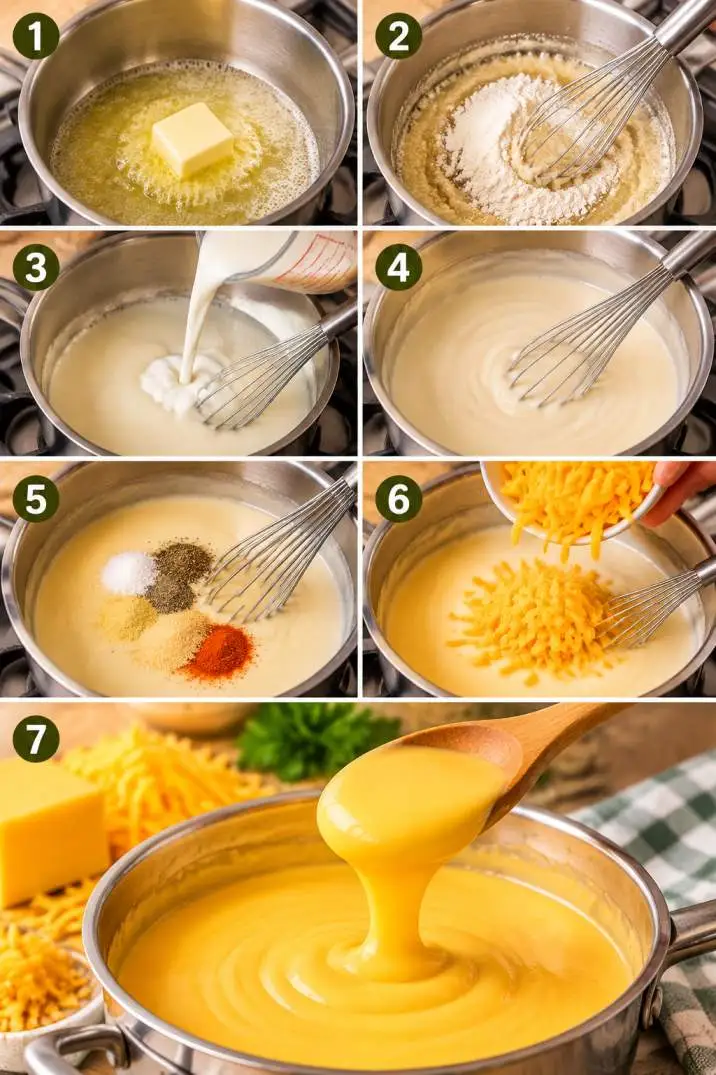
1. Set a medium saucepan over medium heat and let the butter melt completely.
2. Sprinkle in the flour and whisk for about a minute, until it smells faintly toasty. Pull back the heat if it starts to color.
3. Add the milk in three pours, whisking hard after each one so the mixture stays free of lumps.
4. Lower the heat a little and keep stirring for 3 to 5 minutes, until the sauce clings to the back of a spoon.
5. Slide the pan off the burner and stir through the salt, pepper, mustard powder, garlic powder and paprika.
6. Drop in the cheese by the handful, letting each one melt into the sauce before the next goes in.
7. Taste, add salt if needed, and bring it to the table while it’s hot.
Why Does Cheese Sauce Turn Grainy?
Almost always, it comes down to heat or the cheese itself. Cheese proteins tighten and squeeze out fat when they get too hot, which gives you a gritty, greasy texture. Two habits help most:
- Melt it gently. Add the cheese off the heat, or over very low heat, and never let the sauce boil afterward.
- Grate it yourself. Bagged shredded cheese is often coated with starch so it doesn’t clump in the bag, and that coating can keep it from melting smoothly.
If your sauce does turn grainy, take it off the heat and whisk in a tablespoon or two of warm milk. It won’t always recover completely, but it often helps.
What’s the Best Cheese for Cheese Sauce?
Sharp or medium cheddar is the classic choice, since it melts well and tastes like cheese even in a sauce. Younger cheeses melt more smoothly than very aged ones, so a mix of sharp and mild works nicely. Other good melters include Monterey Jack, Colby, Gruyère and Gouda. Use a mix to get both flavor and smooth texture.
For a pale, white cheese sauce, use white cheddar, Monterey Jack or a mix of the two.
How to Thicken or Thin Cheese Sauce
Getting the right consistency is easy once you know when to adjust it:
- Too thick: Whisk in warm milk, one tablespoon at a time, until the sauce reaches your preferred consistency.
- Too thin: Before adding the cheese, let the milk mixture simmer gently for another minute or two until it thickens. If the cheese is already added, stir in a little more freshly grated cheddar over very low heat, without letting the sauce boil.
Remember that cheese sauce thickens as it cools, so keep it slightly looser than your desired serving consistency.
Where to Use Your Cheese Sauce
One pot, plenty of ways to eat it:
- Nachos: keep it a little thicker so it clings to chips, and add a pinch of chili powder or cumin.
- Mac and cheese: stir in cooked pasta, or thin the sauce slightly so it coats every piece. This amount of sauce suits roughly 8 oz (225 g) of uncooked pasta.
- Broccoli and vegetables: spoon it over steamed or roasted broccoli, cauliflower or potatoes. For more ideas, see my roasted vegetables guide.
- Pretzels and fries: serve it warm as a dip.
- Baked potatoes, hot dogs and burgers: pour it over the top.
Cheese Sauce vs. Queso
The words get swapped a lot, yet the two are not identical. A classic cheese sauce is a smooth sauce built on milk and a roux, usually with cheddar. Queso is a Tex-Mex-style dip, usually made by melting cheese with milk or cream and adding peppers, tomatoes, chiles or spices, and it’s often served with chips. Many recipes blur the line, so use whichever name you like.
Cheese Sauce Without a Roux
The roux makes the sauce stable, but there are two other approaches:
- Cream cheese: whisk 2 oz (55 g) of cream cheese into warm milk, then add the shredded cheese. It’s very smooth and mild. You can also stir a spoonful into the finished sauce for extra creaminess.
- Sodium citrate: this ingredient is used to make very smooth, nacho-style cheese sauce without flour. You dissolve it in warm liquid, then melt in the cheese. If you want to try it, follow the directions on the package for the amount.
Some people also make a quick sauce with a processed cheese product such as Velveeta, which melts easily. It’s a different approach from the one above, so check the label if you have dietary needs.
Easy Variations
- Spicy cheese sauce: stir in cayenne, a pinch of chili flakes or chopped pickled jalapeños.
- White cheese sauce: use white cheddar or Monterey Jack, and a little white pepper.
- Extra creamy: replace 1/4 cup of the milk with heavy cream.
- Smoky: add a pinch of smoked paprika or use smoked cheddar.
- Vegan: use plant-based butter, a plant-based milk and a good plant-based shredded cheese, and check that it melts well.
Storing and Reheating
- Refrigerator: Let the cheese sauce cool slightly, then transfer it to a shallow, airtight container and refrigerate within 2 hours of cooking. Store it in the refrigerator for 3 to 4 days. The sauce will become thicker when cold, which is normal.
- Reheating: Warm the sauce gently in a saucepan over low heat, stirring frequently. Add a splash of milk a little at a time to restore its smooth, pourable consistency. You can also reheat it in the microwave in short intervals, stirring between each one.
- Freezer: Freezing isn’t recommended because the sauce may separate or become grainy after thawing. For the best texture, make it fresh when possible.
A Quick Note on Richness
Cheese sauce is a rich, indulgent sauce, so a little goes a long way. Spooning it over roasted or steamed vegetables is an easy way to enjoy it as a topping rather than a main event.
A Quick Note on Dietary Needs
This recipe contains no alcohol or pork. However, cheddar cheese may be made with animal rennet, an enzyme used in cheese production. If you follow a vegetarian or halal diet, check the cheese label and look for cheddar made with microbial or vegetable rennet, or a product with reliable halal certification.
Frequently Asked Questions
How do you make cheese sauce from scratch?
Make a roux with butter and flour, whisk in milk until thickened, then remove the pan from the heat and gradually stir in freshly grated cheese.
Why is my cheese sauce grainy?
The sauce may have overheated, or the cheese may contain anti-caking ingredients. Use freshly grated cheese and melt it gently off the heat.
What cheese is best for cheese sauce?
Sharp or medium cheddar gives the sauce its classic flavor. Monterey Jack, Colby, Gruyère and Gouda are also good options.
Can I make cheese sauce without flour?
Yes. You can use cream cheese or sodium citrate to make a smooth sauce without a traditional flour-based roux.
How long does homemade cheese sauce last?
Store it in an airtight container in the refrigerator for 3 to 4 days. Reheat gently with a little milk to loosen it.
Your Turn
After you’ve whisked up your own, the jarred stuff has a hard time competing. Ten minutes, a few pantry staples and a sauce that suits nearly everything on the table.
If you love creamy sauces, you might also like my creamy Alfredo sauce or my cheesy ranch potatoes. Save this recipe for your next nacho night or mac and cheese dinner.