There’s a particular smell that fills a kitchen around the second hour of a bolognese. Onion and carrot gone soft and sweet, beef turning deeply savory, tomato mellowing into something dark and rich. It’s the smell of a pot that has been left alone, doing exactly what it should.
That’s really the whole secret. Bolognese isn’t hard. It just takes time and a few small habits. Here’s a beginner-friendly version made with beef, with no wine and no pork, plus answers to the questions people keep asking: what goes in it, how it differs from spaghetti sauce, and whether that milk is for real.
Table of Contents
Key Takeaways
- Bolognese is a meat sauce first and a tomato sauce second. Meat, a vegetable base and a long, gentle simmer do the work.
- Dice the onion, carrot and celery very small, and cook them slowly before the meat goes in.
- A splash of milk softens the acidity and makes the sauce rounder.
- Let the sauce simmer gently for about 2 hours. This slow cooking time helps the beef become tender and allows the flavors to develop.
- This recipe skips the wine and the pork found in many classic versions, and it still tastes rich.
Beef Bolognese Sauce
Ingredients
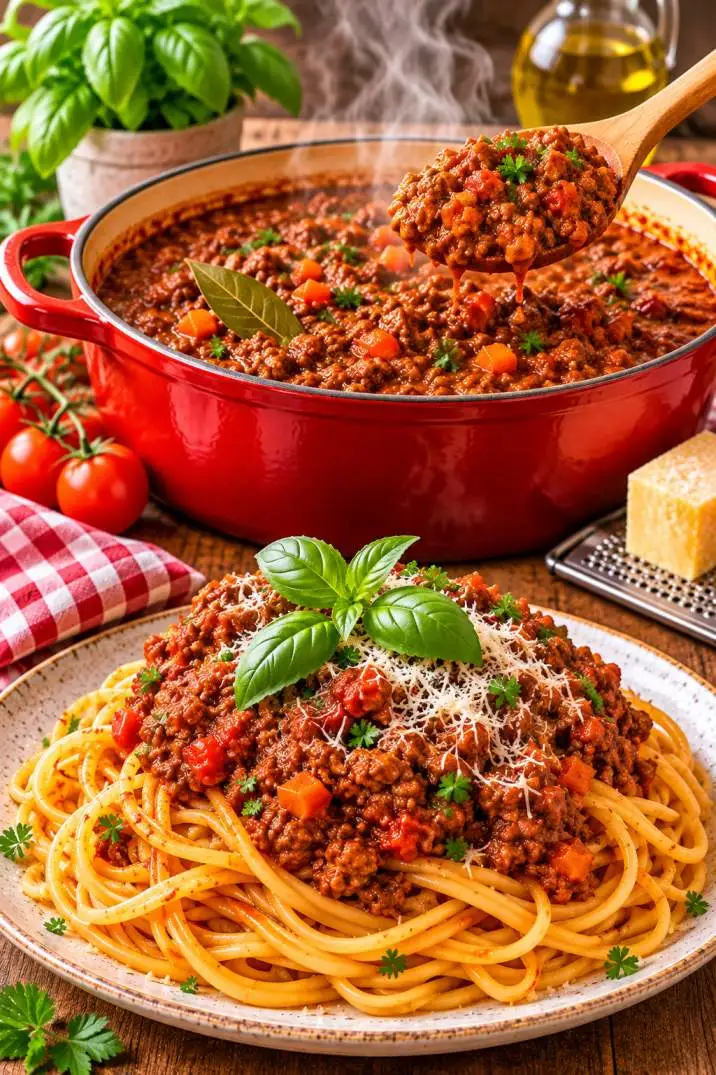
Beef Bolognese Sauce
Ingredients
Instructions
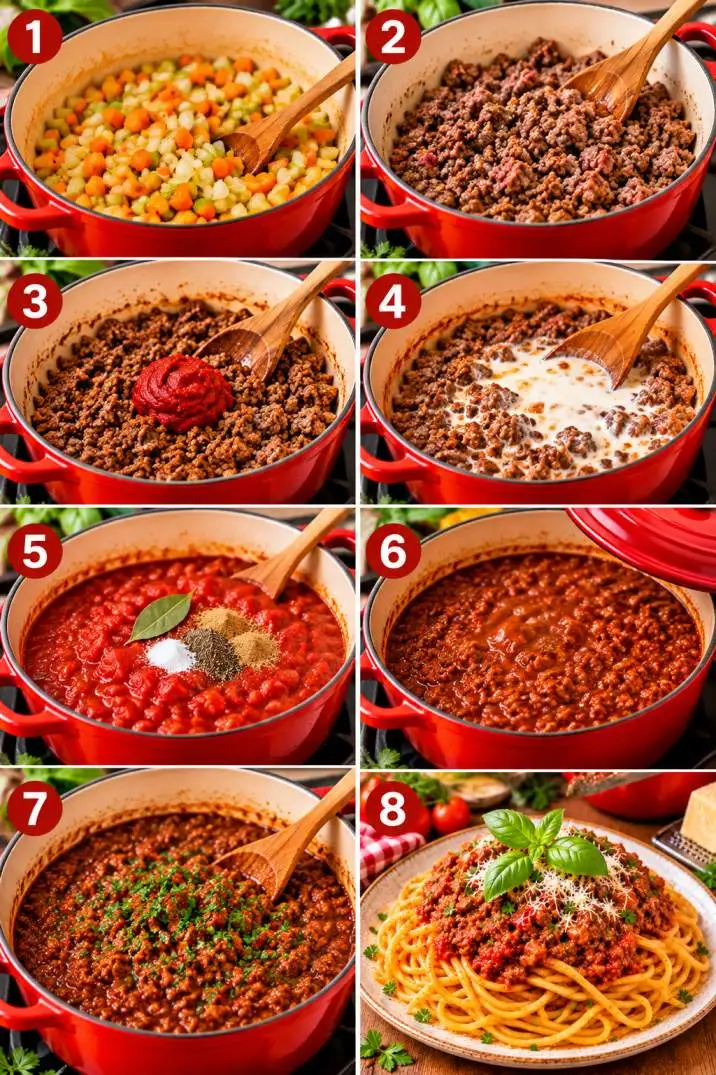
1. Warm the oil and butter in a wide, heavy pot over medium heat. Add the onion, carrot and celery with a pinch of the salt, and cook for 8 to 10 minutes, stirring often, until they’re soft and just starting to turn golden. Stir in the garlic for 30 seconds.
2. Raise the heat to medium-high and crumble in the beef. Break it into small pieces with a wooden spoon and cook until browned and any liquid has evaporated, about 8 to 10 minutes. For food safety, check that the ground beef reaches an internal temperature of 160°F (71°C) using a food thermometer. Let it brown a little. Those browned bits add flavor.
3. Push the meat to the side, add the tomato paste to the empty spot and let it sizzle for 1 to 2 minutes before stirring it through.
4. Pour in the milk. Let it bubble gently until it has almost disappeared, about 3 to 5 minutes.
5. Add the crushed tomatoes, broth, bay leaf, the remaining salt, the pepper and the nutmeg, if using. Stir and bring to a bare simmer.
6. Turn the heat to low, partly cover the pot and cook for 2 hours, stirring every 20 minutes or so. If it gets too thick, add a splash of water. When it’s done, the sauce should look dark and glossy with a little fat separating at the edges.
7. Taste and fix the seasoning. If it seems flat, add a little salt, or a squeeze of lemon to brighten it. Remove the bay leaf.
8. Boil the pasta in well-salted water until just short of tender. Scoop out a cup of the cooking water, drain, and toss the pasta in the pan with the sauce and a splash of the pasta water. Serve with Parmesan.
What Are the Main Ingredients in Bolognese Sauce?
At its heart, bolognese is made from ground meat, a base of finely chopped onion, carrot and celery, tomato, and something dairy, with a little liquid to keep it all moist. Classic recipes often start with pancetta, use a mix of meats and add white or red wine. Many also include milk or cream.
My version keeps the structure and drops the pork and the wine. Beef supplies the richness, tomato paste adds depth, and a long, slow simmer brings it all together.
Is There a Secret Ingredient?
Not a single magic one, but there are a few small tricks that matter:
- Milk. It tempers the sharpness of the tomatoes and gives the sauce a softer, rounder flavor.
- Tomato paste, fried first. A minute or two in the hot pan turns it deep and slightly sweet.
- A fine dice. Tiny vegetables melt into the sauce so you taste them without noticing them.
- Time. Honestly, this is the real secret. A long, low simmer is what turns simple ingredients into something special.
What About the Wine?
Traditional recipes often add a splash of wine after the meat browns, and it does add acidity and depth. This version is alcohol-free. The tomato paste, the milk and the long cook make up for it nicely. If the finished sauce tastes a little flat, a squeeze of lemon or a pinch of salt usually fixes it.
Bolognese vs. Spaghetti Sauce: What’s the Difference?
The simplest way to put it: spaghetti sauce is a tomato sauce that sometimes has meat in it, while bolognese is a meat sauce that happens to contain tomato.
- Bolognese: built on meat and a vegetable base, simmered for hours, with a thick, rich texture and only a moderate amount of tomato.
- Spaghetti sauce: tomato-forward, usually quicker to make and brighter in flavor. For that style, see my easy marinara sauce.
Do Italians Really Serve It With Spaghetti?
The traditional pairing is with wide, flat egg pasta such as tagliatelle, because a thick sauce clings better to broad ribbons. Spaghetti bolognese is hugely popular elsewhere, and I won’t tell you not to eat it. Whatever pasta you choose, toss it with the sauce rather than just spooning sauce on top.
Common Mistakes When Making Bolognese
Rushing the vegetables. If they aren’t soft and sweet before the meat goes in, the sauce tastes raw and sharp.
Steaming the beef. A crowded, too-cool pan boils the meat in its own juices. Use a wide pot, medium-high heat and patience.
Skipping the milk or adding it too late. It needs time to cook down with the meat before the tomatoes go in.
Cooking it too hot. A hard boil toughens the meat and can scorch the bottom. You want a lazy bubble.
Not giving it enough time: A shorter cooking time can produce a tasty meat sauce, but a longer, gentle simmer gives Bolognese its deeper flavor and richer texture. Aim for about 2 hours for this recipe.
Drowning the pasta. Bolognese is thick, so a little goes a long way. Mix it into the pasta with a splash of cooking water.
Easy Variations
- Slow cooker: brown the vegetables and beef on the stove first, then transfer everything to a slow cooker and cook on low for 6 to 8 hours.
- Turkey: Use ground turkey instead of beef and add an extra tablespoon of olive oil to help keep the sauce moist. Cook gently until the turkey reaches an internal temperature of 165°F (74°C), then continue simmering until the sauce reaches your preferred consistency.
- Lentil: replace the beef with 1½ cups of cooked brown or green lentils and some finely chopped mushrooms, and use vegetable broth.
- Lasagna: this sauce is a perfect layer for lasagna.
Storing and Freezing
- Refrigerator: Let the sauce cool slightly, then transfer it to shallow, airtight containers and refrigerate within 2 hours of cooking. Store it in the refrigerator for 3 to 4 days.
- Freezer: Freeze the sauce in airtight containers or freezer bags in individual portions for up to 3 months. Leave a little room at the top for expansion. Thaw overnight in the refrigerator.
- Reheating: Warm the sauce gently in a saucepan over medium-low heat, stirring occasionally. Add a splash of water or broth if it has thickened. Reheat leftovers to an internal temperature of 165°F (74°C).
A Quick Note on Pets and Dietary Needs
Dogs: onion and garlic are toxic to dogs, so please don’t share the sauce with your pet. If your dog gets into some, call your vet.
Dietary needs: this recipe contains no pork and no alcohol. The one thing to check is the Parmesan. Parmigiano-Reggiano is made with animal rennet, which matters for vegetarians, and Islamic scholars differ on how they view cheese made with animal rennet. If it matters to you, look for a cheese made with microbial or vegetable rennet, or one that carries a halal certification. If you have questions about your own situation, ask someone you trust for guidance.
Frequently Asked Questions
What is the secret ingredient in Bolognese?
There’s no single secret, but milk, fried tomato paste, very finely diced vegetables and a long, slow simmer make the biggest difference.
Do Italians put milk in Bolognese?
Many traditional recipes do include milk or cream. It softens the acidity of the tomatoes and gives the sauce a rounder flavor.
What is the difference between Bolognese and spaghetti sauce?
Bolognese is a slow-cooked meat sauce with a vegetable base and a modest amount of tomato. Spaghetti sauce is more tomato-forward and usually quicker.
How long should Bolognese simmer?
For this recipe, let the sauce simmer gently for about 2 hours. This gives the beef time to become tender and allows the flavors to develop.
Can I make bolognese in a slow cooker?
Yes. Brown the vegetables and beef first, then cook everything on low for 6 to 8 hours.
Your Turn
Make a pot on a lazy Sunday, let it murmur away while you do something else, and portion the leftovers for the week ahead. It’s one of those recipes that pays you back long after dinner.
If you’d like a lighter, quicker sauce next, try my marinara sauce.